Official Storage Guidelines for Cilantro
🇺🇸 USDA Guidelines
🇬🇧 FSA Guidelines
Disclaimer: This information is provided for general guidance only. It is based on publicly available USDA and FSA recommendations at the time of publication. Storage times may vary depending on handling, packaging, and storage conditions. Always check official sources and use your best judgment to ensure food safety.
This guide contains Amazon affiliate links, marked ↗. If you buy through one, we may earn a commission at no extra cost to you. Learn more about affiliate links.
Frequently Asked Questions
Can you freeze cilantro without blanching it?
Yes. Blanching is optional for herbs, and unblanched cilantro usually keeps a brighter fresh-herb aroma. Wash it, remove poor leaves, dry it extremely well, and freeze sprigs or leaves in a single layer before transferring them to an airtight bag.
Illinois Extension notes that blanching can preserve color but may reduce flavor. If color is more important, a very brief blanch followed by immediate ice-water cooling is an option, but most home cooks will prefer the simpler raw method for cilantro.
Is it better to freeze cilantro in water or oil?
Choose the liquid according to the dishes you cook. Water cubes drop neatly into soup, beans, curry, or rice. Oil cubes suit sautés, marinades, and sauces where added fat already belongs. Roughly chopped cilantro also freezes dry on a tray if you want more flexibility.
Oil mixtures need a safety rule: freeze them immediately. Oregon State University says fresh herbs in oil should be refrigerated and used within 4 days or frozen. Do not store homemade cilantro oil at room temperature.
Can frozen cilantro be used in salsa or guacamole?
It can contribute flavor, but it will not provide the crisp leafy texture of fresh cilantro. Frozen cilantro is more successful in cooked salsa, salsa verde, blended sauces, and marinades. In fresh pico de gallo or guacamole, dark, limp leaves can make the dish look watery.
If frozen cilantro is your only option, use a small amount while still frozen and stir it in just before serving. Drain any thawing liquid. For a presentation-focused raw dish, fresh cilantro is worth buying.
Should cilantro stems be frozen too?
Yes. Tender cilantro stems carry considerable flavor and are ideal for cooked dishes. Wash and dry them with the leaves, chop them finely, and freeze them separately if you want to control texture. Tough lower stems can be reserved for stock or discarded.
Label stem portions so they go into curry paste, soup, beans, or a blended sauce rather than being mistaken for garnish. Freezing the edible stems reduces waste and preserves a part many cooks unnecessarily throw away.
Why did my frozen cilantro turn dark or mushy?
Mushiness is a normal result of ice crystals rupturing delicate leaf cells. Darkening is worsened by bruising, excess surface water, air exposure, slow freezing, and repeated warming. Thorough drying, tray-freezing, airtight packaging, and small portions all help.
The change does not automatically mean the herb is spoiled. Judge safety by its handling history and signs such as mold or a rotten odor. Use dark but properly frozen cilantro in a cooked or blended dish where appearance is not important.
Cilantro Freezing and Storage Guide
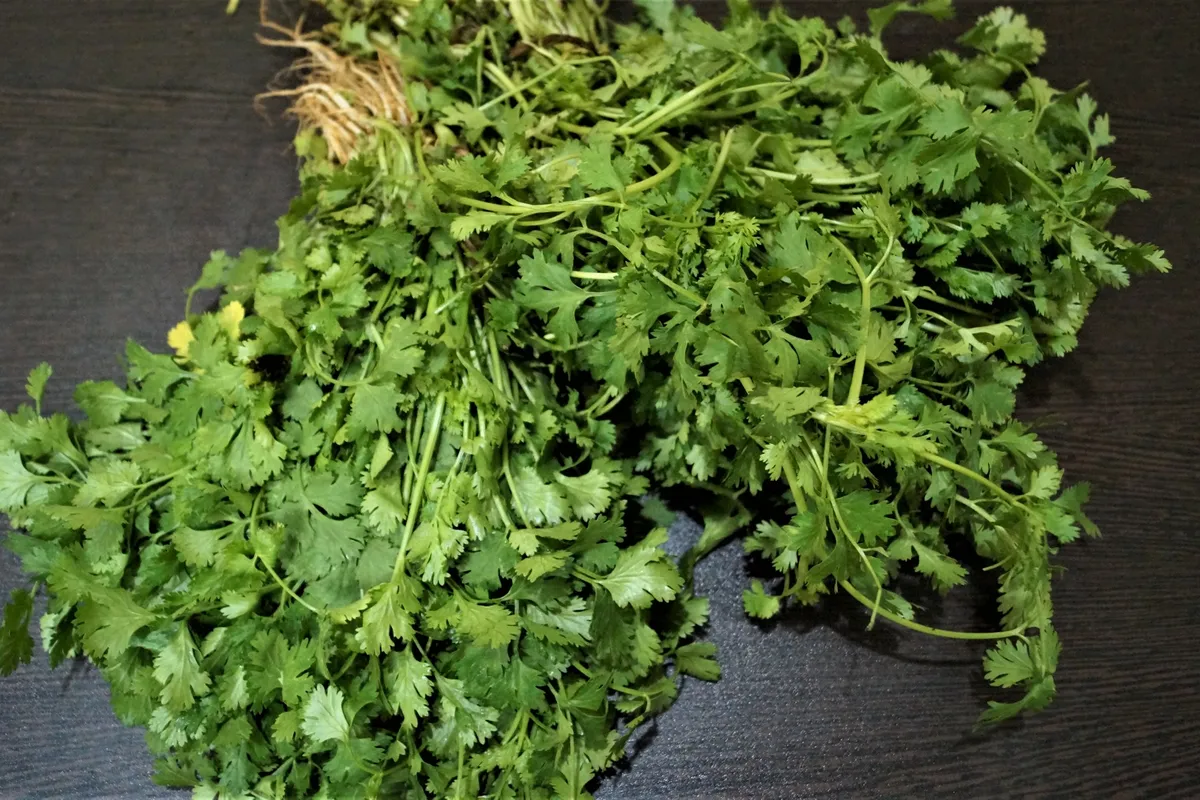
Cilantro, called coriander leaf in the UK, can be frozen successfully when the goal is flavor rather than garnish. Its leaves are thin and full of water, so ice crystals collapse their structure. The thawed herb will be limp, but its distinctive citrusy flavor remains useful in cooked and blended foods. That makes freezing a strong option when a bunch is too large to finish within a week.
How to Freeze Cilantro Leaves
For loose leaves and sprigs, wash the cilantro in cool water, inspect it, and dry it thoroughly in a salad spinner and on clean towels. Spread it in a single layer, freeze until firm, and transfer it to an airtight bag. Include tender stems because they carry flavor. Tray-freezing prevents one solid block and lets you pinch out the amount needed.
Freezing Cilantro in Cubes
For cubes, chop the herb and place about a teaspoon in each compartment, then cover with water. A covered silicone cube tray(affiliate link, opens Amazon) limits odor transfer before the portions are moved to a labeled freezer bag. Oil is another option for dishes that already need fat, but the cubes must be frozen immediately. Use cilantro within about 4 to 6 months for its best aroma, even though a continuously frozen package does not become unsafe at that exact date.
Cooking with Frozen Cilantro
Add cilantro while frozen to soup, beans, curry, or a sauce with tomatoes, onions, and garlic. For pesto-style sauces, see our pesto guide, and compare basil because the two delicate herbs share a texture problem but suit different dishes. For a curry or salsa that needs heat as well as herbs, chili peppers freeze with the same no-blanch simplicity as cilantro.
Editor's Picks
Gear Worth Buying for Cilantro
OXO Good Grips Silicone Large Ice Cube Tray with Lid
The lid protects chopped cilantro in water or oil from freezer odors while the flexible silicone releases one cooking portion at a time.
Shop on AmazonStasher Stand-Up Mid Reusable Silicone Bag (56 oz)
A premium, reusable stand-in for disposable freezer bags - freezer, oven, and dishwasher safe.
Shop on AmazonRubbermaid Brilliance Airtight Food Storage Containers, 24-Piece Set
A complete, leak-proof set that covers nearly any portion size this guide calls for.
Shop on Amazon
As an Amazon Associate, we earn from qualifying purchases.
Important Safety Guidelines
- Wash cilantro in cool running water and remove damaged or slimy leaves.
- Dry it thoroughly before tray-freezing. Surface water forms excess ice and encourages clumping.
- Freeze herb-and-oil mixtures immediately. Oregon State University warns that fresh herbs in oil must be refrigerated and used within 4 days or frozen because unrefrigerated mixtures can support botulism toxin formation.
- Use clean freezer trays, bags, utensils, and containers.
- Store at 0°F (-18°C) or below and keep portions airtight.
- Add frozen cilantro directly to a cooking dish or thaw it in the refrigerator.
- Discard cilantro with mold, slime, or a rotten odor rather than freezing it.
Key Safety Reminders
- Always label containers with freezing date
- Use airtight containers to prevent freezer burn
- Follow proper thawing procedures
You Might Also Like
Can You Freeze Basil?
Yes, you can freeze basil. Whole leaves, chopped water cubes, oil cubes, and pesto all work, but thawed leaves become dark and limp rather than salad-fresh. Freeze clean, dry basil promptly and use it in sauces, soups, pasta, pizza, and pesto within about 4 to 6 months for the best flavor.
Can You Freeze Celery?
Yes, you can freeze celery for up to 12 months, though it loses its signature crunch. Blanching celery for 3 minutes before freezing preserves flavor and prevents browning, making it perfect for soups, stews, and stocks. While frozen celery won't work for raw snacks or salads, it's a game-changer for reducing food waste and always having this versatile veggie ready for cooked dishes.
Can You Freeze Fresh Chillies and Chili Peppers?
Yes, fresh chillies and chili peppers freeze very well without blanching. Wash and dry them, remove stems if convenient, then freeze whole, sliced, or chopped in recipe-size portions. They soften after thawing, so use them directly from frozen in sauces, curries, soups, and cooked dishes. University of Nebraska-Lincoln Extension puts frozen peppers at about 8 months for best quality, though a well-sealed bag stays safe well beyond that.
Can You Freeze Garlic?
Yes, you can freeze garlic unpeeled, chopped, or puréed with oil. Wrap it airtight to contain its odor and use it mainly in cooked dishes because freezing softens the cloves and can make garlic taste stronger or slightly bitter. Garlic-in-oil requires special care: refrigerate it at 40°F (4°C) or below and use it within 4 days, or freeze it immediately. Never store untreated garlic-in-oil at room temperature because botulinum toxin can form without visible signs of spoilage.
Sources & References
This information is based on official guidelines from trusted food safety authorities:
Preserving garden-grown herbs
View Source →Preserving Herbs
View Source →Using Fresh Herbs in Kitchen
View Source →Herbs and vegetables in oil
View Source →How to chill, freeze and defrost food safely
View Source →
About the Author

Disclaimer
The information on this website is provided for general informational purposes only. While we work to keep our food storage and freezing guides accurate and current, we are not food safety professionals, nutritionists, or medical experts, and our recommendations may not account for every individual circumstance, product type, or storage condition.
Always consult official food safety guidance (such as your national food safety agency) and use your own judgment before consuming stored or frozen food. CanIFreeze.com assumes no responsibility or liability for any loss, damage, illness, or other adverse outcome resulting from reliance on the information provided on this site.
CanIFreeze.com is a participant in the Amazon Associates Program, an affiliate advertising program designed to provide a means for sites to earn advertising fees by linking to Amazon.com and its affiliated sites. As an Amazon Associate we earn from qualifying purchases made through links on this site, at no extra cost to you. Product links are clearly marked where they appear.
Disclaimer date: