Official Storage Guidelines for Pesto
🇺🇸 USDA Guidelines
🇬🇧 FSA Guidelines
Disclaimer: This information is provided for general guidance only. It is based on publicly available USDA and FSA recommendations at the time of publication. Storage times may vary depending on handling, packaging, and storage conditions. Always check official sources and use your best judgment to ensure food safety.
This guide contains Amazon affiliate links, marked ↗. If you buy through one, we may earn a commission at no extra cost to you. Learn more about affiliate links.
Frequently Asked Questions
Can you use pesto directly from frozen?
Yes, and this is genuinely the easiest way to use frozen pesto - drop a frozen cube straight into a pot of hot, freshly-drained pasta, where the residual heat melts it in within a minute or two of tossing.
For sauces, soups, or a quick marinade, a frozen cube can go straight into the pan over low-medium heat and melt in as the dish comes together, no separate thawing step needed.
For cold applications - spreading it on a sandwich, stirring into a dressing, or using it as a dip base - thaw it in the refrigerator first, since a frozen or half-frozen chunk won't spread or blend smoothly.
Either way, give it a quick stir once it's thawed or melted in; the oil layer that protected it in the freezer will initially sit slightly separate from the rest before it's mixed back through.
Can pesto be refrozen after it's thawed?
Yes, if it was thawed in the refrigerator and kept at 40°F (4°C) or below the whole time - refreezing is safe under those conditions, though the basil's flavor and vibrant color will fade a bit more with each additional freeze-thaw cycle, since oxidation has more opportunities to occur each time it's exposed to air during handling.
Don't refreeze pesto that was left at room temperature or that sat above 40°F (4°C) for more than 2 hours (1 hour above 90°F/32°C) - the garlic-in-oil combination in homemade pesto makes proper temperature control especially important, not just for quality but for food safety.
If you've thawed more than you need, using it up within a few days (stirred into pasta, spread on bread, mixed into a dressing) is a better bet than refreezing a partial jar repeatedly.
Freezing pesto in small, single-use portions from the start - which the ice cube tray method does automatically - is the easiest way to avoid ever needing to refreeze it at all.
Does pesto freeze well?
Yes, exceptionally well - pesto is one of the best-performing foods for freezing on this entire site, and the reason comes down to what it's made of. Pesto is mostly oil, and oil doesn't form the damaging ice crystals that water-based foods do, so the sauce itself holds its texture and consistency through freezing far better than a watery soup or a delicate leafy green would.
The real risk isn't freezing damage - it's oxidation. Basil contains an enzyme called polyphenol oxidase that reacts with oxygen and turns the leaves brown and bitter-tasting, the same browning reaction that turns a cut apple brown. This reaction happens whether or not pesto is frozen, but freezer storage gives it a lot more time to occur if the pesto is exposed to air.
The fix is a thin layer of olive oil poured over each portion before freezing, physically blocking oxygen from reaching the basil underneath. Portioned this way in an ice cube tray, pesto holds its bright green color and fresh flavor for about 6 months, with best quality in the first 3.
Some recipes recommend adding extra lemon juice to prevent browning; it does help somewhat, but it also mutes the basil's delicate aromatic compounds and can add a sharp, slightly artificial tang, especially once thawed - the oil-cap method alone works better without that tradeoff.
Best containers to freeze pesto
A lidded silicone freezer tray(affiliate link, opens Amazon) is genuinely the best tool for freezing pesto - portion it in, level each cube, top with a thin layer of olive oil (about ¼ teaspoon per cube is enough to fully coat the surface), and freeze uncovered for a couple of hours until solid before popping the cubes into a labeled freezer bag.
For larger batches you'll use all at once, a small rigid container works too - just make sure to add that same thin oil layer over the surface before sealing, and press plastic wrap directly onto the oil if there's any air gap left in the container.
Avoid loosely bagging unfrozen pesto without the oil-cap step; any pesto exposed directly to the air inside the bag, even in the freezer, will start browning and losing flavor faster than properly capped portions.
Whatever container you use, don't skip the oil layer - it's the one step that separates good frozen pesto from disappointing, oxidized pesto.
Best uses for pesto after it's been frozen
Tossed with hot pasta is the classic and still the best use - the pasta's residual heat melts the pesto into a smooth coating in under a minute, and any minor texture change from freezing disappears completely.
It's also excellent spread on sandwiches or flatbread, swirled into soup just before serving, mixed into a vinaigrette, or spooned over roasted vegetables, grilled chicken, or fish.
For a quick appetizer, spread thawed pesto over a base of ricotta on crostini or crackers - the two freeze and thaw on similar timelines and pair naturally together.
Pesto also works well stirred into scrambled eggs, mixed into a marinade, or blended into mayonnaise or sour cream for a quick herby dip - though if you're freezing that dip afterward, remember that mayonnaise-based mixtures don't freeze well on their own.
Does pesto with cheese freeze differently than vegan or dairy-free pesto?
A little, yes. Traditional pesto with Parmesan or Pecorino can turn slightly grainy after freezing and thawing, the same texture change that affects other cheese-based sauces - the cheese's fat and protein structure doesn't reform quite as smoothly after ice crystals disrupt it. It's a minor effect in pesto specifically, since the cheese is a smaller proportion of the mixture than in, say, a cream sauce, and it's barely noticeable once the pesto is stirred into hot pasta.
Vegan or dairy-free pesto (made without cheese, sometimes with nutritional yeast for a similar savory note) tends to freeze slightly more consistently, since there's no dairy component to affect texture - though it still needs the same oil-cap treatment to prevent basil oxidation, which is unrelated to the cheese question entirely.
Nut choice matters more than cheese for long-term freezer storage: pine nuts, walnuts, and other nuts are high in oil themselves, and that oil can slowly turn rancid over very long freezer storage (a similar mechanism to why fatty meats like bacon have shorter freezer quality windows than lean ones) - another reason to aim for the 3-month best-quality mark rather than pushing pesto toward the outer edge of its 6-month safe window.
Regardless of recipe, the oil-cap-and-freeze method works the same way across all pesto variations - cheese or no cheese, nuts or nut-free.
Pesto Freezing and Storage Guide
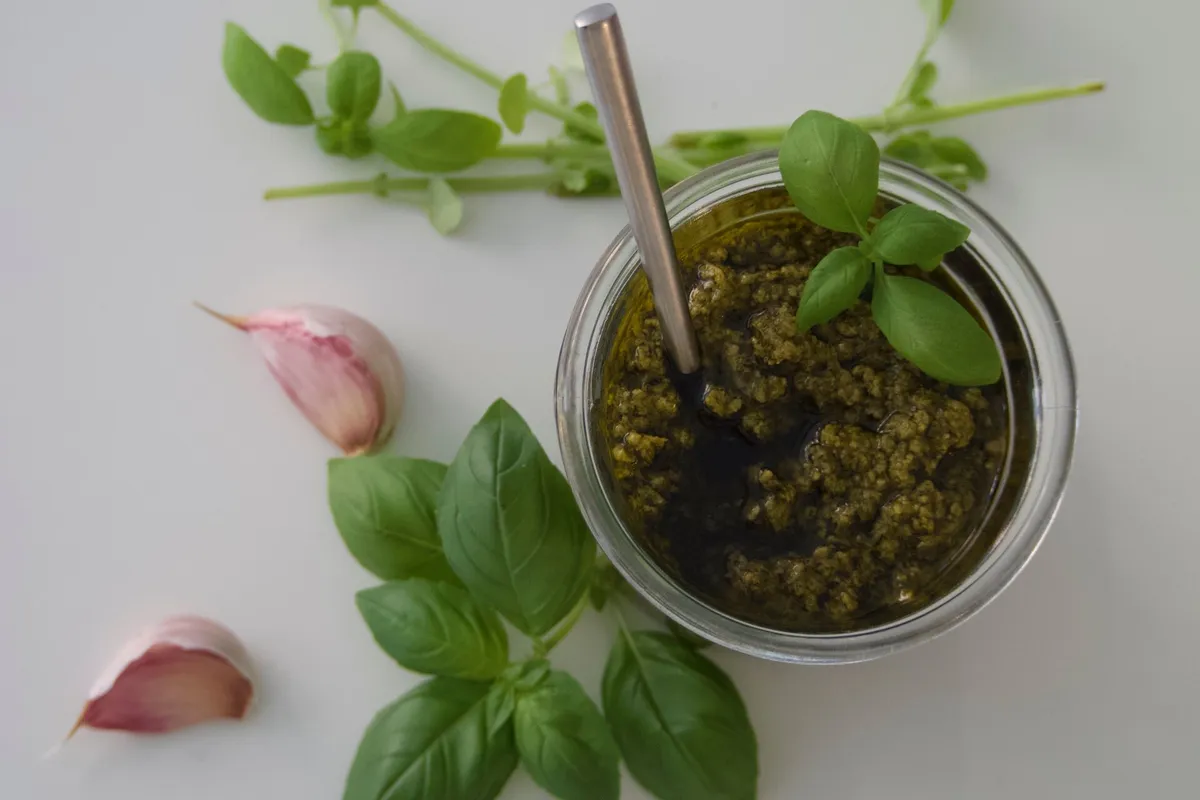
Can you freeze pesto? Yes - and of everything covered on this site, pesto might be the single best freezer performer there is. The ice-cube-tray method is such a well-known kitchen trick precisely because it works this well.
Portioned and properly capped with oil, fresh basil pesto holds its bright green color and flavor for about 6 months in the freezer, with best quality in the first 3. In the fridge, plan on about 5 days.
Why Pesto Freezes So Well (and the One Thing That Ruins It)
Pesto is mostly oil, and oil doesn’t form the damaging ice crystals that ruin watery foods - which is why pesto’s texture survives freezing better than almost anything else on this site. The real threat isn’t the cold, it’s oxygen. Basil contains an enzyme called polyphenol oxidase that reacts with air and turns the leaves brown and bitter - the same reaction that browns a cut apple. It happens whether pesto is frozen or not, but sitting in the freezer for months gives it a lot more time to occur if the surface is exposed to air.
The fix is simple: a thin layer of olive oil poured over each portion before freezing, physically blocking oxygen from reaching the basil underneath. Skip this step, and even perfectly frozen pesto will turn dull and bitter over time.
How to Freeze Pesto
- Portion into an ice cube tray(affiliate link, opens Amazon), leveling each cube.
- Top each cube with a thin layer of olive oil - about ¼ teaspoon, just enough to fully coat the surface.
- Freeze uncovered for about 2 hours until solid.
- Transfer cubes to a labeled freezer bag, pressing out excess air.
- Freeze at 0°F (-18°C) or below.
Skip the commonly-suggested lemon-juice trick if you can - it helps prevent browning somewhat, but it also mutes basil’s delicate aroma and can add a sharp, artificial tang once thawed. The oil cap does the job better on its own.
A Food Safety Note for Homemade Pesto
Homemade pesto with fresh garlic carries a small but real risk: garlic-in-oil mixtures can support Clostridium botulinum growth if left unrefrigerated for extended periods, since oil creates a low-oxygen environment the bacteria favor. Keep pesto refrigerated or frozen at all times, never left at room temperature for more than 2 hours, and don’t attempt to shelf-store or can homemade garlic-and-oil pesto.
How Long Frozen Pesto Actually Lasts
At a steady 0°F (-18°C), pesto is safe indefinitely - freezing halts bacterial growth completely. The 6-month window (3 for best quality) is about oxidation and flavor, not safety. Cheese-based pesto (Parmesan, Pecorino) can turn slightly grainy after freezing, a minor texture change barely noticeable once stirred into hot pasta. Nut oils (pine nuts, walnuts) can slowly turn rancid over very long storage, similar to why fatty meats have shorter freezer windows than lean ones - another reason to aim for that 3-month best-quality mark.
Best Uses for Frozen Pesto
Tossed with hot pasta is the classic, and the pasta’s heat melts it in completely. It’s also great spread on sandwiches, swirled into soup, spooned over roasted vegetables, or spread over ricotta on crostini for a quick appetizer. If you have not made the sauce yet, compare freezing plain basil or cilantro so you can choose between leaves, cubes, and finished pesto.
Common Mistakes to Avoid
The most common mistake is skipping the oil cap and freezing pesto exposed directly to air - that’s the single biggest cause of brown, bitter frozen pesto. The second is freezing one large block instead of small portions, forcing a full thaw for a task that needed one tablespoon. The third is leaving homemade garlic pesto at room temperature for too long before refrigerating or freezing it, which matters more here than for most sauces given the garlic-in-oil botulism consideration.
Editor's Picks
Gear Worth Buying for Pesto
Souper Cubes 1/2 Cup Silicone Freezer Tray with Lid
The textbook way to freeze pesto - measured cubes ready to drop straight into hot pasta.
Shop on AmazonStasher Stand-Up Mid Reusable Silicone Bag (56 oz)
A premium, reusable stand-in for disposable freezer bags - freezer, oven, and dishwasher safe.
Shop on AmazonRubbermaid Brilliance Airtight Food Storage Containers, 24-Piece Set
A complete, leak-proof set that covers nearly any portion size this guide calls for.
Shop on Amazon
As an Amazon Associate, we earn from qualifying purchases.
Important Safety Guidelines
- Refrigerate homemade pesto in an airtight container at or below 40°F (4°C) and use within about 5 days; opened jarred pesto follows a similar window once opened, though always check the label's use-by date.
- Freeze at 0°F (-18°C) or below, portioned into small amounts (ice cube trays are ideal) so you only thaw what a single meal needs.
- Top each portion with a thin layer of olive oil before freezing - this blocks oxygen contact with the basil, which is what actually causes the brown, bitter, oxidized flavor that ruins improperly-frozen pesto.
- Homemade pesto with fresh garlic carries a small but real botulism risk if stored improperly at room temperature or in oil without refrigeration/freezing (garlic-in-oil mixtures can support Clostridium botulinum growth in low-oxygen, unrefrigerated conditions) - always keep pesto refrigerated or frozen, never left at room temperature for extended periods, and don't can or shelf-store homemade garlic-and-oil pesto.
- Never leave pesto at room temperature for more than 2 hours (1 hour above 90°F/32°C) before refrigerating or freezing it.
- Pesto containing cheese (traditionally Parmesan or Pecorino) can turn slightly grainy after freezing, similar to other cheese-based sauces - this is a texture issue, not a safety one.
- Thaw pesto in the refrigerator rather than at room temperature, and stir well before using.
- Refreezing is safe only if the pesto was thawed in the refrigerator and kept at 40°F (4°C) or below the entire time.
- Label with the date; pesto stays safe indefinitely at 0°F (-18°C), but oxidation and flavor loss are what actually limit how long it's worth keeping.
Key Safety Reminders
- Always label containers with freezing date
- Use airtight containers to prevent freezer burn
- Follow proper thawing procedures
You Might Also Like
Can You Freeze Basil?
Yes, you can freeze basil. Whole leaves, chopped water cubes, oil cubes, and pesto all work, but thawed leaves become dark and limp rather than salad-fresh. Freeze clean, dry basil promptly and use it in sauces, soups, pasta, pizza, and pesto within about 4 to 6 months for the best flavor.
Can You Freeze Celery?
Yes, you can freeze celery for up to 12 months, though it loses its signature crunch. Blanching celery for 3 minutes before freezing preserves flavor and prevents browning, making it perfect for soups, stews, and stocks. While frozen celery won't work for raw snacks or salads, it's a game-changer for reducing food waste and always having this versatile veggie ready for cooked dishes.

Can You Freeze Chicken Broth and Stock?
Yes, chicken broth and stock freeze exceptionally well. Cool homemade broth quickly, portion it, leave expansion space, and freeze for about 2-3 months for best quality. Commercial broth can also be frozen after opening. Never freeze broth in an unopened can, carton or completely full glass jar.
Can You Freeze Cilantro?
Yes, you can freeze cilantro, but it will lose the crisp texture needed for garnish. Freeze clean, thoroughly dried leaves and tender stems on a tray, or chop them into water or oil cubes. The flavor works well in soups, curries, beans, sauces, and marinades, with best quality in about 4 to 6 months.
Sources & References
This information is based on official guidelines from trusted food safety authorities:
Freezing and Food Safety
View Source →Are You Storing Food Safely?
View Source →Selecting and Serving Produce Safely
View Source →How to chill, freeze and defrost food safely
View Source →
About the Author

Disclaimer
The information on this website is provided for general informational purposes only. While we work to keep our food storage and freezing guides accurate and current, we are not food safety professionals, nutritionists, or medical experts, and our recommendations may not account for every individual circumstance, product type, or storage condition.
Always consult official food safety guidance (such as your national food safety agency) and use your own judgment before consuming stored or frozen food. CanIFreeze.com assumes no responsibility or liability for any loss, damage, illness, or other adverse outcome resulting from reliance on the information provided on this site.
CanIFreeze.com is a participant in the Amazon Associates Program, an affiliate advertising program designed to provide a means for sites to earn advertising fees by linking to Amazon.com and its affiliated sites. As an Amazon Associate we earn from qualifying purchases made through links on this site, at no extra cost to you. Product links are clearly marked where they appear.
Disclaimer date: