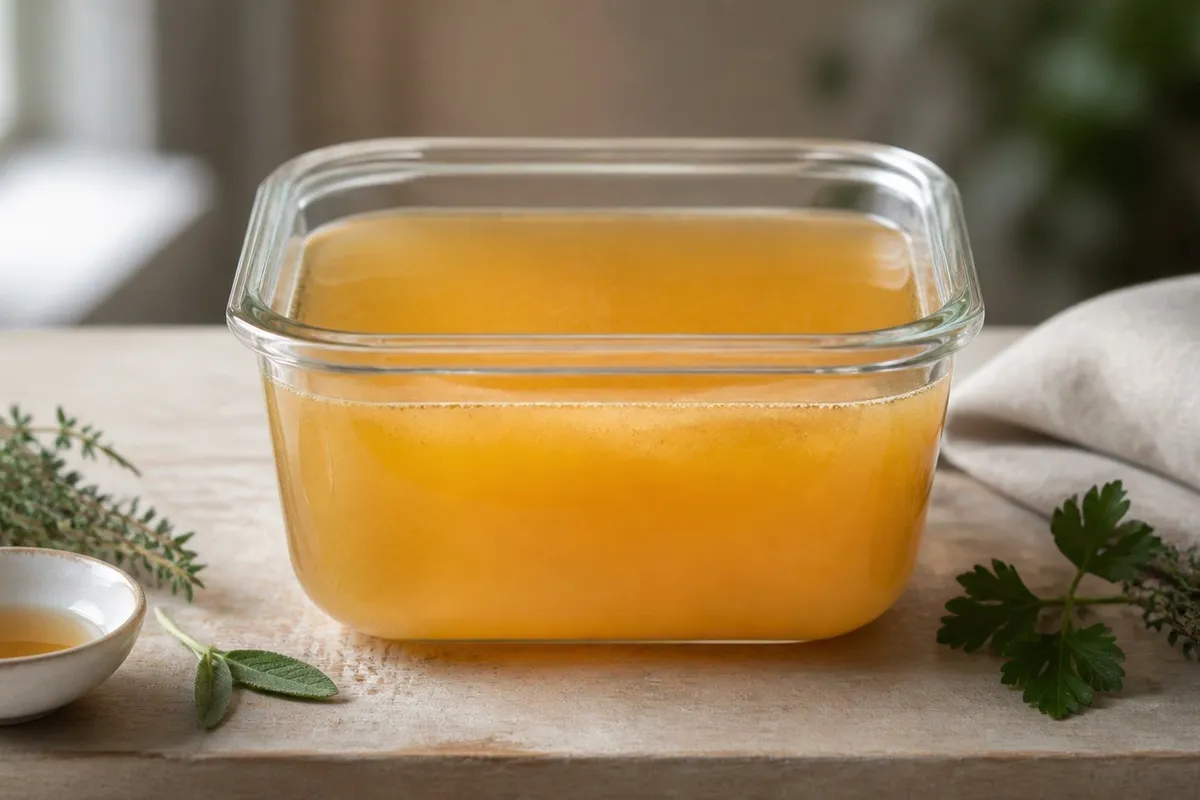
Official Storage Guidelines for Chicken Broth and Stock
🇺🇸 USDA Guidelines
🇬🇧 FSA Guidelines
Disclaimer: This information is provided for general guidance only. It is based on publicly available USDA and FSA recommendations at the time of publication. Storage times may vary depending on handling, packaging, and storage conditions. Always check official sources and use your best judgment to ensure food safety.
This guide contains Amazon affiliate links, marked ↗. If you buy through one, we may earn a commission at no extra cost to you. Learn more about affiliate links.
Frequently Asked Questions
Can you freeze chicken broth in glass jars?
Yes, but use straight-sided, freezer-safe jars and respect their freezer fill line. Leave at least 1 inch of headspace, cool the broth before freezing, and avoid sudden temperature changes. Narrow-shouldered jars are more likely to crack because expanding liquid pushes against the shoulder.
Can you freeze opened boxed chicken broth?
Yes. Transfer leftovers from the carton to a freezer container or portion tray rather than freezing the carton itself. Label the date and freeze within the label's refrigerated-use period. A carton designed for shelf storage is not necessarily designed to withstand liquid expansion in a freezer.
Does the fat need to be removed first?
No. A fat cap can reduce air exposure, but fat can absorb freezer odors and eventually oxidize. For versatile stock, chill it, lift off most of the solid fat, and freeze the liquid airtight. Keep some fat if it is part of the intended recipe.
Can chicken broth be refrozen?
Broth thawed in the refrigerator may be refrozen if it stayed cold, although repeated cycles dull flavor. Broth thawed in a microwave should be reheated before refreezing. Portioning in cubes prevents unnecessary thawing.
Chicken Broth and Stock Freezing and Storage Guide
Broth and stock are among the easiest ingredients to freeze. The practical challenge is not whether they survive freezing, but cooling a large pot safely and allowing enough room for expansion.
Broth Versus Stock in the Freezer
Both freeze the same way. Stock is usually made with more bones and may contain enough gelatin to set in the refrigerator. Broth is generally seasoned and intended to be served or used directly. Gelatin, cloudiness, sediment and a layer of fat can all change how the liquid looks after chilling without making it unsafe.
How to Cool and Freeze Chicken Stock
- Strain out bones and vegetables.
- Divide the hot liquid into shallow containers or set the pot in an ice-water bath and stir.
- Refrigerate or freeze within 2 hours. Do not leave a large stockpot cooling overnight.
- Portion for actual uses: 1 cup for rice, larger amounts for soup, and tablespoon-size cubes for sauces.
- Leave headspace, seal once cold, label and freeze.
Half-cup silicone freezer trays(affiliate link, opens Amazon) are useful for forming measured portions, but move frozen cubes to an airtight bag so exposed surfaces do not dehydrate or pick up odors. Flat freezer bags save space; freeze them on a rimmed tray in case of leaks.
Thawing and Using Frozen Broth
Thaw overnight in the refrigerator or put a frozen portion directly into a saucepan over low heat. Stir as it melts. Small cubes can go directly into pasta sauces, pan sauces, gravy, mashed potatoes or cooked grains.
Homemade broth is not sterile. Freezing pauses microbial growth but cannot rescue broth that cooled too slowly or was already spoiled. If storage history is uncertain, do not rely on boiling to repair it.
Editor's Picks
Gear Worth Buying for Chicken Broth and Stock
Souper Cubes 1/2 Cup Silicone Freezer Trays (2-Pack)
Turns broth or stock into measured half-cup portions for sauces, grains and small recipes without thawing a full container.
Shop on AmazonStasher Stand-Up Mid Reusable Silicone Bag (56 oz)
A premium, reusable stand-in for disposable freezer bags - freezer, oven, and dishwasher safe.
Shop on AmazonRubbermaid Brilliance Airtight Food Storage Containers, 24-Piece Set
A complete, leak-proof set that covers nearly any portion size this guide calls for.
Shop on Amazon
As an Amazon Associate, we earn from qualifying purchases.
Important Safety Guidelines
- Divide a large batch among shallow containers and refrigerate or freeze within 2 hours.
- Keep the refrigerator at 40°F (4°C) or below and the freezer at 0°F (-18°C) or below.
- Leave headspace because water-rich broth expands by roughly 9% as it freezes.
- Use only freezer-safe glass and never freeze a sealed can or unopened carton.
- Fat may separate and gelatin-rich stock may liquefy after heating; neither change alone indicates spoilage.
- Thaw in the refrigerator, reheat from frozen, or microwave safely. Do not thaw broth on the counter.
- Bring soup, sauce and gravy made with leftovers to a rolling boil under USDA reheating guidance.
- Discard broth with mold, a swollen package, unexplained bubbling, or a sour or putrid odor.
Key Safety Reminders
- Always label containers with freezing date
- Use airtight containers to prevent freezer burn
- Follow proper thawing procedures
You Might Also Like
Can You Freeze Bacon?
Yes, you can freeze bacon, both raw and cooked. Raw bacon holds best quality for about 1 month in the freezer (some producers say up to 4 months), while cooked bacon is good for about 1 month as well. That's a shorter window than most raw meats get, and it's not about bacteria - it's the high fat content slowly turning rancid, a chemical process freezing only slows, not stops. Bacon stays safe indefinitely at 0°F (-18°C); quality is what actually declines.

Can You Freeze Beef and Roast Beef?
Yes, you can freeze raw beef, cooked beef, and roast beef. Freeze raw roasts and other whole cuts for 4 to 12 months for best quality, while cooked beef is best within 2 to 3 months. Divide sliced roast beef with parchment, remove as much air as possible, and thaw it in the refrigerator so it stays juicy and safe.

Can You Freeze Chick-fil-A Nuggets?
Yes, you can freeze leftover Chick-fil-A nuggets. Chill them quickly, freeze in a single layer so they don't clump, then reheat in an oven or air fryer rather than a microwave to keep the breading from going soggy. Chick-fil-A doesn't publish its own freezing guidance, so this follows general USDA rules for cooked, breaded chicken.

Can You Freeze Chicken?
Yes, chicken freezes exceptionally well, whether it's raw or cooked, whole or in parts. A whole raw chicken holds good quality for up to a year at 0°F (-18°C), raw parts and pieces for about 9 months, and raw ground chicken for 3 to 4 months. Cooked chicken keeps for about 4 months, or up to 6 months if it's sitting in broth or gravy. Chicken is also one of the few foods where the USDA says freezing indefinitely never makes it unsafe - only less appetizing over time - as long as it stayed at 0°F the whole way through and was safe when it went in.
Sources & References
This information is based on official guidelines from trusted food safety authorities:
Cold Food Storage Chart
View Source →Leftovers and Food Safety
View Source →How to chill, freeze and defrost food safely
View Source →
About the Author

Disclaimer
The information on this website is provided for general informational purposes only. While we work to keep our food storage and freezing guides accurate and current, we are not food safety professionals, nutritionists, or medical experts, and our recommendations may not account for every individual circumstance, product type, or storage condition.
Always consult official food safety guidance (such as your national food safety agency) and use your own judgment before consuming stored or frozen food. CanIFreeze.com assumes no responsibility or liability for any loss, damage, illness, or other adverse outcome resulting from reliance on the information provided on this site.
CanIFreeze.com is a participant in the Amazon Associates Program, an affiliate advertising program designed to provide a means for sites to earn advertising fees by linking to Amazon.com and its affiliated sites. As an Amazon Associate we earn from qualifying purchases made through links on this site, at no extra cost to you. Product links are clearly marked where they appear.
Disclaimer date: