Official Storage Guidelines for Onions
🇺🇸 USDA Guidelines
🇬🇧 FSA Guidelines
Disclaimer: This information is provided for general guidance only. It is based on publicly available USDA and FSA recommendations at the time of publication. Storage times may vary depending on handling, packaging, and storage conditions. Always check official sources and use your best judgment to ensure food safety.
This guide contains Amazon affiliate links, marked ↗. If you buy through one, we may earn a commission at no extra cost to you. Learn more about affiliate links.
Frequently Asked Questions
Do you need to blanch onions before freezing?
Only if you're freezing whole bulbs. The National Center for Home Food Preservation and Michigan State University Extension both spell out the same split: chopped or sliced onion goes straight into the freezer with no blanching at all, while whole mature bulbs need a water blanch of 3 minutes for small ones up to 7 minutes for large ones, timed from when the water comes back to a full boil after you drop them in, followed by an ice bath for the same amount of time.
The reason chopped onion skips blanching isn't a shortcut, it's just how little enzyme activity matters at that surface area and short a freezer stay. Blanching exists to stop enzymes that cause off flavors and color loss over long storage, and diced onion is typically used up within a few months anyway, before that becomes an issue. Whole bulbs are a longer commitment and a bigger piece of food, so the blanch matters more there.
There's a middle path if you want it: Colorado State University Extension's PreserveSmart program lists an optional blanch for chopped onion, 1.5 minutes below 5,000 feet elevation or 2.5 minutes above it, aimed at cooks who want to push toward the longer end of the storage window. It's not required, and NCHFP and Michigan State don't call for it on diced onion, but it's a legitimate option if you're freezing a large batch you don't plan to touch again for a while.
Onion rings are their own case: a 10 to 15 second blanch, a cool-and-drain step, then a flour, milk, and cornmeal coating before freezing on a tray, so they go straight from freezer to 375degF oil. For everyday cooking, though, the practical answer is simple: skip blanching for anything you're going to chop up, and only bother with hot water if you're freezing onions whole.
How long do frozen onions last?
Michigan State University Extension's research on this is specific: onions held at 0degF tend to lose their flavor after 3 to 6 months. That's not a safety cutoff, it's a quality one. Frozen food stays safe to eat indefinitely as long as your freezer holds at 0degF (-18degC) or below, per USDA guidance, but onion's flavor is a moving target and it fades well before anything becomes unsafe.
In the UK, Love Food Hate Waste gives more conservative advice for home cooks: freeze chopped onion flat in a sealed bag and plan to use it within about 3 months. That lines up with the National Center for Home Food Preservation's note that diced onion is 'best used within a few months' rather than treated as a long-term pantry item the way, say, blanched carrots might be.
A few things push you toward the shorter end of that range. A frost-free freezer that cycles temperature more than a chest freezer will speed up quality loss. Loose packaging with extra air in it accelerates freezer burn. And onion that wasn't fully dry before freezing tends to form more ice crystals, which damages texture faster once it thaws.
The practical move is to label everything with the date and treat 3 months as your target window rather than the outer limit. If you regularly cook with onion, freeze it in amounts you'll actually work through in that time instead of one giant batch you'll be picking through at month eight, still safe, just noticeably blander than what you started with.
How do you stop onions from smelling up your freezer?
Wrap it properly, because onion odor moves through ordinary packaging more readily than most people expect. Clemson Cooperative Extension's food storage guidance uses onion-flavored milk as its go-to example of what happens when perishable food isn't wrapped well enough: odors and flavors migrate between items stored close together, and onion is one of the worst offenders because it's aromatic even frozen solid.
The most effective fix is removing the air around the onion entirely. Vacuum sealing does this better than any zip-top bag, since there's no air pocket left to carry the smell to your ice cream or butter. Vacuum seal bags(affiliate link, opens Amazon) sized for quart portions work well for this precisely because you can portion out a batch, pull the air, and seal it flat for stacking. If you don't have a vacuum sealer, double-bagging in heavy-duty freezer bags with the air pressed out is the next best option, and it genuinely helps more than a single loosely sealed bag.
Layout matters too. Keep onion (and other pungent items like fish) grouped together on one shelf or in one bin, away from anything porous like butter, soft cheese, or open containers of ice cream. Rigid containers with a tight-fitting lid add another layer of odor containment on top of a sealed bag, which is worth it if you're freezing enough onion that a stray bag puncture would be a real loss.
If your freezer already smells like onion from a past mishap, the USDA Food Safety and Inspection Service recommends washing the interior with hot water and baking soda, then leaving an open container of baking soda or fresh coffee grounds inside for a few days to absorb what's left. It's a genuinely effective fix, not just folk wisdom, and it works on freezers that have picked up other strong odors too.
Can you freeze whole onions, or should you chop them first?
Chopping first is the more useful choice for most kitchens, but whole bulbs have their place. Whole onions need that 3 to 7 minute blanch and take up more freezer space for what you get back: a bulb that's only good for cooking whole, in something like a roasted or stuffed onion dish where you actually want that shape. It's a legitimate option if that's a dish you make often, but it's more prep for less flexibility.
Chopped or sliced onion is the more practical default. No blanching, no extra equipment, and it comes back out of the freezer in a form that works in soup, a stir-fry, or a pan sauce without any extra steps. Freeze it loose on a tray first and it stays separated once bagged, so you can measure out exactly what a recipe calls for instead of thawing more than you need. An ice cube tray with a lid(affiliate link, opens Amazon) works well for this if you tend to use small amounts at a time, since each cube holds roughly a tablespoon, a convenient unit for a sauce base or a single serving of soup.
Green onions are a separate case entirely. Michigan State University Extension notes that young green onions can be chopped and frozen without blanching, but they won't be crisp after thawing and may turn slightly tough, and freezing actually intensifies their flavor rather than dulling it. That's worth knowing before you dump a frozen batch into a dish expecting the same mild bite as fresh.
For the average home cook stocking a freezer for weeknight cooking, chopped wins on convenience and flexibility. Save whole-bulb freezing for onions genuinely destined to be cooked whole, and treat green onions as their own thing, useful, but with a flavor and texture that shifts more than regular bulb onion's does.
Why do frozen onions taste different, and can I still use them?
Onion is one of the specific foods the National Center for Home Food Preservation flags as changing flavor during freezing, grouped alongside paprika in their guidance on ingredients that shift character in the freezer rather than simply degrading. That's a different claim than 'freezing ruins onion,' it's more that the sharp, sulfurous bite of fresh onion softens and mellows into something milder once it's been frozen and thawed.
Texture changes too, and for a more familiar reason. Freezing forms ice crystals that rupture the onion's cell walls, and when it thaws those damaged cells release water, leaving a softer, slightly limp piece of onion instead of the crisp bite you'd get from a fresh one. That's exactly why frozen onion only works in cooked dishes: there's no getting that crunch back for a raw application like pico de gallo or a burger topping.
Green onions go the other direction on flavor. Rather than mellowing, Michigan State University Extension notes freezing intensifies their flavor, so a frozen green onion can taste sharper than you'd expect from how mild it looked going into the freezer. It's worth tasting as you cook rather than measuring by habit if you're used to fresh.
None of this makes frozen onion a downgrade, it just makes it a different ingredient suited to different jobs. It disappears beautifully into a simmered soup, a braise, or a sauce where you want the flavor without the texture, the same logic that makes frozen celery and carrots work well as a soup base even though none of the three would be pleasant thawed and eaten raw.
Can you cook onions straight from frozen, and what about caramelized onions?
Yes, and it's actually the better method most of the time. There's no need to thaw chopped onion before it goes into a hot pan, a simmering pot of soup, or a stew. The same principle the National Center for Home Food Preservation applies to frozen vegetables generally holds here: added straight from frozen, it cooks through fine and you skip the soggy mess that comes from thawing it on the counter first.
One thing to expect: frozen onion releases more water than fresh onion does when it first hits heat, because those ice-damaged cells let go of moisture fast. For a sauté where you want onion to actually brown, that extra liquid needs to cook off first, so budget a few extra minutes or use a hotter pan than you would for fresh. For soups and braises where extra liquid isn't a problem, it's a total non-issue and you can add it straight from the freezer bag.
Caramelized onion is arguably a better use of your freezer than raw chopped onion in the first place. Cooking it down concentrates the flavor and changes the texture into something that doesn't rely on any crispness to begin with, so freezing has almost nothing left to ruin. Portion cooked caramelized onion into an ice cube tray(affiliate link, opens Amazon) for tablespoon-size servings you can drop straight into a pan sauce, a batch of French onion soup, or a burger topping without measuring anything out.
Refreezing follows the same rule as most cooked food: once you've cooked onion (caramelized, sauteed, or folded into a finished dish), UK government food safety guidance confirms you can freeze it again, but you'll only get one more reheat out of it after that. Raw onion that was thawed in the fridge can also be safely refrozen, though the texture takes another hit each time it goes through the freeze-thaw cycle, so it's worth cooking it into something rather than refreezing it raw a second time.
Onions Freezing and Storage Guide
Peel it, cut it to the size you actually cook with, and freeze it: that’s the whole process for most onion freezing, and it’s simpler than people expect. The National Center for Home Food Preservation and Michigan State University Extension agree that chopped or sliced onion needs no blanching at all. Whole bulbs are the exception, needing a 3 to 7 minute water blanch depending on size before they’re suitable for the freezer, and even then they’re only good for cooking, never for eating raw again.
How to Freeze Raw Onions
The step that actually makes frozen onion pleasant to use later is tray-freezing. Spread your cut onion in a single layer on a baking sheet or tray, freeze it until firm (usually an hour or two), then transfer it to a bag or container. Skip this and you get one solid, onion-scented brick that has to be thawed entirely before you can use any of it. Do it, and you can pour out a handful for tonight’s soup and leave the rest exactly as loose and usable as it was going in.
Portioning Onions for Recipes
Portion size matters more with onion than with a lot of vegetables, because most recipes call for it in small amounts rather than by the cup. A quarter cup here, two tablespoons there. Freezing loose diced onion solves the biggest-batch problem, but for genuinely small, consistent portions, a lidded ice cube tray turns extra onion (or leftover caramelized onion, which freezes even better than raw) into grab-and-go tablespoon cubes that go straight into a pan without measuring.
Freezing Cooked or Caramelized Onions
Cooked onion is arguably the better freezer candidate of the two. Once onion is sauteed or caramelized, the texture is already soft and the flavor concentrated. It reheats as a base for soup, gravy, or a pan sauce. Raw frozen onion also pairs conveniently with bell peppers for fajitas and stir-fries, or with frozen garlic as a pre-portioned cooking base. Michigan State University Extension puts onion’s best-quality period at about 3 to 6 months at 0°F; use it in cooked dishes rather than raw salad.
Preventing Freezer Odors
The one thing every source agrees on is that onion needs to be wrapped seriously, not casually. It’s aromatic enough, even frozen, to migrate through ordinary packaging and turn up as an off flavor in whatever’s stored next to it. Clemson Cooperative Extension’s storage guidance points to onion-flavored milk as the textbook example of what happens when a freezer isn’t organized with that in mind. Vacuum sealing, or at minimum a double layer of well-sealed bags, keeps that smell contained and keeps the rest of your freezer tasting like what it’s actually supposed to be.
Editor's Picks
Gear Worth Buying for Onions
OXO Good Grips No-Spill Ice Cube Tray with Lid
Freezes chopped or cooked onion in tablespoon-size portions so you can drop exactly what a recipe needs into the pan instead of thawing a whole block.
Shop on AmazonFoodSaver Quart Vacuum Seal Bags
Pulling the air out is the single best way to stop onion odor from spreading to the butter and ice cream sharing your freezer.
Shop on AmazonStasher Stand-Up Mid Reusable Silicone Bag (56 oz)
A premium, reusable stand-in for disposable freezer bags - freezer, oven, and dishwasher safe.
Shop on AmazonRubbermaid Brilliance Airtight Food Storage Containers, 24-Piece Set
A complete, leak-proof set that covers nearly any portion size this guide calls for.
Shop on Amazon
As an Amazon Associate, we earn from qualifying purchases.
Important Safety Guidelines
- Only freeze firm, dry onions with no soft spots, mold, or sprouting. Freezing won't fix a bulb that's already going soft, it just locks the quality in wherever it was when you froze it.
- Peel, trim the root and stem ends, and rinse before cutting. Any dirt or papery skin left on gets frozen right along with the onion.
- Chopped or sliced onion does not need blanching. Cut it to the size you actually cook with (about 1/4 inch dice is standard), pack it, and freeze it.
- Whole mature bulbs need a water blanch of 3 minutes for small onions up to 7 minutes for large ones, timed from when the water returns to a full boil, then an immediate ice-water bath for the same length of time.
- Spread cut onion in a single layer on a tray and freeze until firm before bagging it. This keeps the pieces loose so you can pour out a spoonful instead of chiseling at a solid block.
- Leave 1/2 inch of headspace in rigid containers, and press the air out of bags before sealing. Air pockets are where freezer burn starts.
- Wrap onion tightly and consider double-bagging or vacuum sealing it. Onion odor migrates through ordinary packaging and will taint butter, milk, or anything else stored nearby.
- Label every package with the contents, the cut, and the date. Onion flavor fades gradually rather than spoiling outright, so there's no obvious visual cue telling you it's past its best.
- Keep cut onion refrigerated and use it within about a week if you're not freezing it right away, and don't leave prepped onion sitting out at room temperature for more than 2 hours.
- Store at 0degF (-18degC) or colder. Frozen onion stays safe to eat indefinitely at that temperature, but flavor and texture only hold up for a few months.
Key Safety Reminders
- Always label containers with freezing date
- Use airtight containers to prevent freezer burn
- Follow proper thawing procedures
You Might Also Like
Can You Freeze Arugula?
Yes, you can freeze arugula (also called rocket in the UK, Ireland, Australia, and much of Europe - same plant, different name), but only for cooked uses. Blanch the leaves briefly, dry them well, and freeze for about 6-8 months of good quality in soups, sautés, and pasta dishes. Raw arugula wilts into a soggy, limp mess when frozen and thawed, so it's never coming back for salads. If you'd rather skip that texture loss altogether, blending arugula into pesto before freezing gives a noticeably better result than freezing the whole leaves.
Can You Freeze Asparagus?
Yes, you can freeze asparagus, but blanching first makes a real difference. Blanched and frozen properly, asparagus holds good quality for 8-12 months and works well in soups, stir-fries, and roasted side dishes. Skip the blanch and it'll still be safe to eat, but it fades in color and flavor within a month or two and turns noticeably tougher. Either way, frozen asparagus loses its raw crunch, so it's a cooked-dish ingredient from here on, not a salad or crudité one.
Can You Freeze Bean Sprouts?
Yes, you can freeze bean sprouts, but blanch them briefly first (they turn very watery and limp otherwise) and use them within 2-3 months for cooked dishes only - freezing doesn't bring back their crunch. More importantly: bean sprouts are one of the higher food-safety-risk vegetables you can buy, raw or frozen, because the warm, humid conditions that make seeds sprout also let bacteria like Salmonella and E. coli grow. Freezing pauses that bacterial growth but does not kill it - a July 2025 CDC/FDA investigation into Salmonella-contaminated frozen sprouted beans is a real, recent reminder of exactly that.
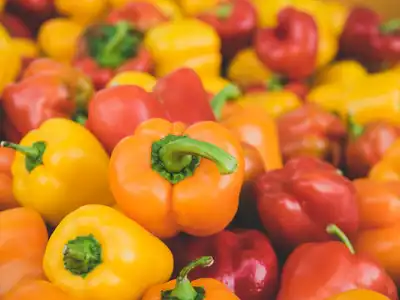
Can You Freeze Bell Peppers?
Yes, you can freeze bell peppers without blanching. Wash, core, seed, and cut them, then pack them raw or tray-freeze the pieces first so they stay loose. The National Center for Home Food Preservation recommends raw-packed peppers for cooked or uncooked uses and gives a separate blanched method for cooked dishes. Expect a softer texture after freezing, so peppers work best in fajitas, stir-fries, soups, and stews rather than salads. For best quality, use them within about 8 to 12 months at 0°F (-18°C).
Sources & References
This information is based on official guidelines from trusted food safety authorities:
Freezing Onions
View Source →Foods That Do Not Freeze Well
View Source →Using, Storing and Preserving Onions
View Source →Freezing Onions - PreserveSmart
View Source →How to Use Onions
View Source →Food Selection & Storage
View Source →Preserving Onions and Garlic
View Source →Onions - UC Master Food Preserver Program of Orange County
View Source →Freezing and Food Safety
View Source →How to chill, freeze and defrost food safely
View Source →Onions
View Source →
About the Author

Disclaimer
The information on this website is provided for general informational purposes only. While we work to keep our food storage and freezing guides accurate and current, we are not food safety professionals, nutritionists, or medical experts, and our recommendations may not account for every individual circumstance, product type, or storage condition.
Always consult official food safety guidance (such as your national food safety agency) and use your own judgment before consuming stored or frozen food. CanIFreeze.com assumes no responsibility or liability for any loss, damage, illness, or other adverse outcome resulting from reliance on the information provided on this site.
CanIFreeze.com is a participant in the Amazon Associates Program, an affiliate advertising program designed to provide a means for sites to earn advertising fees by linking to Amazon.com and its affiliated sites. As an Amazon Associate we earn from qualifying purchases made through links on this site, at no extra cost to you. Product links are clearly marked where they appear.
Disclaimer date: