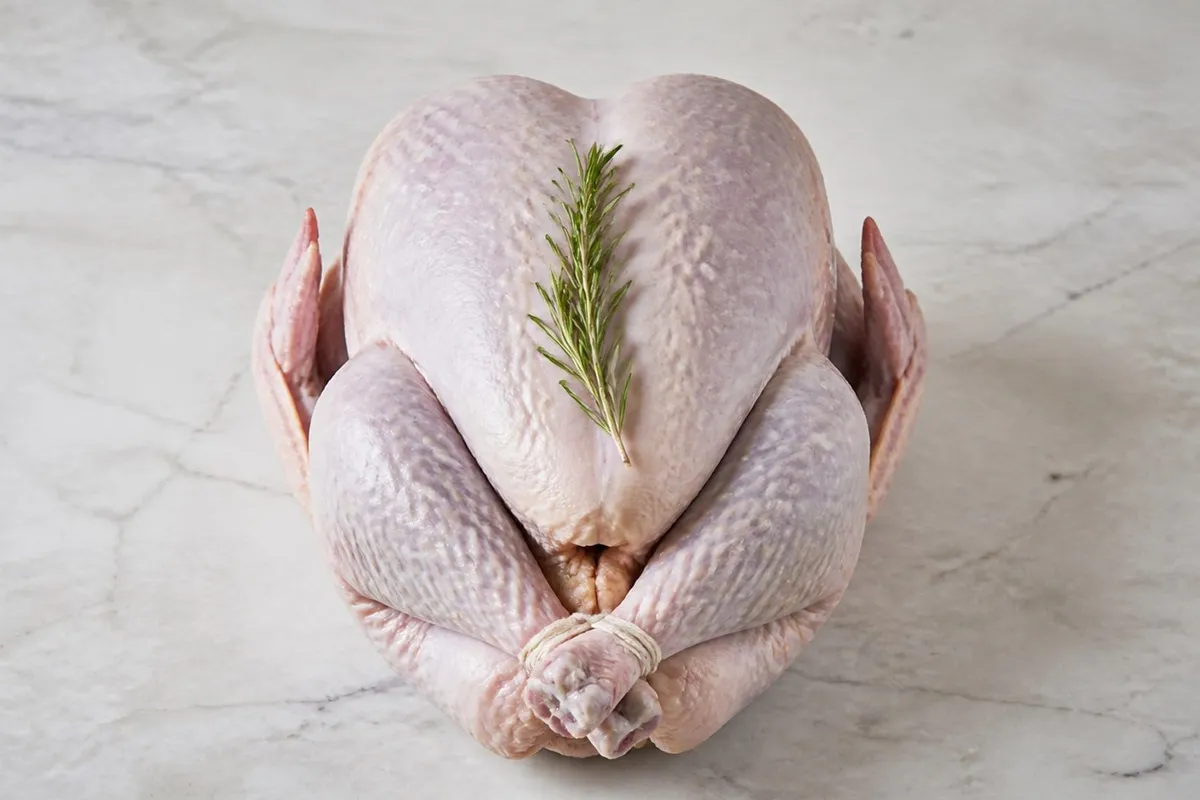
Official Storage Guidelines for Turkey
🇺🇸 USDA Guidelines
🇬🇧 FSA Guidelines
Disclaimer: This information is provided for general guidance only. It is based on publicly available USDA and FSA recommendations at the time of publication. Storage times may vary depending on handling, packaging, and storage conditions. Always check official sources and use your best judgment to ensure food safety.
This guide contains Amazon affiliate links, marked ↗. If you buy through one, we may earn a commission at no extra cost to you. Learn more about affiliate links.
Frequently Asked Questions
How long can you freeze turkey?
For best quality, USDA guidance gives a whole raw turkey 1 year and raw pieces 9 months at 0°F (-18°C). Plain cooked turkey is best within 4 months; covering it with chicken broth or gravy extends the quality window to about 6 months by protecting it from air. These are quality limits, not safety deadlines.
Can you refreeze a thawed turkey?
Yes, if it thawed in the refrigerator and remained at 40°F (4°C) or below. Expect some moisture loss. A turkey thawed in cold water or the microwave must be cooked before it is frozen again. Do not refreeze turkey thawed on the counter or left out beyond the 2-hour limit.
Can you cook turkey from frozen?
An unstuffed turkey can be oven-cooked from frozen, but USDA says it will take at least 50% longer. Remove the giblet packet as soon as it loosens and verify 165°F (74°C) in the breast, innermost thigh and wing. Never deep-fry a frozen or partly frozen turkey.
What is the best way to freeze leftover turkey?
Remove meat from the carcass, divide it into meal-size portions, and package it airtight. Freeze breast slices with a little broth or gravy to limit drying. Freeze the carcass separately for stock. Do not freeze an entire cooked bird merely for presentation; smaller portions cool, freeze and thaw more safely and evenly.
How long does a turkey take to thaw?
In the refrigerator, allow about 24 hours per 4-5 lb: roughly 1-3 days for 4-12 lb, 3-4 days for 12-16 lb, 4-5 days for 16-20 lb, and 5-6 days for 20-24 lb. Cold-water thawing takes about 30 minutes per lb and requires fresh cold water every 30 minutes.
Turkey Freezing and Storage Guide
Turkey is highly freezer-friendly, but whole raw birds, raw portions and cooked leftovers need different treatment. Its 1-year freezer window for a whole raw bird actually beats every red meat on this site, including beef, lamb, and pork, thanks to poultry fat’s own resistance to oxidation. A factory-frozen whole turkey can stay in its intact packaging until needed. A fresh bird or loosely wrapped portion needs close freezer wrap or an airtight bag to limit dehydration.
How to Freeze a Whole Raw Turkey
Freeze before the package use-by date and within the 1-2 day refrigerated window. Keep intact vacuum packaging if it is undamaged; overwrap thin retail film for long storage. Label the freezing date and leave enough freezer space for cold air to circulate until the bird is solid.
Do not rinse raw turkey. Washing can splash bacteria around the sink, while adequate cooking is what makes the meat safe. Freezing also does not kill every harmful organism; it pauses growth.
How to Freeze Turkey Breast and Other Pieces
Divide breasts, thighs, legs, wings or cutlets into the amounts you cook at once. Press freezer wrap directly against the meat, then place it in a heavy freezer bag and remove as much air as practical. Pieces keep their best quality for about 9 months and thaw much faster than a whole bird.
How to Freeze Cooked Turkey
Within 2 hours of serving, remove the meat from the carcass and transfer it to shallow containers. Freeze slices or chopped meat in useful portions. White meat is lean and can dry out, so freezing it under gravy or broth is especially effective. Keep stuffing, cranberry sauce and mashed potatoes in separate containers because they thaw and reheat differently.
Safe Thawing and Reheating
Refrigerator thawing is the lowest-effort choice, but it requires several days for a large bird. Put the turkey on a rimmed tray on the bottom shelf. For cold-water thawing, keep it in a leak-proof bag, submerge it in cold tap water and replace the water every 30 minutes. Microwave only if the bird fits and can go straight into cooking.
Cook raw turkey to 165°F (74°C), verified with an instant-read thermometer(affiliate link, opens Amazon). Reheat cooked leftovers to the same temperature. If the turkey smells sour, feels sticky or slimy, or was mishandled before freezing, discard it. Freezer burn is dry, pale damage and affects quality rather than safety.
Freeze the stuffing separately from the bird so both foods cool quickly and reheat evenly.
Editor's Picks
Gear Worth Buying for Turkey
Weber Instant-Read Digital Thermometer
Checks the breast, thigh and wing for the safe 165°F (74°C) target without relying on color or cooking time.
Shop on AmazonReynolds Kitchens Plastic-Coated Freezer Paper (3 Rolls)
Provides a moisture-resistant close wrap for turkey portions before they go into an outer freezer bag.
Shop on AmazonStasher Stand-Up Mid Reusable Silicone Bag (56 oz)
A premium, reusable stand-in for disposable freezer bags - freezer, oven, and dishwasher safe.
Shop on AmazonRubbermaid Brilliance Airtight Food Storage Containers, 24-Piece Set
A complete, leak-proof set that covers nearly any portion size this guide calls for.
Shop on Amazon
As an Amazon Associate, we earn from qualifying purchases.
Important Safety Guidelines
- Refrigerate fresh raw turkey at 40°F (4°C) or below and cook or freeze it within 1-2 days.
- A whole raw turkey keeps best quality for 1 year; raw turkey pieces keep for 9 months.
- Freeze plain cooked turkey for up to 4 months, or turkey covered with broth or gravy for up to 6 months.
- These freezer times describe quality. Food kept continuously at 0°F (-18°C) remains safe indefinitely.
- Thaw a whole turkey in the refrigerator for about 24 hours per 4-5 lb, or in cold water for about 30 minutes per lb while changing the water every 30 minutes.
- Cook turkey immediately after cold-water or microwave thawing. Turkey thawed in the refrigerator can remain there 1-2 days and may be safely refrozen.
- Never thaw turkey on the counter.
- Cook raw turkey to 165°F (74°C), measured in the thickest breast and innermost thigh and wing.
- Refrigerate or freeze cooked turkey within 2 hours, carving large birds into smaller portions so they cool quickly.
- Reheat leftovers to 165°F (74°C).
Key Safety Reminders
- Always label containers with freezing date
- Use airtight containers to prevent freezer burn
- Follow proper thawing procedures
You Might Also Like
Can You Freeze Bacon?
Yes, you can freeze bacon, both raw and cooked. Raw bacon holds best quality for about 1 month in the freezer (some producers say up to 4 months), while cooked bacon is good for about 1 month as well. That's a shorter window than most raw meats get, and it's not about bacteria - it's the high fat content slowly turning rancid, a chemical process freezing only slows, not stops. Bacon stays safe indefinitely at 0°F (-18°C); quality is what actually declines.
Can You Freeze Beef and Roast Beef?
Yes, you can freeze raw beef, cooked beef, and roast beef. Freeze raw roasts and other whole cuts for 4 to 12 months for best quality, while cooked beef is best within 2 to 3 months. Divide sliced roast beef with parchment, remove as much air as possible, and thaw it in the refrigerator so it stays juicy and safe.

Can You Freeze Cheesecake?
Yes, you can freeze cheesecake for up to 3 months with excellent results. The high fat content from cream cheese makes it ideal for freezing. Wrap it tightly after chilling to prevent freezer burn, and always thaw in the refrigerator overnight. Skip adding toppings until after thawing for best quality.
Can You Freeze Chick-fil-A Nuggets?
Yes, you can freeze leftover Chick-fil-A nuggets. Chill them quickly, freeze in a single layer so they don't clump, then reheat in an oven or air fryer rather than a microwave to keep the breading from going soggy. Chick-fil-A doesn't publish its own freezing guidance, so this follows general USDA rules for cooked, breaded chicken.
Sources & References
This information is based on official guidelines from trusted food safety authorities:
Turkey Basics: Safe Thawing
View Source →Turkey Basics: Handling Cooked Dinners
View Source →Cold Food Storage Chart
View Source →Christmas food hygiene
View Source →
About the Author

Disclaimer
The information on this website is provided for general informational purposes only. While we work to keep our food storage and freezing guides accurate and current, we are not food safety professionals, nutritionists, or medical experts, and our recommendations may not account for every individual circumstance, product type, or storage condition.
Always consult official food safety guidance (such as your national food safety agency) and use your own judgment before consuming stored or frozen food. CanIFreeze.com assumes no responsibility or liability for any loss, damage, illness, or other adverse outcome resulting from reliance on the information provided on this site.
CanIFreeze.com is a participant in the Amazon Associates Program, an affiliate advertising program designed to provide a means for sites to earn advertising fees by linking to Amazon.com and its affiliated sites. As an Amazon Associate we earn from qualifying purchases made through links on this site, at no extra cost to you. Product links are clearly marked where they appear.
Disclaimer date: