Official Storage Guidelines for Bread Dough
🇺🇸 USDA Guidelines
🇬🇧 FSA Guidelines
Disclaimer: This information is provided for general guidance only. It is based on publicly available USDA and FSA recommendations at the time of publication. Storage times may vary depending on handling, packaging, and storage conditions. Always check official sources and use your best judgment to ensure food safety.
This guide contains Amazon affiliate links, marked ↗. If you buy through one, we may earn a commission at no extra cost to you. Learn more about affiliate links.
Frequently Asked Questions
Is it better to freeze bread dough before or after the first rise?
Both stages can work, but freezing between the first and second proof is usually more convenient for shaped loaves and rolls. Let the first rise finish, gently deflate the dough, shape it, and freeze it covered. After thawing, it only needs its final proof before baking. Iowa State University Extension reports that dough may be frozen before the first rise or after a rise, while also noting that home results vary.
A freezer-dough recipe is the safest bet for consistent volume. Oregon State and North Dakota State extension guidance specifically recommends recipes developed for freezing because home freezing is slower than commercial blast freezing and can damage yeast.
Why did my frozen bread dough fail to rise?
The most common causes are yeast damage during slow freezing, too much freezer time, a dry crust, or proofing conditions that were too cool. Colorado State University notes that longer frozen storage inactivates yeast and weakens gluten. That is why the quality window is only about 1 month.
Keep the dough tightly covered, thaw it patiently, and judge the final proof by volume rather than the clock. Some freezer-specific recipes use slightly more yeast and strong bread flour to compensate. If the dough was already overproofed before freezing, the remaining structure may not hold another full rise.
How do you thaw frozen bread dough overnight?
Move the wrapped dough to a greased pan or covered container in the refrigerator the night before baking. Leave room for expansion. In the morning, let it finish thawing and proof at a suitable room temperature until visibly puffy or approximately doubled, as directed by the recipe.
Do not leave it unwrapped because the surface can dry into a skin that prevents even expansion. Refrigerator thawing is slower but makes timing easier and keeps dough containing milk or egg safely cold. Bake once the final proof is complete and do not taste the raw dough.
Can you freeze sourdough or pizza dough the same way?
Pizza dough balls usually tolerate freezing reasonably well. Lightly oil each portion, wrap or bag it, and allow a slow refrigerator thaw followed by time at room temperature before stretching. Sourdough dough is less predictable because starter strength, hydration, fermentation stage, and freezing speed all affect recovery.
For sourdough, freezing a fully baked bread loaf is generally more reliable than freezing the dough. If you experiment with dough, freeze one small portion after bulk fermentation and keep notes rather than risking the whole batch.
Can bread dough be baked straight from frozen?
Ordinary yeast dough should not go directly from freezer to oven. It needs to thaw and complete the remaining proof so the yeast can produce gas and the dough can expand. Baking a frozen center sets the outside before the inside has risen, producing a dense or uneven loaf.
The exception is a commercial product whose package specifically provides bake-from-frozen directions. For homemade loaves, rolls, cinnamon rolls, and pizza bases, follow the tested recipe's thawing and proofing instructions.
Bread Dough Freezing and Storage Guide
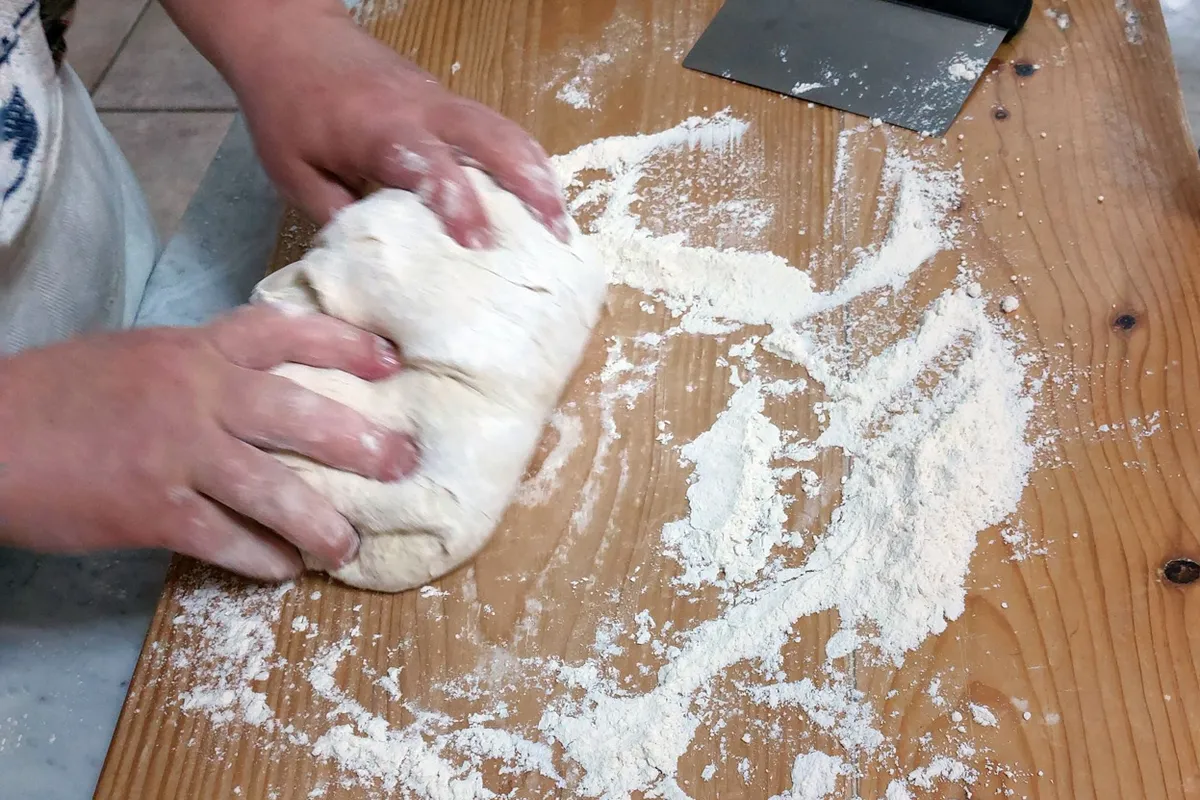
Freezing bread dough is possible, but it is not as forgiving as freezing a baked loaf. Ice crystals and time can injure yeast cells and weaken the gluten network that traps their gas. Commercial frozen dough is formulated and frozen quickly to limit that damage. A domestic freezer works more slowly, so a dough that rose strongly when fresh can produce a smaller loaf after thawing. Laminated, butter-layered doughs like croissant and puff pastries face a different set of freezer risks entirely, since their concern is fat layers merging rather than yeast losing vigor.
When to Freeze Bread Dough
For the best home method, use a recipe intended for frozen dough. Let the dough complete its first rise, gently deflate it, and shape rolls, a disk, or a loaf. Freeze the covered pieces on a sturdy rimmed half sheet(affiliate link, opens Amazon) or in a greased loaf pan for 1 to 2 hours, then wrap tightly and place in an airtight freezer bag. Iowa State Extension also allows freezing after kneading and before the first rise, but that leaves both proofs to complete after thawing.
Use frozen yeast dough within 1 month. Illinois Extension and Colorado State University both give a one-month quality window for unbaked yeast bread and roll dough. Label the dough with the remaining step, such as “thaw, final proof, bake at 375°F,” because different shapes and recipes cannot share one universal time.
How Long Frozen Bread Dough Lasts
The one-month window is a quality target for yeast strength and gluten performance. A dough that rises slowly after thawing may need more proofing time, but discard it if the package leaked during an uncertain thaw or the dough develops mold, coloured patches or an objectionable smell.
How to Thaw, Proof and Bake Frozen Dough
Thaw covered dough in the refrigerator, then give it time to finish proofing before baking. If convenience matters more than an unbaked make-ahead stage, freeze fully baked bread instead. Dough also pairs with make-ahead toppings such as mozzarella, tomatoes, onions, and pesto, but every raw-flour dough still needs complete baking before eating.
Editor's Picks
Gear Worth Buying for Bread Dough
Nordic Ware Naturals Baker's Half Sheet Pan
A rigid half sheet gives shaped rolls and dough portions enough room to freeze separately before they are bagged.
Shop on AmazonStasher Stand-Up Mid Reusable Silicone Bag (56 oz)
A premium, reusable stand-in for disposable freezer bags - freezer, oven, and dishwasher safe.
Shop on AmazonRubbermaid Brilliance Airtight Food Storage Containers, 24-Piece Set
A complete, leak-proof set that covers nearly any portion size this guide calls for.
Shop on Amazon
As an Amazon Associate, we earn from qualifying purchases.
Important Safety Guidelines
- Raw flour can contain harmful bacteria, and raw dough may also contain raw egg. Do not taste unbaked dough.
- Wash hands, utensils, and work surfaces after handling raw dough and flour.
- Freeze dough promptly in a freezer-safe, airtight package at 0°F (-18°C) or below.
- Keep dough covered during freezing, thawing, and proofing so a dry skin does not restrict expansion.
- Thaw covered dough in the refrigerator for the most controlled result, then proof until visibly expanded according to the recipe.
- Bake bread fully. Freezing is not a kill step for organisms that may be present in raw flour.
- Discard dough with mold, colored patches, an objectionable odor, or a package that leaked after an uncertain thaw.
Key Safety Reminders
- Always label containers with freezing date
- Use airtight containers to prevent freezer burn
- Follow proper thawing procedures
You Might Also Like
Can You Freeze Bread?
Yes, bread is one of the best foods you can freeze - in fact, freezing is the single best way to store bread beyond a day or two, better than the counter and much better than the fridge. Wrapped well and frozen at 0°F (-18°C), a loaf holds its texture and flavor for 3-5 months, and slices go straight from freezer to toaster with no real quality hit. The one thing freezing can't fix is bread that's already stale or moldy going in, so freeze it while it's fresh, not as a last resort.
Can You Freeze Cake?
Yes, you can freeze cake, and for most types it works very well. Plain or buttercream-frosted cake holds good quality for roughly 3 to 6 months in the freezer, while cakes topped with egg-white frostings, custard fillings, or fondant hold up far worse and are better off frozen plain. Layer cakes, sponge cakes, and sheet cakes all freeze the same basic way: cool completely, wrap airtight in a rigid container so nothing gets crushed, and keep the freezer at 0°F (-18°C) or below. Cheesecake behaves differently enough, thanks to its dense dairy filling, that it's worth checking the dedicated cheesecake freezing guide rather than treating it like an ordinary cake.

Can You Freeze Cookie Dough?
Yes, cookie dough freezes remarkably well and actually benefits from it. Both homemade and store-bought varieties can be frozen for 2-3 months while maintaining quality. The freezer acts like a pause button, keeping your dough fresh until you're ready to bake those warm cookies whenever a craving strikes.

Can You Freeze Cookies?
Yes, most baked cookies freeze very well, and well-wrapped plain cookies can hold good quality for up to 6 months, though 2 to 3 months is a safer bet for anything iced, filled, or delicate. Cool them completely, separate soft and crisp styles, and pack them airtight with parchment between layers. Freeze icing, jam fillings, and delicate decorations only when their texture is known to hold up.
Sources & References
This information is based on official guidelines from trusted food safety authorities:
Freezing Yeast Dough
View Source →Freezing convenience foods that you've prepared at home
View Source →Food Storage for Safety and Quality
View Source →Freezer Storage
View Source →How to chill, freeze and defrost food safely
View Source →
About the Author

Disclaimer
The information on this website is provided for general informational purposes only. While we work to keep our food storage and freezing guides accurate and current, we are not food safety professionals, nutritionists, or medical experts, and our recommendations may not account for every individual circumstance, product type, or storage condition.
Always consult official food safety guidance (such as your national food safety agency) and use your own judgment before consuming stored or frozen food. CanIFreeze.com assumes no responsibility or liability for any loss, damage, illness, or other adverse outcome resulting from reliance on the information provided on this site.
CanIFreeze.com is a participant in the Amazon Associates Program, an affiliate advertising program designed to provide a means for sites to earn advertising fees by linking to Amazon.com and its affiliated sites. As an Amazon Associate we earn from qualifying purchases made through links on this site, at no extra cost to you. Product links are clearly marked where they appear.
Disclaimer date: