Official Storage Guidelines for Pastries
🇺🇸 USDA Guidelines
🇬🇧 FSA Guidelines
Disclaimer: This information is provided for general guidance only. It is based on publicly available USDA and FSA recommendations at the time of publication. Storage times may vary depending on handling, packaging, and storage conditions. Always check official sources and use your best judgment to ensure food safety.
This guide contains Amazon affiliate links, marked ↗. If you buy through one, we may earn a commission at no extra cost to you. Learn more about affiliate links.
Frequently Asked Questions
Can you freeze croissants and reheat them crisp?
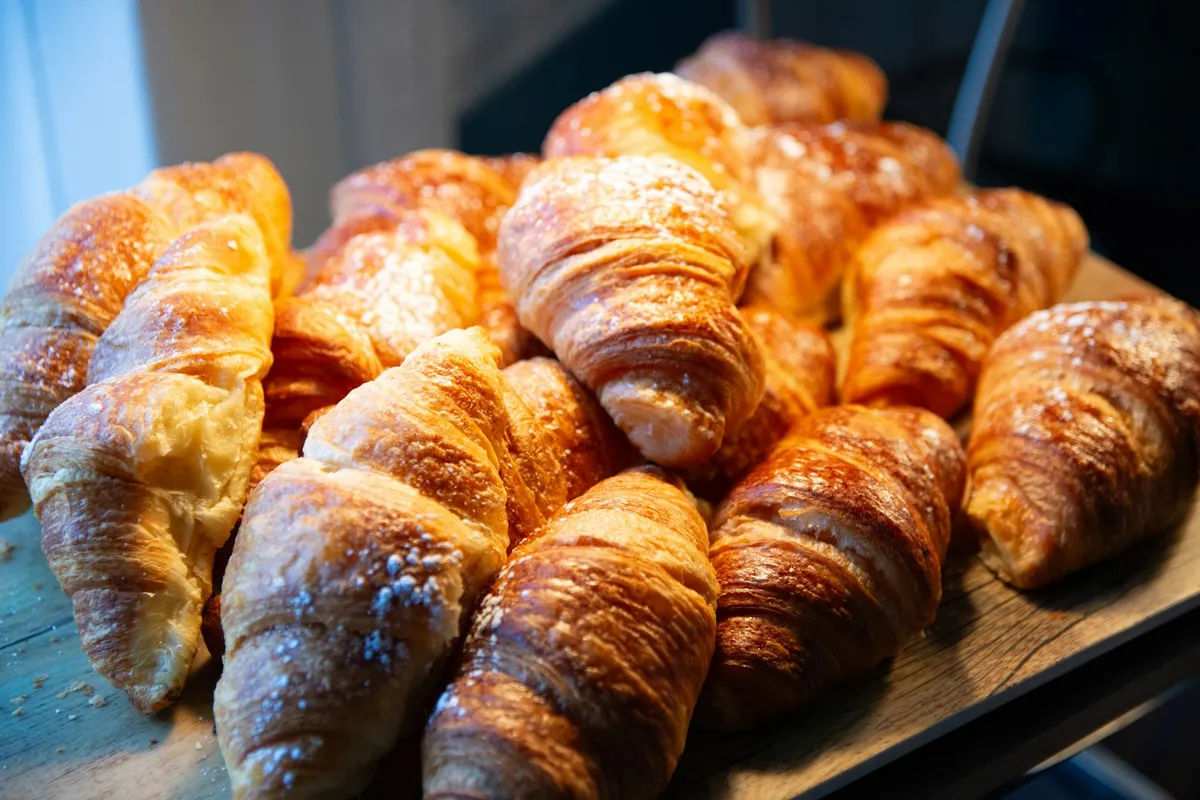
Yes, and timing matters more than most home bakers assume. Freeze croissants the day they are baked, once they are completely cool, since any residual warmth becomes trapped condensation that softens the outer layers. Protect them in a rigid container or a double wrap so their laminated structure, dozens of thin alternating layers of dough and butter, is not crushed under heavier items.
Reheat from frozen or thawed in a moderate oven, around 325 to 350°F (163 to 177°C), until the exterior crisps back up and the center is warm through. A microwave is the wrong tool here: it adds moisture and heats unevenly, which turns butter-rich laminated layers pliable and greasy rather than flaky. If you only have a few minutes, a toaster oven does a passable job that a microwave cannot match.
Danish pastries and croissants both rely on yeast for their rise, which is a detail plain puff pastry does not share. Yeast activity slows in the freezer but does not stop entirely, so a yeasted laminated pastry is more sensitive to storage time than an unleavened one, which is part of why this guide's freezer window skews shorter than a plain baked good like a cookie.
Which pastry fillings do not freeze well?
Custard and cream fillings can separate, turn watery, or become lumpy. Clemson University's Home & Garden Information Center, drawing on tested prepared-foods research, is direct about it: custards and cream pies soak into the crust during freezer storage, and that same soaking tendency shows up in cream-filled Danish and eclairs. Wet fruit filling causes a related problem, soaking the pastry from the inside rather than the outside. The pastel de nata guide shows how to limit that damage when the custard is already baked into a laminated shell.
Fillings thickened the ordinary way, with flour or cornstarch, are also a weak point. Penn State Extension's tested pie-freezing research found that flour- and cornstarch-thickened fillings tend to separate during freezing, and recommends tapioca or a modified food starch instead, because those thickeners hold their set through a freeze-thaw cycle far better. If you bake your own fruit-filled turnovers or hand pies regularly, switching the thickener in the filling recipe solves more of the sogginess problem than any wrapping technique will.
The reliable fix is still to freeze plain shells or unfilled dough where possible, then fill and finish after baking and cooling. Firm almond paste, chocolate, and well-drained, tapioca-thickened fruit generally hold up; loose custard, softly whipped cream, and flour-thickened fruit generally do not.
Can you freeze savory meat pastries?
Yes, but handle them as cooked leftovers rather than as bakery items. Cool them promptly, freeze in shallow portions so they chill through quickly, thaw in the refrigerator, and heat the center to 165°F (74°C) before serving, the same safe-reheating threshold that applies to any cooked meat dish.
Keep gravy or sauce inside a savory pastry modest, since excess liquid softens the base from the inside during storage exactly the way a wet fruit filling does in a sweet pastry. A rigid airtight container(affiliate link, opens Amazon) prevents delicate lids and lattice tops from being crushed, which matters more for savory hand pies and vol-au-vents than it does for a solid-topped dish.
If the pastry contains raw meat that was assembled and frozen unbaked, treat it like any raw-protein product: it needs to reach a safe internal temperature during its first cook, not a reheat, and should never be assembled, frozen, then baked only partway.
Should pastries be glazed before freezing?
Generally no. A plain sugar glaze often turns sticky and translucent as condensation forms underneath it during freezer storage, and powdered sugar dusting all but disappears into a damp surface once thawed. Crisp streusel or nut toppings soften for the same reason: any moisture migrating through the pastry as it thaws finds the topping first.
Clemson HGIC's frosting research on cakes offers a useful parallel here: fudge-style frostings and powdered sugar icings made with fat freeze reasonably well, while cooked candy-type icings and, separately, egg-white or meringue toppings tend to weep or turn sticky. Danish glaze and croissant sugar dust behave more like the fragile end of that spectrum than the sturdy end.
For the cleanest bakery-style finish, freeze the pastry plain, reheat it, let it cool for a few minutes so it is not steaming, then glaze or dust it fresh. That short delay is the difference between a crisp, defined glaze and a soggy one.
Can you freeze unbaked pastry dough or shells?
Yes, and it is often the better freezer strategy than freezing the finished bake, especially for pie-style and hand-pie pastry. Penn State Extension's tested method rolls dough into flat circles, stacks them with freezer paper separators, and freezes them flat before bagging, which avoids the crushed, misshapen edges that come from freezing a fully assembled item. The same freezer-paper-between-layers approach works for stacked, unbaked pastry shells in their pans.
Do not cut vent holes, docking marks, or decorative lattice into unbaked filled pastry before it goes into the freezer. Extension guidance recommends adding those just before baking, since a pre-cut vent gives filling an escape route to weep through during weeks of storage rather than only during the short bake itself.
Baking from frozen generally needs a hotter start and more time than a fresh pastry: Penn State's tested method for a full frozen pie calls for the lower third of a preheated oven, an initial blast at 425°F (218°C), then a drop to 350°F (177°C), with roughly 20 to 25 extra minutes total compared with an unfrozen bake. Smaller unbaked hand pies and turnovers scale that down, but the same lower-then-higher heat logic applies.
Pastries Freezing and Storage Guide
Pastry quality is fundamentally a moisture-management problem. Flaky, laminated layers need dry heat and physical protection from crushing; creamy fillings need cold handling and often resist freezing altogether; and unbaked dough needs to be shaped and separated before it ever goes hard as a rock in the freezer.
How to Freeze Baked Pastries
Cool baked pastries thoroughly, freeze decorated pieces uncovered on a tray only until firm, then pack them airtight. Use a rigid freezer container(affiliate link, opens Amazon) for croissants and Danish pastries so heavier items in the freezer cannot flatten their delicate layers. If you are freezing more than a couple of pieces, freezer paper(affiliate link, opens Amazon) between layers keeps them from fusing together the way plastic wrap tends to, since ordinary plastic cling wrap sticks stubbornly to frozen pastry surfaces in a way waxed freezer paper does not.
Baked Versus Unbaked Pastry
Commercial puff pastry sheets should follow their package directions, which are calibrated to that specific product’s fat content and lamination. Homemade shaped pastry, particularly pie-style dough and hand pies, often does better frozen unbaked than frozen finished. Penn State Extension’s tested approach rolls dough flat, separates layers with freezer paper, and bakes straight from frozen with extra time and a hot initial oven blast, a method that sidesteps the soggy-bottom problem you get from freezing a fully assembled, already-baked item. A finished bakery pastry like a croissant, by contrast, is simplest to freeze already baked, since laminated dough is fussy to shape from a raw, cold state at home.
Fillings Are the Real Variable
Whether a filled pastry survives the freezer has less to do with the pastry and more to do with what is inside it. Flour- and cornstarch-thickened fruit fillings separate on thawing, according to Penn State’s tested pie research, while tapioca or modified starch holds together. Custard, softly whipped cream, and egg-white toppings soak into crusts or turn watery, per Clemson HGIC’s prepared-foods guidance. If you bake your own filled pastries specifically to freeze, choosing the filling recipe with freezing in mind saves more disappointment than any wrapping trick.
Reheating for Flaky Layers
Use dry oven heat, not a steamy microwave, and add fresh cream, glaze, or powdered sugar after reheating rather than before freezing. Large, delicate pastries such as Costco croissants also need a rigid container so their flaky layers are not crushed in the freezer. For adjacent baked goods with different freezer behavior, compare bread dough, cake, and cheesecake. The flour that goes into pastry dough is itself a raw ingredient with its own freezer and food-safety considerations worth knowing before you mix a batch.
Editor's Picks
Gear Worth Buying for Pastries
Reynolds Kitchens Plastic-Coated Freezer Paper (50 sq ft)
University extension pastry guidance specifically calls for freezer-paper separators between stacked dough and unbaked shells, since ordinary plastic wrap sticks to raw pastry once it freezes solid.
Shop on AmazonStasher Stand-Up Mid Reusable Silicone Bag (56 oz)
A premium, reusable stand-in for disposable freezer bags - freezer, oven, and dishwasher safe.
Shop on AmazonRubbermaid Brilliance Airtight Food Storage Containers, 24-Piece Set
A complete, leak-proof set that covers nearly any portion size this guide calls for.
Shop on Amazon
As an Amazon Associate, we earn from qualifying purchases.
Important Safety Guidelines
- Refrigerate pastries filled with custard, cream, cream cheese, meat, or egg; do not treat them like shelf-stable croissants.
- Cool baked pastries before freezing to avoid condensation and soggy layers.
- Never taste raw pastry dough; FDA identifies uncooked flour as a potential source of harmful bacteria.
- Freeze cream-filled pastries promptly and thaw them in the refrigerator.
- Keep savory meat pastries cold and reheat leftovers to 165°F (74°C).
- Discard pastries with mold, sour dairy filling, or rancid fat aromas.
- Do not cut vent holes or docking marks into unbaked filled pastry before freezing; Penn State Extension advises adding them just before baking so filling doesn't leak out during storage.
Key Safety Reminders
- Always label containers with freezing date
- Use airtight containers to prevent freezer burn
- Follow proper thawing procedures
You Might Also Like
Can You Freeze Bread?
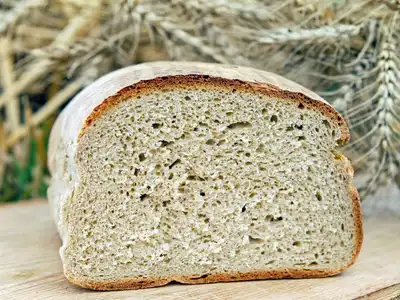
Yes, bread is one of the best foods you can freeze - in fact, freezing is the single best way to store bread beyond a day or two, better than the counter and much better than the fridge. Wrapped well and frozen at 0°F (-18°C), a loaf holds its texture and flavor for 3-5 months, and slices go straight from freezer to toaster with no real quality hit. The one thing freezing can't fix is bread that's already stale or moldy going in, so freeze it while it's fresh, not as a last resort.
Can You Freeze Bread Dough?
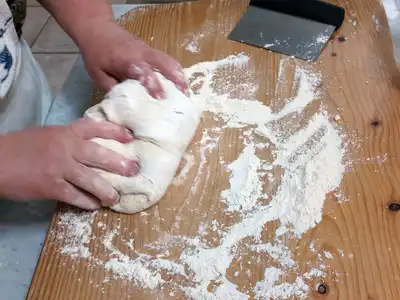
Yes, you can freeze yeast bread dough, but home-frozen dough may rise less than fresh dough because slow freezing damages yeast and weakens gluten. For the most predictable result, use a freezer-dough recipe, freeze shaped portions after the first rise, seal them well, and use them within 1 month.
Can You Freeze Cake?
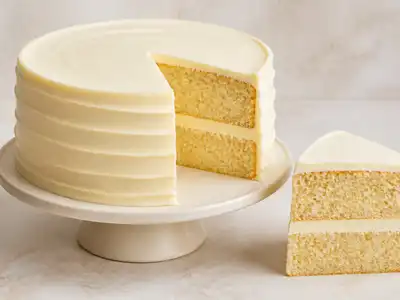
Yes, you can freeze cake, and for most types it works very well. Plain or buttercream-frosted cake holds good quality for roughly 3 to 6 months in the freezer, while cakes topped with egg-white frostings, custard fillings, or fondant hold up far worse and are better off frozen plain. Layer cakes, sponge cakes, and sheet cakes all freeze the same basic way: cool completely, wrap airtight in a rigid container so nothing gets crushed, and keep the freezer at 0°F (-18°C) or below. Cheesecake behaves differently enough, thanks to its dense dairy filling, that it's worth checking the dedicated cheesecake freezing guide rather than treating it like an ordinary cake.
Can You Freeze Cheesecake?
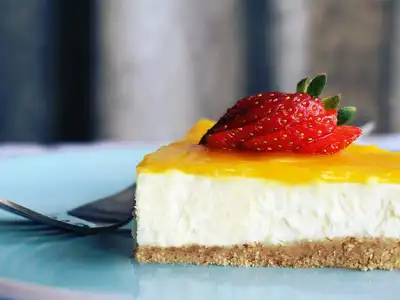
Yes, you can freeze cheesecake for up to 3 months with excellent results. The high fat content from cream cheese makes it ideal for freezing. Wrap it tightly after chilling to prevent freezer burn, and always thaw in the refrigerator overnight. Skip adding toppings until after thawing for best quality.
Sources & References
This information is based on official guidelines from trusted food safety authorities:
Handling Flour Safely: What You Need to Know
View Source →How to chill, freeze and defrost food safely
View Source →Freezing Pies and Pie Fillings
View Source →Freezing Prepared Foods
View Source →
About the Author

Disclaimer
The information on this website is provided for general informational purposes only. While we work to keep our food storage and freezing guides accurate and current, we are not food safety professionals, nutritionists, or medical experts, and our recommendations may not account for every individual circumstance, product type, or storage condition.
Always consult official food safety guidance (such as your national food safety agency) and use your own judgment before consuming stored or frozen food. CanIFreeze.com assumes no responsibility or liability for any loss, damage, illness, or other adverse outcome resulting from reliance on the information provided on this site.
CanIFreeze.com is a participant in the Amazon Associates Program, an affiliate advertising program designed to provide a means for sites to earn advertising fees by linking to Amazon.com and its affiliated sites. As an Amazon Associate we earn from qualifying purchases made through links on this site, at no extra cost to you. Product links are clearly marked where they appear.
Disclaimer date: