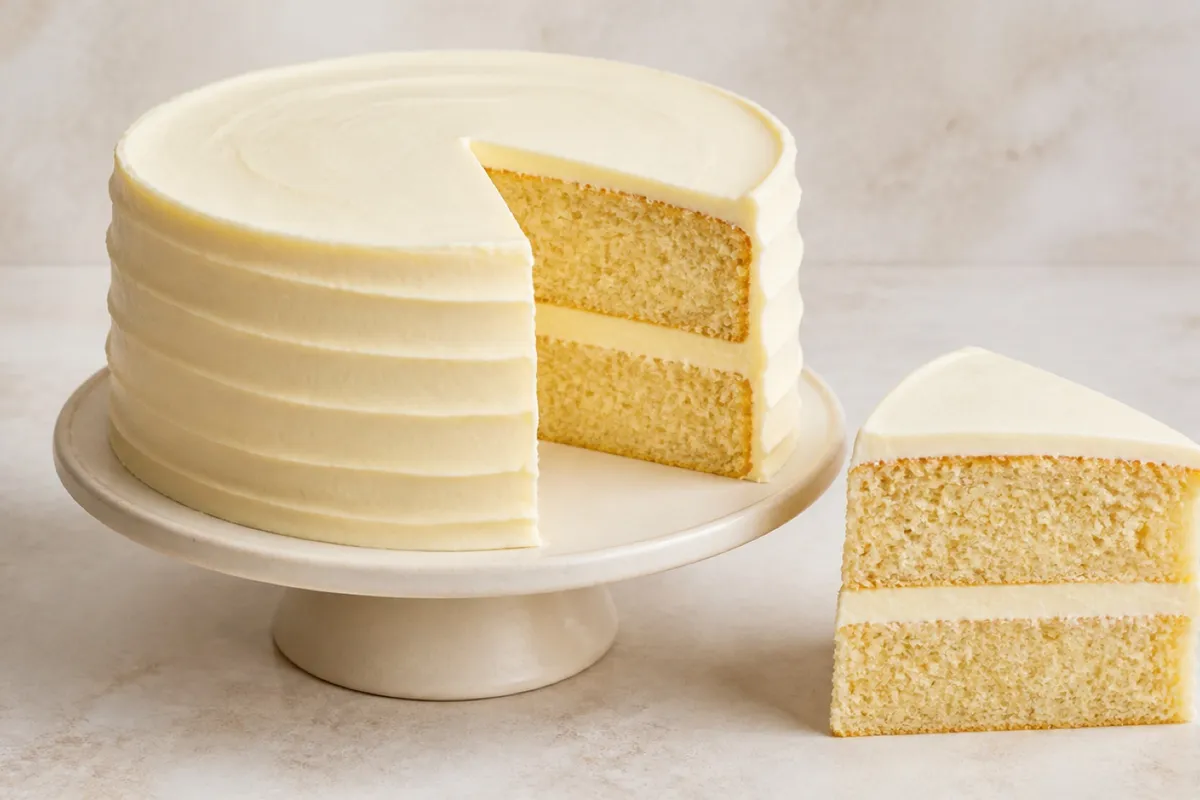
Official Storage Guidelines for Cake
🇺🇸 USDA Guidelines
🇬🇧 FSA Guidelines
Disclaimer: This information is provided for general guidance only. It is based on publicly available USDA and FSA recommendations at the time of publication. Storage times may vary depending on handling, packaging, and storage conditions. Always check official sources and use your best judgment to ensure food safety.
This guide contains Amazon affiliate links, marked ↗. If you buy through one, we may earn a commission at no extra cost to you. Learn more about affiliate links.
Frequently Asked Questions
Does cake freeze well?
Yes, but how well depends almost entirely on what's on top of it. Kansas State University Research and Extension, which publishes specific guidance for cakes and cupcakes, draws a clear line: plain, unfrosted cake keeps good quality in the freezer for up to 6 months, while frosted cake is good for up to 3 months. North Dakota State University Extension's food storage chart lands in the same range, listing 6 months for baked cakes generally and 6 to 12 months for angel food cake specifically, which makes sense since angel food has almost no fat to go rancid and no frosting to weep or separate.
The reason frosting shortens the window isn't food safety, it's texture. Buttercream, ganache, and most American-style frostings hold their structure fine through a freeze-thaw cycle, but they're still an emulsion of fat, sugar, and sometimes dairy, and repeated temperature swings gradually degrade that structure. Plain cake crumb, by contrast, is mostly flour, sugar, fat, and air: low-moisture, low-risk, and forgiving.
Sponge cake and other very light, low-fat cakes (genoise, chiffon, angel food) generally freeze best of all in this category, since there's less fat to develop off-flavors and no dense filling to separate. Dense, rich cakes like pound cake or anything with a custard or fruit filling sit at the other end: still freezable, but with a shorter realistic quality window than the numbers above suggest.
None of this is a hard safety cutoff. Cake kept continuously at 0°F (-18°C) or below stays safe to eat well past these windows, per National Center for Home Food Preservation guidance that frozen food is safe indefinitely while frozen. What changes is flavor, moisture, and how much the frosting has started to dull or separate, which is exactly why the quality-focused numbers above are worth following even though nothing bad happens safety-wise if you go a bit longer.
Can I freeze a cake with fondant or elaborate decorations?
Not once it's already decorated, at least not without real risk to the finish. Iowa State University Extension's Answerline is direct about this: freezing fondant is not recommended because condensation forming during thawing can change its consistency and texture. The same guidance goes further for a fully assembled cake, warning that condensation trapped between the fondant and the cake surface underneath can cause bubbling, which shows up as unsightly lumps and soft patches once the cake comes back to temperature.
The underlying problem is that fondant is essentially a sugar paste, and sugar pulls moisture aggressively. Any condensation that forms as a frozen cake warms up gets absorbed unevenly into the fondant surface, turning it sticky, blotchy, or bubbled rather than smooth. This is a texture issue, not a safety one, but it's exactly the kind of thing that ruins a cake meant for a birthday or wedding.
The practical workaround used by working bakers is to freeze the cake before it's decorated. Bake and cool the layers, crumb-coat if you like, wrap tightly, and freeze plain. Move it to the fridge to thaw slowly, bring it fully to room temperature so no condensation is still forming, and only then apply fondant, gum paste decorations, or anything else moisture-sensitive. This keeps the fondant's first and only contact with the cake at room temperature, when there's no longer a temperature gradient driving condensation.
Sugar flowers, gum paste toppers, and other completely dry decorations are a separate story: since they carry almost no moisture themselves, they tend to survive freezing fine sitting on a sturdy buttercream cake, similar to how sprinkles hold up on frozen cupcakes. Fresh flowers, anything with wire or floral foam, and delicate piped royal icing detail are safer added fresh, after the cake is fully decorated and ready to serve.
Can I eat cake directly from frozen, or how do I thaw it without ruining the frosting?
You can eat plain cake almost straight from frozen with barely any wait, but frosted cake needs a slower, more deliberate thaw if you want the icing to look right. Kansas State University Extension's guidance splits the two cleanly: unfrosted cake should thaw covered for 2 to 3 hours at room temperature, after which you can frost or serve it as the recipe calls for, while frosted cake should thaw loosely covered overnight in the refrigerator.
The loosely covered part matters more than it sounds. Wrapping a frosted cake tightly while it thaws traps condensation directly against the icing, which can leave it looking wet, streaky, or slightly melted, especially with buttercream or ganache. Leaving the wrap loose lets moisture escape gradually instead of beading up on the surface. Once the cake has come fully to refrigerator temperature and the frosting feels firm again, you can let it sit at cool room temperature for a final 30 to 60 minutes before serving, which brings out the flavor and softens the crumb without inviting condensation back onto the icing.
If you're short on time, a frosted cake can thaw at cool room temperature instead of in the fridge, but check it more often and keep it away from direct sun or a warm kitchen. Anything with a cream cheese, whipped cream, or custard element should stay in the fridge for the whole thaw, the same way you'd treat a cheesecake coming out of the freezer, rather than sitting out on the counter.
Don't microwave a frosted cake to speed things up. Microwaves heat unevenly, which melts frosting in some spots while the crumb underneath is still cold, and it toughens the texture of the cake itself. If you genuinely need a plain, unfrosted slice warm, a low oven (around 300°F/150°C) for a few minutes works far better than a microwave and mirrors the gentle reheating approach that works for cupcakes.
Can cake be refrozen after it's thawed?
Generally yes, if it was thawed in the refrigerator and hasn't sat out, though each freeze-thaw cycle costs you more texture and moisture than the last. The UK's food safety guidance on chilling, freezing and defrosting confirms the general principle behind this: once food has been frozen and properly thawed, it can be frozen again, though the guidance is more cautious about doing this more than once, particularly once a food has also been cooked or reheated in between. Applied to cake, that means a slice thawed gently in the fridge and kept cold the whole time can go back in the freezer safely, but a cake that spent an afternoon out at a party, warmed through, and started drying out at the edges is a worse candidate for a second freeze, quality-wise.
The National Center for Home Food Preservation's broader freezing principle applies here too: frozen food is safe indefinitely while it stays frozen, and the real risk during thawing is time spent in the temperature range where bacteria multiply, which matters most for cakes carrying dairy fillings, cream cheese frosting, or fresh fruit rather than a plain sponge.
In practice, refreezing plain cake is fairly forgiving since there's little moisture-sensitive filling to break down further. Refreezing a frosted or filled cake is where you'll notice the difference: buttercream can turn slightly grainy, whipped cream or custard elements degrade further, and the crumb dries out a bit more each cycle as ice crystals re-form and rupture more cell walls.
The better long-term habit, especially for a sheet cake or a large layer cake you won't finish in one sitting, is to slice and freeze individual portions from the start rather than thawing the whole cake and refreezing what's left. That way each piece only goes through one freeze-thaw cycle, which keeps quality closer to day one.
What's the best way to freeze a layer cake, sheet cake, or sponge cake?
The method is mostly the same across formats, but a few details change depending on the shape. For a layer cake, bake and cool the layers completely, then freeze them unfrosted and unstacked if possible; individual layers wrapped flat in plastic wrap and foil freeze more evenly and take up less awkward space than a fully assembled cake. Kansas State University Extension specifically calls out layer cakes, angel food, and chiffon cakes as needing a rigid container once wrapped, since their light, delicate crumb crushes easily under other items in a full freezer.
Sheet cake is the most freezer-friendly format precisely because it's flat and dense compared with a stacked layer cake. Cut it into individual squares before freezing if you know you'll want to portion it out later; wrap each square individually or lay them in a single layer separated by parchment in a rigid container, then bag the whole batch once they're firm. This portioning trick mirrors how cupcakes freeze well individually wrapped, and it means you only thaw what you'll actually eat.
Sponge cake, genoise, and other very light, low-fat cakes freeze the most predictably of any type, largely because there's minimal fat to turn rancid and typically no frosting to weep or separate. Wrap the cooled sponge tightly in plastic wrap, then foil or a freezer bag, and it holds up well toward the long end of the roughly 3 to 6 month US quality window, per Kansas State and North Dakota State University Extension guidance.
Whichever format you're freezing, cool the cake fully before wrapping (moisture condensation from a warm cake is what causes sogginess and mold, not the freezing itself), use moisture-proof, vapor-proof wrap or containers as both extension sources recommend, and press out as much air as you can. If the cake is frosted, harden the frosting in the freezer uncovered for an hour or two first so the wrap doesn't stick to and smear the surface.
Is frozen cake still safe to eat, and what about cream cheese frosting, whipped cream, or cheesecake?
Frozen cake stays safe to eat for as long as it's kept solidly frozen at 0°F (-18°C) or below; the National Center for Home Food Preservation is clear that freezing halts bacterial growth entirely, so a cake that's been in the freezer well past its quality window won't make you sick, it will just taste flatter and feel drier than a fresh one. Once thawed, though, cake with any dairy component should be handled like the perishable food it becomes, kept refrigerated, and eaten within the fridge-life window rather than left out.
Cream cheese frosting is a common sticking point. It freezes without any safety issue, but the cream cheese in it turns crumbly and grainy once thawed, the exact texture change described in the cream cheese freezing guide, and mixing it into a frosting doesn't protect it from that change. If you want a cream cheese frosted cake for later, some bakers get better results freezing the cake layers plain and making the frosting fresh closer to serving.
Whipped cream toppings sit in a similar gray zone: plain, unwhipped cream and canned aerosol whipped cream generally don't freeze well, but cream that's already been whipped and lightly sweetened holds up noticeably better for a short freezer stay, a distinction covered in more depth in the heavy cream freezing guide. Either way, expect some loss of that just-whipped airiness on thawing.
Cheesecake is different enough from ordinary cake that it deserves its own approach rather than being lumped in here. It's essentially a dense, baked dairy custard on a crumb base, which freezes and thaws by a different set of rules than a flour-based sponge or layer cake, including its own fridge and freezer windows. If cheesecake is what you're actually freezing, the cheesecake freezing guide covers it directly instead of this one, which focuses on flour-based cakes: layer, sponge, sheet, and their frostings.
Cake Freezing and Storage Guide
Cake is one of the more forgiving baked goods to freeze, but “cake” covers a lot of ground: a plain sponge, a fully frosted layer cake, a fondant-covered showpiece, and a cream-filled sheet cake all behave differently once they’re wrapped and put in the freezer. Kansas State University Research and Extension draws the clearest line in its baked-goods guidance: unfrosted cake keeps good quality for up to 6 months, while frosted cake is good for up to 3 months. North Dakota State University Extension’s food storage chart lands in the same range, and both point to the same underlying reason, plain cake crumb is low-moisture and low-fat, while frosting is an emulsion that slowly loses structure over repeated temperature swings.
Which Cakes and Frostings Freeze Best?
Frosting type matters more than almost anything else here. Buttercream, ganache, and most American-style frostings freeze and thaw acceptably. Egg-white frostings like seven-minute icing, custard fillings, and fondant do not, for three different reasons: egg-white frostings weep and separate, custard is a delicate dairy-egg emulsion that breaks on thawing, and fondant absorbs condensation unevenly and can bubble away from the cake underneath, according to Iowa State University Extension Answerline. The fix for all three is the same: freeze the cake plain and add the fragile topping fresh, closer to when you’ll actually serve it.
Format changes the practical details but not the underlying method. Layer cakes and anything delicate like angel food or chiffon need a rigid container once wrapped, since their crumb crushes easily. Sheet cake freezes especially well cut into portions first, so you only thaw what you need. Sponge cake, being low in fat with nothing on top to degrade, tends to hold quality the longest of any type. Whatever the shape, cool the cake completely before wrapping (a warm cake sweats inside its wrap, and that trapped moisture is what causes sogginess and mold, not the cold itself), wrap in moisture-proof, vapor-proof material with the air pressed out, and freeze at 0°F (-18°C) or below.
How to Freeze Cake Without Drying It Out
- Cool the cake completely before wrapping it.
- For frosted cake, freeze it uncovered just until the frosting is firm enough not to smear.
- Wrap the whole cake, individual layers, or slices tightly in freezer wrap, then add foil, a freezer bag, or a rigid container.
- Label the package with the cake type, frosting or filling, and freeze date.
- Freeze flat at 0°F (-18°C) or below, protected from anything that could crush it.
How to Thaw Frozen Cake
Thaw unfrosted cake in its wrapping so condensation forms on the package rather than the crumb. Thaw frosted or perishable filled cake in the refrigerator, loosely covered so the finish is not pressed or smeared. Keep whipped cream, custard, fresh fruit, and cream cheese fillings chilled throughout thawing.
Cake Storage Time and Portioning
Cheesecake is worth calling out separately: it’s a dense, baked dairy custard on a crumb crust, closer in structure to a set custard than to a flour-based sponge, and it follows its own freezing timeline. If that’s what’s in your hands, the cheesecake guide covers it directly. This guide focuses on flour-based cakes and their frostings, including how cream cheese frosting, butter-based buttercream, and egg-heavy fillings each hold up differently once they’ve been through a freeze-thaw cycle. If it’s the flour itself you’re trying to keep fresh rather than a finished bake, that guide covers rancidity and bulk storage separately.
None of the numbers above are a hard safety cutoff. The National Center for Home Food Preservation is clear that food stays safe indefinitely as long as it’s kept solidly frozen; what actually changes past the quality windows is flavor and texture, not safety. That’s why it’s worth labeling packages with the date and working through your freezer stock in roughly the order you froze it, rather than treating these figures as an expiration date.
Editor's Picks
Gear Worth Buying for Cake
Stasher Stand-Up Mid Reusable Silicone Bag (56 oz)
A premium, reusable stand-in for disposable freezer bags - freezer, oven, and dishwasher safe.
Shop on AmazonRubbermaid Brilliance Airtight Food Storage Containers, 24-Piece Set
A complete, leak-proof set that covers nearly any portion size this guide calls for.
Shop on Amazon
As an Amazon Associate, we earn from qualifying purchases.
Important Safety Guidelines
- Cool cake completely on a wire rack before wrapping it, at least an hour for a full-size layer cake. Wrapping it while still warm traps steam that turns to condensation, which encourages sogginess and mold, according to Kansas State University Research and Extension.
- If the cake is frosted, freeze it unwrapped for an hour or two first so the frosting hardens, then wrap it. This keeps plastic wrap or foil from sticking to and smearing a soft buttercream or ganache surface.
- Skip freezing anything topped with egg-white frostings (seven-minute frosting, meringue-style icing) or custard-based fillings. Kansas State University Extension is explicit that these do not freeze well; they tend to weep liquid and separate on thawing.
- Fondant is a poor freezer candidate once it is already on the cake. Iowa State University Extension Answerline notes that condensation forming during thawing can change fondant's texture and cause bubbling between the fondant and the cake underneath. Freeze the cake plain and add fondant after it thaws.
- Whipped cream toppings are borderline. Plain unwhipped cream and canned aerosol whipped cream do not freeze well, but cream that has already been whipped and lightly sweetened holds up somewhat better for a short freezer stay. Check the heavy cream freezing guide before committing a whipped-cream-topped cake to the freezer.
- Cream cheese frosting freezes, but the cream cheese itself turns crumbly and grainy once thawed, the same texture change covered in the cream cheese freezing guide. Expect a less smooth finish rather than a food-safety problem.
- Protect layer cakes, angel food cakes, and chiffon cakes in a rigid, freezer-safe container rather than a plain bag. Their delicate crumb crushes easily under anything stacked on top in a full freezer.
- Wrap in moisture-proof, vapor-proof material, such as plastic wrap followed by heavy-duty foil or a freezer bag with the air pressed out, and leave a little room for expansion. This is the standard baked-goods method recommended by both Kansas State and North Dakota State University Extension.
- Label every package with contents and date. Cake stays safe indefinitely as long as the freezer holds at 0°F (-18°C) or below, per the National Center for Home Food Preservation, but flavor and texture fade well before that, so track dates and rotate stock.
- Once thawed, keep frosted or filled cake refrigerated rather than at room temperature. The UK Food Standards Agency places the range where bacteria multiply fastest at roughly 8-63°C (46-145°F), so don't let a cream-topped slice sit out for long.
Key Safety Reminders
- Always label containers with freezing date
- Use airtight containers to prevent freezer burn
- Follow proper thawing procedures
You Might Also Like
Can You Freeze Bread?
Yes, bread is one of the best foods you can freeze - in fact, freezing is the single best way to store bread beyond a day or two, better than the counter and much better than the fridge. Wrapped well and frozen at 0°F (-18°C), a loaf holds its texture and flavor for 3-5 months, and slices go straight from freezer to toaster with no real quality hit. The one thing freezing can't fix is bread that's already stale or moldy going in, so freeze it while it's fresh, not as a last resort.
Can You Freeze Bread Dough?
Yes, you can freeze yeast bread dough, but home-frozen dough may rise less than fresh dough because slow freezing damages yeast and weakens gluten. For the most predictable result, use a freezer-dough recipe, freeze shaped portions after the first rise, seal them well, and use them within 1 month.
Can You Freeze Cookie Dough?
Yes, cookie dough freezes remarkably well and actually benefits from it. Both homemade and store-bought varieties can be frozen for 2-3 months while maintaining quality. The freezer acts like a pause button, keeping your dough fresh until you're ready to bake those warm cookies whenever a craving strikes.
Can You Freeze Cookies?
Yes, most baked cookies freeze very well, and well-wrapped plain cookies can hold good quality for up to 6 months, though 2 to 3 months is a safer bet for anything iced, filled, or delicate. Cool them completely, separate soft and crisp styles, and pack them airtight with parchment between layers. Freeze icing, jam fillings, and delicate decorations only when their texture is known to hold up.
Sources & References
This information is based on official guidelines from trusted food safety authorities:
Freezing Baked Goods
View Source →Food Storage Guide
View Source →Fun with Fondant
View Source →Thawing and Preparing Foods for Serving
View Source →How to chill, freeze and defrost food safely
View Source →Food Storage Time
View Source →
About the Author

Disclaimer
The information on this website is provided for general informational purposes only. While we work to keep our food storage and freezing guides accurate and current, we are not food safety professionals, nutritionists, or medical experts, and our recommendations may not account for every individual circumstance, product type, or storage condition.
Always consult official food safety guidance (such as your national food safety agency) and use your own judgment before consuming stored or frozen food. CanIFreeze.com assumes no responsibility or liability for any loss, damage, illness, or other adverse outcome resulting from reliance on the information provided on this site.
CanIFreeze.com is a participant in the Amazon Associates Program, an affiliate advertising program designed to provide a means for sites to earn advertising fees by linking to Amazon.com and its affiliated sites. As an Amazon Associate we earn from qualifying purchases made through links on this site, at no extra cost to you. Product links are clearly marked where they appear.
Disclaimer date: