Official Storage Guidelines for Heavy Cream
🇺🇸 USDA Guidelines
🇬🇧 FSA Guidelines
Disclaimer: This information is provided for general guidance only. It is based on publicly available USDA and FSA recommendations at the time of publication. Storage times may vary depending on handling, packaging, and storage conditions. Always check official sources and use your best judgment to ensure food safety.
This guide contains Amazon affiliate links, marked ↗. If you buy through one, we may earn a commission at no extra cost to you. Learn more about affiliate links.
Frequently Asked Questions
Does heavy cream separate or go grainy when frozen?
Yes. Freezing disrupts cream's emulsion, so thawed cream can separate into thicker and thinner layers or feel slightly grainy. Separation alone does not mean the cream has spoiled, but discard it if it has an off odor, visible mold, or other spoilage signs.
Thaw the cream in the refrigerator, then shake it in a sealed container or use an OXO balloon whisk(affiliate link, opens Amazon) to redistribute the fat. The result may not be identical to fresh cream, but it usually works well in soups, sauces, batters, and other cooked recipes.
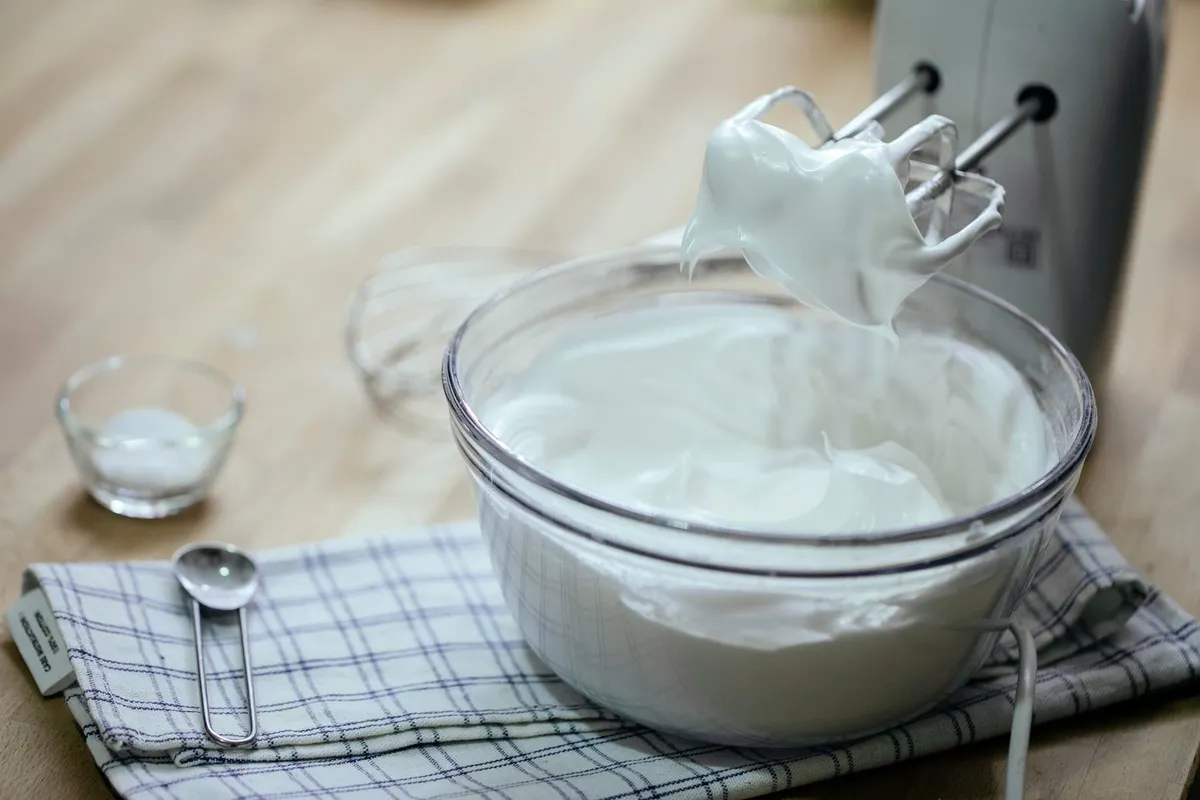
Whipping is less predictable because previously frozen cream may not reach its original volume. If whipped cream is the intended use, sweeten and whip it before freezing, then tray-freeze individual dollops as recommended by the National Center for Home Food Preservation.
Can you whip cream after it's been frozen and thawed?
It may whip, but it will not usually reach the same volume as fresh cream. Both the National Center for Home Food Preservation and North Dakota State University Extension warn about this quality loss after freezing and thawing.
If whipped cream is the goal, whip and sweeten fresh cream first. Spoon individual dollops onto a tray, freeze them solid, and transfer them to an airtight container. NCHFP recommends using these frozen whipped-cream portions within about 1 to 2 months for best quality. They can be placed directly on pie, cocoa, or pumpkin pie and allowed to soften briefly before serving.
You can still test a thawed batch of liquid cream after chilling it thoroughly, but plan for less volume and softer peaks. Use fresh cream when a stable, high-volume finish is essential.
How long does frozen heavy cream last?
Use frozen liquid cream within about 1 to 3 months for best quality. The National Center for Home Food Preservation gives sweetened whipped-cream dollops a 1-to-2-month quality period, while Love Food Hate Waste recommends up to 3 months for frozen cream. These periods describe expected texture and flavor, not a date on which continuously frozen cream automatically becomes unsafe.
Higher-fat cream generally retains a more usable texture. NDSU recommends at least 40% milkfat for freezing performance, while UK double cream is commonly higher in fat than US heavy cream. Single cream, light cream, and half-and-half are more prone to separation.
Label the container with the amount and freeze date. Use thawed cream promptly, and discard it if it shows spoilage signs rather than relying only on the freezer date.
Can you freeze heavy cream in the carton it came in?
Not safely if the carton is still full and sealed. Cream, like most liquids, expands as it freezes, and a completely full, tightly sealed carton doesn't have anywhere for that expansion to go. That can split the carton seams or crack a rigid container, leaving you with a freezer mess and cream that's absorbed the smell of whatever else is in there.
The fix is simple: pour off about an inch of cream before freezing (save it for your coffee) so there's room for expansion, then either freeze the carton as-is or transfer the cream to a proper freezer-safe container. If you're using the original carton, wrapping it in a freezer bag or plastic wrap adds a second layer of protection against leaks and freezer odors, since cardboard cartons aren't fully airtight on their own.
A better option for most people is to skip the carton for freezing purposes entirely and use a rigid, freezer-safe container with an inch of headspace, or a silicone cube tray(affiliate link, opens Amazon) if you only need small amounts at a time for coffee, sauces, or baking. Once the cubes are solid, pop them into a bag or a Rubbermaid-style airtight container so you're not left thawing an entire carton for a splash of cream in a recipe.
Whichever container you choose, label it clearly. A carton of frozen cream looks identical to a carton of frozen milk once it's opaque and solid, and mixing those up mid-recipe is an easy mistake to make.
Can you use frozen heavy cream in coffee, soups, or sauces?
Yes, and this is where frozen heavy cream is at its most reliable. Cooked and heated applications don't care much about the separation and slight graininess that come with freezing, since the cream is getting whisked, simmered, or blended into something else anyway. Soups, sauces, gravies, curries, and baked goods that call for heavy cream all work fine with a thawed, well-shaken batch.
For coffee specifically, small frozen cream cubes are genuinely convenient: drop one straight into a hot cup and let it melt and dissolve on its own, no separate thawing step needed. This is one of the better everyday uses for tray-frozen cream cubes, alongside enriching a pan sauce or finishing a risotto.
Where it gets trickier is anything relying on the cream's structure rather than just its fat and flavor, mainly whipping (covered above) or recipes like panna cotta or certain custards where a perfectly smooth, unbroken emulsion matters for the final texture. For those, fresh cream is still the safer bet, or you can strain thawed cream through a fine sieve to smooth out any persistent graininess before using it.
As a general rule: if the recipe involves heat or a blender, frozen-and-thawed cream works well. If the recipe depends on cream whipping up or holding a delicate raw texture, fresh cream will give you more predictable results.
Heavy Cream Freezing and Storage Guide
Heavy cream can freeze reasonably well for cooking, and fat content strongly affects the result. North Dakota State University Extension recommends cream with 40% milkfat or more. That does not mean every US product labeled heavy cream meets the recommendation: US heavy cream may contain about 36% milkfat, so check the label. Lower-fat cream can still freeze, but separation is usually more pronounced and the thawed texture is less reliable. If that is the product in your carton, use the dedicated half-and-half freezing guide for its shorter quality window and coffee-specific advice.
How to Freeze Liquid Heavy Cream
Freezing disrupts the emulsion, so thawed cream can separate or feel grainy until shaken or whisked(affiliate link, opens Amazon). This is easier to hide in soups, gravy, sauces, and baking than in cold desserts. For another cultured dairy product that separates after freezing, compare the uses in our sour cream guide. Previously frozen liquid cream may not whip to its usual volume; the National Center for Home Food Preservation instead recommends freezing sweetened whipped-cream dollops.
If you want whipped cream on hand, whip it first and freeze individual dollops for 1 to 2 months of best quality; they work well on pumpkin pie, cheesecake, or hot drinks. For cooking, portion liquid cream in a silicone cube tray(affiliate link, opens Amazon) so individual amounts can go directly into a hot pan or sauce.
Freezing Whipped Cream Instead
The dedicated whipped cream freezing guide explains the tested sweetened-dollop method, canned toppings and commercial frozen whipped topping. Do not expect thawed liquid cream to recover its original whipping volume.
Packaging, Expansion and Thawing
However you package it, never freeze a completely full, sealed carton; liquid expands as it freezes, and a full carton has nowhere for that expansion to go. Pour off an inch first, or use a container built with headspace. On timing, US and UK guidance land in a similar place: roughly 1 to 3 months for best quality, safely well beyond that at 0°F (-18°C) according to the USDA’s Food Safety and Inspection Service, though flavor and texture are what fade first, not safety. Thaw in the fridge, never on the counter, and use it soon after, since NDSU Extension advises against refreezing cream once it’s thawed.
Editor's Picks
Gear Worth Buying for Heavy Cream
Tovolo King Cube Ice Tray with Lid
Freezing cream in large silicone cubes gives you recipe-ready, single-serving portions instead of thawing a whole carton for a splash in coffee or a sauce.
Shop on AmazonOXO Good Grips Balloon Whisk
A quick whisk is usually all it takes to smooth thawed cream back out for cooking, even though it won't restore full whipping power.
Shop on AmazonStasher Stand-Up Mid Reusable Silicone Bag (56 oz)
A premium, reusable stand-in for disposable freezer bags - freezer, oven, and dishwasher safe.
Shop on AmazonRubbermaid Brilliance Airtight Food Storage Containers, 24-Piece Set
A complete, leak-proof set that covers nearly any portion size this guide calls for.
Shop on Amazon
As an Amazon Associate, we earn from qualifying purchases.
Important Safety Guidelines
- Check the milkfat percentage, not just the product name. North Dakota State University recommends freezing cream with at least 40% milkfat for best results; US heavy cream may legally contain less, and lower-fat products tend to separate more. This is a quality distinction, not a claim that lower-fat cream becomes unsafe when frozen.
- Avoid freezing ultra-pasteurized heavy cream when practical. The National Center for Home Food Preservation says it does not freeze as well as standard pasteurized cream.
- Do not freeze a completely full, sealed carton. Transfer the cream to an airtight freezer-safe container and leave headspace for expansion.
- If you want whipped cream later, whip and sweeten it before freezing. Previously frozen liquid cream may not whip to its usual volume.
- For recipe-ready portions, freeze cream in a silicone cube tray(affiliate link, opens Amazon), then transfer the solid cubes to an airtight bag or container.
- Label containers with the amount, whether the cream is liquid or whipped, and the freeze date.
- Thaw liquid cream in the refrigerator, not on the counter. Shake or whisk after thawing to redistribute separated fat.
- Use thawed cream promptly and do not refreeze it, following NDSU Extension guidance.
- Keep the freezer at 0°F (-18°C) or below. The listed freezer period is a best-quality guide, not an automatic safety deadline.
Key Safety Reminders
- Always label containers with freezing date
- Use airtight containers to prevent freezer burn
- Follow proper thawing procedures
You Might Also Like
Can You Freeze Butter?
Yes - butter freezing is safe and handy. Freeze sticks or blocks tightly wrapped to block air, keep your freezer at 0°F / -18°C, and thaw in the fridge. Quality is best within 6–9 months (USDA FoodKeeper). Salted butter usually holds flavor longer than unsalted because salt slows oxidation.

Can You Freeze Cheese?
Yes, most hard and semi-hard cheeses (cheddar, Swiss, gouda) can be frozen for later cooking. Keep them cold (40°F / 4°C), wrap tightly, and expect a slightly crumblier bite after thawing. Soft fresh cheeses (ricotta, cream cheese) don't freeze well. When in doubt, freeze grated portions - cheese freezing works best that way.

Can You Freeze Cottage Cheese?
Yes, you can freeze cottage cheese for up to 3 months, though it's not ideal. The texture becomes grainier and more crumbly after thawing due to liquid separation. Full-fat varieties freeze better than low-fat versions. Best used in cooked dishes like lasagna, casseroles, and baked goods rather than eating fresh.

Can You Freeze Cream Cheese?
Yes - cream cheese freezing is safe but not ideal. Freeze only if you must, because thawed cream cheese turns crumbly and grainy. For safety, keep it fridge-cold at 40°F / 4°C, freeze at 0°F / −18°C, and follow country guidance: the USDA doesn't recommend freezing; the UK FSA gives no specific freezer time.
Sources & References
This information is based on official guidelines from trusted food safety authorities:
21 CFR 131.150 - Heavy Cream
View Source →Freezing Whipped Cream
View Source →Food Freezing Basics: Freezing Dairy Products, Eggs and Other Foods
View Source →Freezing Foods Requires the Right Touch
View Source →Freezing and Food Safety
View Source →Cream
View Source →
About the Author

Disclaimer
The information on this website is provided for general informational purposes only. While we work to keep our food storage and freezing guides accurate and current, we are not food safety professionals, nutritionists, or medical experts, and our recommendations may not account for every individual circumstance, product type, or storage condition.
Always consult official food safety guidance (such as your national food safety agency) and use your own judgment before consuming stored or frozen food. CanIFreeze.com assumes no responsibility or liability for any loss, damage, illness, or other adverse outcome resulting from reliance on the information provided on this site.
CanIFreeze.com is a participant in the Amazon Associates Program, an affiliate advertising program designed to provide a means for sites to earn advertising fees by linking to Amazon.com and its affiliated sites. As an Amazon Associate we earn from qualifying purchases made through links on this site, at no extra cost to you. Product links are clearly marked where they appear.
Disclaimer date: