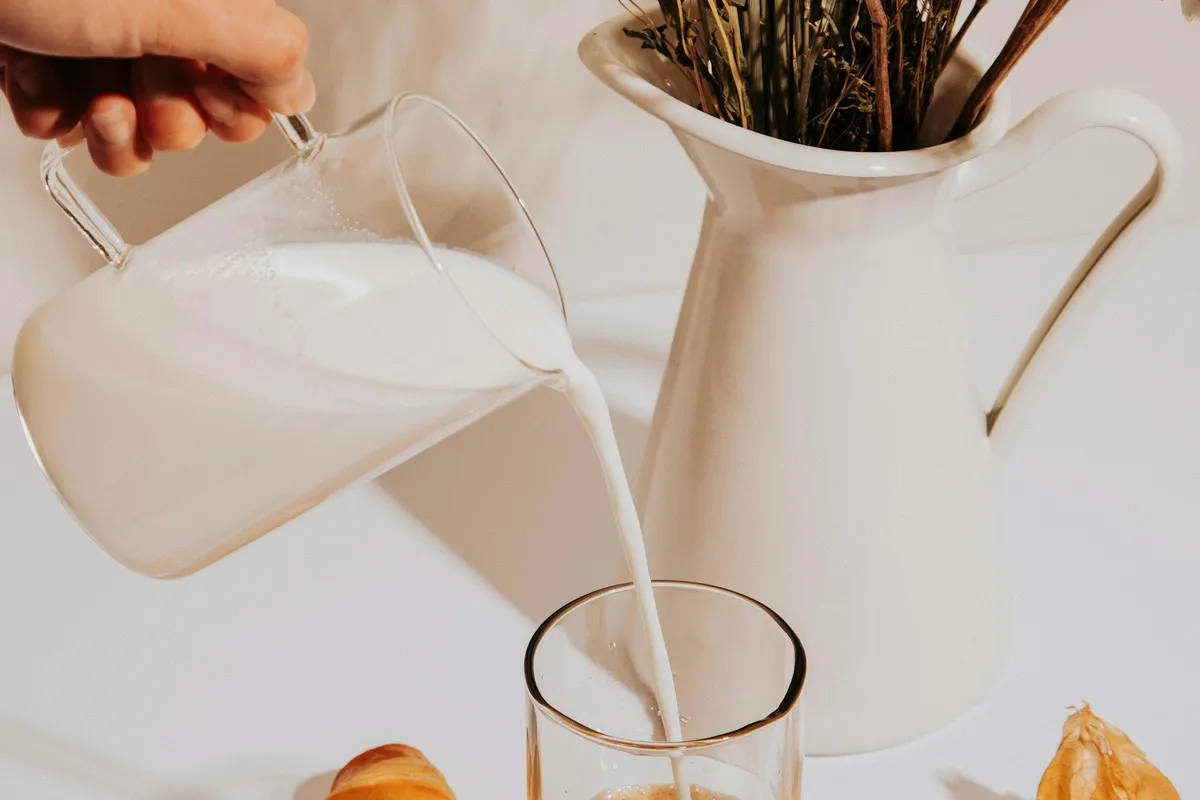
Official Storage Guidelines for Half-and-Half
🇺🇸 USDA Guidelines
🇬🇧 FSA Guidelines
Disclaimer: This information is provided for general guidance only. It is based on publicly available USDA and FSA recommendations at the time of publication. Storage times may vary depending on handling, packaging, and storage conditions. Always check official sources and use your best judgment to ensure food safety.
This guide contains Amazon affiliate links, marked ↗. If you buy through one, we may earn a commission at no extra cost to you. Learn more about affiliate links.
Frequently Asked Questions
Can you freeze half-and-half in the carton?
It is better to transfer half-and-half out of the retail carton. The National Center for Home Food Preservation says milk cartons are not sufficiently moisture-vapour resistant for long freezer storage, and a full container may not leave safe expansion room.
Measure recipe-size portions into rigid freezer-safe containers or a lidded silicone tray. Leave headspace, seal and label with both the quantity and date. Small portions freeze faster and save you from thawing more than you need.
If you have already frozen an unopened carton and it has not split or leaked, thaw it inside a bowl in the refrigerator. Do not use a carton that has burst or shows signs of contamination.
Can you freeze half-and-half for coffee?
Yes, but coffee makes the texture change easy to see. Thawed half-and-half can release small fat droplets or fine protein particles, especially when poured cold into hot acidic coffee. It may taste acceptable while looking slightly grainy.
Thaw it fully in the refrigerator, shake hard and add it gradually. A quick pass with a milk frother or small blender can improve the emulsion. It works more reliably in iced coffee, where minor separation is less noticeable.
Freeze portions close to the amount you use in one or two days. For a smoother result, fresh half-and-half remains the better choice.
How do you fix separated half-and-half after freezing?
First, let it thaw completely in the refrigerator. Partly frozen dairy will always look uneven. Shake the sealed container vigorously, whisk it or blend it briefly until the fat is dispersed again.
Gentle warming can help when the half-and-half is going directly into soup or sauce. Add it over low heat and whisk; boiling can encourage further curdling. The National Center for Home Food Preservation notes that milk sauces may curdle or separate after freezing, so perfect restoration is not guaranteed.
Use stubbornly grainy portions in baking, mashed potatoes, soup or a cooked sauce. Those applications hide the texture far better than pouring it straight into coffee.
How long can half-and-half be frozen?
Use frozen half-and-half within about one month for the best chance of acceptable flavour and texture. That is a quality target rather than a sharp safety deadline: FoodSafety.gov notes that food continuously held at 0°F (-18°C) remains frozen-safe indefinitely, while quality declines.
In the refrigerator, Utah State University Extension lists cream and half-and-half at about 14 days in the original container at 38 to 40°F. Once opened, follow the package and use it sooner if the label directs.
The UK Food Standards Agency recommends a freezer at -18°C or below and a refrigerator at 5°C or below. Freeze before the use-by date and write the date on every portion.
Half-and-Half Freezing and Storage Guide
Half-and-half can survive freezing, but it does not emerge unchanged. Ice formation concentrates milk solids and disturbs the fat-and-water emulsion, which explains the grainy or separated appearance after thawing. Plain milk, heavy cream and sour cream also separate to different degrees because their fat and protein structures differ.
How to Portion and Freeze Half-and-Half
Portion size matters more than people expect. Freezing a whole carton forces you to thaw a large amount and creates an expansion risk. Small measured portions in an airtight freezer-safe container(affiliate link, opens Amazon) are faster to freeze, easier to blend and much more useful for cooking.
Thawing and Using Frozen Half-and-Half
Best Uses for Thawed Half-and-Half
Judge the result by its destination. Fresh half-and-half is best for a flawless finish in coffee; thawed half-and-half is perfectly practical in baking, soup, mashed potatoes and sauces where whisking and other ingredients disguise a minor texture change.
Editor's Picks
Gear Worth Buying for Half-and-Half
Rubbermaid Brilliance Airtight Food Storage Containers, 24-Piece Set
Multiple container sizes make it practical to freeze measured half-and-half portions with headspace and a leak-resistant seal.
Shop on AmazonStasher Stand-Up Mid Reusable Silicone Bag (56 oz)
A premium, reusable stand-in for disposable freezer bags - freezer, oven, and dishwasher safe.
Shop on Amazon
As an Amazon Associate, we earn from qualifying purchases.
Important Safety Guidelines
- Freeze half-and-half while it is still fresh and before any use-by date, not as a rescue for sour dairy.
- Do not freeze a completely full carton. Transfer portions to freezer-safe containers with headspace.
- Thaw in the refrigerator and keep it at 40°F (4°C) or below in the US, or 5°C or below under UK FSA guidance.
- Shake or blend only after it has thawed completely.
- Discard half-and-half with mould, a swollen package, persistent curdling or a sour odour.
- Do not refreeze repeatedly; each freeze-thaw cycle worsens separation.
Key Safety Reminders
- Always label containers with freezing date
- Use airtight containers to prevent freezer burn
- Follow proper thawing procedures
You Might Also Like
Can You Freeze Butter?
Yes - butter freezing is safe and handy. Freeze sticks or blocks tightly wrapped to block air, keep your freezer at 0°F / -18°C, and thaw in the fridge. Quality is best within 6–9 months (USDA FoodKeeper). Salted butter usually holds flavor longer than unsalted because salt slows oxidation.
Can You Freeze Cheese?
Yes, most hard and semi-hard cheeses (cheddar, Swiss, gouda) can be frozen for later cooking. Keep them cold (40°F / 4°C), wrap tightly, and expect a slightly crumblier bite after thawing. Soft fresh cheeses (ricotta, cream cheese) don't freeze well. When in doubt, freeze grated portions - cheese freezing works best that way.
Can You Freeze Chicken Broth and Stock?
Yes, chicken broth and stock freeze exceptionally well. Cool homemade broth quickly, portion it, leave expansion space, and freeze for about 2-3 months for best quality. Commercial broth can also be frozen after opening. Never freeze broth in an unopened can, carton or completely full glass jar.

Can You Freeze Coconut Milk?
Yes, coconut milk freezes well - it's one of the more freezer-friendly liquids on this site, and freezing leftover canned coconut milk in an ice cube tray is a genuinely popular, effective trick. Expect it to separate into a firmer, whiter layer and a more watery layer as it freezes and thaws; this is completely normal and disappears once you blend it for about 30 seconds after thawing. Opened, it holds well for about 2 months in the freezer and 4-6 days in the fridge.
Sources & References
This information is based on official guidelines from trusted food safety authorities:
Food Storage in Home
View Source →Packaging Materials FAQs
View Source →Preserving Food: Freezing Prepared Foods
View Source →Storing chilled foods at incorrect temperatures
View Source →
About the Author

Disclaimer
The information on this website is provided for general informational purposes only. While we work to keep our food storage and freezing guides accurate and current, we are not food safety professionals, nutritionists, or medical experts, and our recommendations may not account for every individual circumstance, product type, or storage condition.
Always consult official food safety guidance (such as your national food safety agency) and use your own judgment before consuming stored or frozen food. CanIFreeze.com assumes no responsibility or liability for any loss, damage, illness, or other adverse outcome resulting from reliance on the information provided on this site.
CanIFreeze.com is a participant in the Amazon Associates Program, an affiliate advertising program designed to provide a means for sites to earn advertising fees by linking to Amazon.com and its affiliated sites. As an Amazon Associate we earn from qualifying purchases made through links on this site, at no extra cost to you. Product links are clearly marked where they appear.
Disclaimer date: