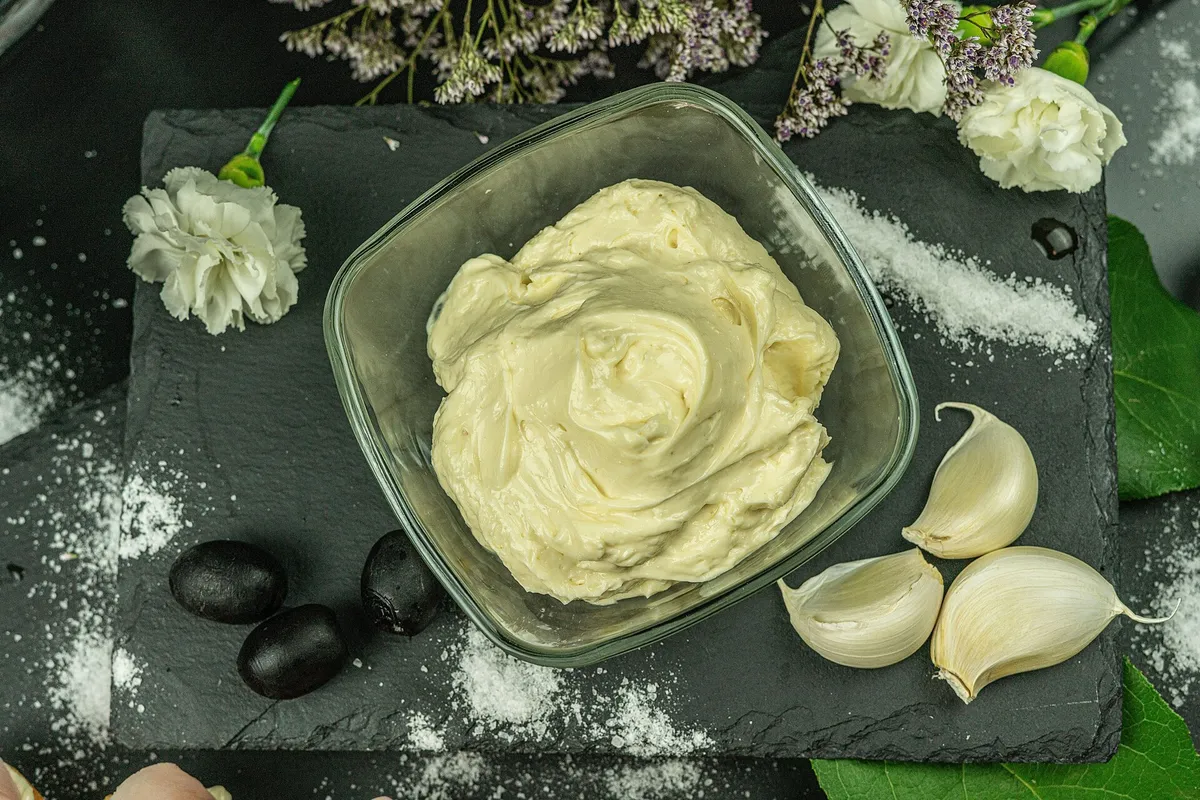
Official Storage Guidelines for Mayonnaise
🇺🇸 USDA Guidelines
🇬🇧 FSA Guidelines
Disclaimer: This information is provided for general guidance only. It is based on publicly available USDA and FSA recommendations at the time of publication. Storage times may vary depending on handling, packaging, and storage conditions. Always check official sources and use your best judgment to ensure food safety.
This guide contains Amazon affiliate links, marked ↗. If you buy through one, we may earn a commission at no extra cost to you. Learn more about affiliate links.
Frequently Asked Questions
What actually happens if you freeze mayonnaise?
The oil and water-based components separate, and they don't recombine on thawing. You'll typically see a layer of oil sitting on top of a watery, curdled-looking base, with the texture ranging from thin and runny to grainy and lumpy depending on how long it was frozen.
This isn't spoilage or a safety issue by itself - it's a physical, structural failure of the emulsion - but the texture change is severe enough that most people find thawed mayonnaise unappetizing and unusable as a condiment.
Unlike ketchup, which separates slightly on freezing but comes back together with a stir because its structure is a simpler suspension, mayonnaise's emulsion depends on egg lecithin actively binding oil and water together at a molecular level - once ice crystals disrupt that binding, whisking or blending can't restore it.
If you've accidentally frozen mayonnaise, it's not dangerous to eat once thawed (assuming it was handled safely throughout), but expect a genuinely unpleasant, unusable texture rather than something you can salvage.
Can mayonnaise-based salads or dips be frozen?
No, not successfully - potato salad, coleslaw, chicken salad, tuna salad, deviled egg filling, and similar mayonnaise-based dishes all suffer the same emulsion breakdown as plain mayonnaise when frozen, since the mayonnaise component is what's actually failing, regardless of what it's mixed into.
The other ingredients in these dishes (potatoes, cabbage, chicken, eggs) often don't freeze particularly well either - potatoes can turn grainy, and hard-boiled egg whites can become rubbery - compounding the texture problems beyond just the mayonnaise.
If you're meal-prepping and want a version of one of these dishes ready to go from the freezer, a better strategy is to freeze the base components (cooked chicken, boiled potatoes, hard-boiled eggs) separately, without any mayonnaise, and mix in fresh mayonnaise dressing after thawing and just before serving.
This gets you most of the meal-prep convenience without the emulsion failure that ruins the dish if the mayo goes in before freezing.
Does mayonnaise freeze well?
No - of all the foods covered on this site, mayonnaise is one of the clearest and most consistent "don't freeze this" answers, and it comes down to what mayonnaise actually is at a molecular level.
Mayonnaise is an emulsion: tiny droplets of oil dispersed evenly throughout a water-based phase (egg yolk, vinegar or lemon juice), held in that stable suspension by lecithin, an emulsifying compound naturally present in egg yolk. That structure is inherently fragile - it's why mayonnaise can also "break" from being whisked too aggressively, overheated, or mixed with the wrong ratio of ingredients during preparation, well before freezing ever enters the picture.
Freezing is a particularly effective way to break that structure because ice crystals form within the water phase and physically disrupt the oil droplets' even distribution, and freeze-concentration (as ice forms, the remaining unfrozen liquid becomes more concentrated) further destabilizes the emulsion. Once thawed, the oil and water phases have separated at a fundamental level that whisking - which only works by re-dispersing droplets, not re-forming the lecithin bonds ice crystals destroyed - cannot fix.
The good news is that mayonnaise rarely needs to be frozen in the first place: a jar keeps about 2 months in the fridge once opened, which comfortably outlasts how quickly most households use a jar.
What should you do with mayonnaise you can't use before it expires?
First, check whether you're actually close to the use-by date - commercial mayonnaise's roughly 2-month opened fridge life is longer than most people expect, and many jars get thrown out well before they're actually at risk.
If you genuinely have more than you'll use, the better move is to use it up in dishes rather than trying to freeze it: mayonnaise-based dressings, dips, sandwich spreads, deviled eggs, or as a base for aioli-style sauces with added garlic or herbs all use meaningful amounts at once.
Mayonnaise also works well as a moisture-retaining ingredient baked into things like grilled cheese (spread on the outside instead of butter) or as a binder in fish cakes or crab cakes, which can extend how far a jar goes before it expires.
Buying a smaller jar size if you don't go through mayonnaise quickly is often the simplest fix - it avoids the expiration problem entirely rather than trying to solve it after the fact with a freezing method that doesn't actually work.
Is homemade mayonnaise different from store-bought when it comes to freezing?
The freezing outcome is the same - homemade mayonnaise is still an emulsion, and freezing breaks it exactly the way it breaks a store-bought jar - but homemade mayonnaise has additional food-safety considerations that make the "don't freeze it" advice even more relevant, since freezing isn't a reasonable workaround for its shorter safe life either.
Traditional homemade mayonnaise uses raw egg yolks, which carry a real risk of Salmonella contamination unless made with pasteurized eggs. The USDA and FDA recommend using pasteurized shell eggs or pasteurized egg products for any raw-egg preparation, including homemade mayonnaise, aioli, and Caesar dressing.
Even made safely with pasteurized eggs, homemade mayonnaise should be refrigerated immediately and used within about a week, considerably shorter than a commercial jar's roughly 2-month opened window, since it lacks the stabilizers and preservatives that extend shelf-stable products' safe life.
Given that shorter safe window, making smaller batches more frequently is a better strategy than making a large batch and hoping to freeze the extra - freezing won't safely extend homemade mayonnaise's life any more than it does store-bought, and the texture failure is identical either way.
Why do some sauces freeze fine while mayonnaise doesn't?
It comes down to what's actually holding the sauce together structurally. Sauces that are simple suspensions or purees - tomato sauce, gravy (with some minor separation), most broths - freeze reasonably well because reheating and stirring can redistribute their components even after ice crystals disrupt them.
True emulsions, on the other hand, depend on an emulsifying agent actively bonding two substances that don't naturally mix (oil and water). Mayonnaise, hollandaise, and vinaigrettes made with only oil and vinegar (no emulsifier) are all prone to breaking under stress, whether that stress is freezing, overheating, or improper mixing - and once broken, stirring alone can't rebuild the emulsifier's molecular bonds.
Some cooked, starch-thickened sauces (like a roux-based béchamel or gravy) fall in between: they can freeze reasonably well because the starch structure, while affected by freezing, can often be at least partially restored by gentle reheating and whisking - a fundamentally different (and more forgiving) mechanism than an egg-based emulsion offers.
This is also why cream-based sauces and dairy products with high fat content (like heavy cream or full-fat sour cream) tend to freeze better than mayonnaise despite also containing fat and water - they're not relying on the same fragile emulsifier-dependent structure that mayonnaise is built on.
Mayonnaise Freezing and Storage Guide
Can you freeze mayonnaise? No - and this is one of the most consistent, well-documented “don’t” answers you’ll find in food storage guidance, with a clear reason behind it: mayonnaise is an emulsion, and freezing destroys emulsions in a way nothing in the kitchen can undo.
Why Mayonnaise Breaks When Frozen
Mayonnaise works by suspending tiny droplets of oil evenly throughout a water-based phase - egg yolk, vinegar or lemon juice - held together by lecithin, a natural emulsifier in egg yolk. That structure is delicate even outside the freezer; it’s the same reason mayonnaise can “break” from being whisked wrong or mixed too fast during preparation.
Freezing attacks this structure on two fronts. Ice crystals form within the water phase and physically shove the oil droplets out of their even distribution. At the same time, as more water freezes, the remaining unfrozen liquid becomes increasingly concentrated (a process called freeze-concentration), further destabilizing the emulsion. By the time it’s fully frozen, the oil and water phases have separated at a structural level - and because whisking only works by re-dispersing droplets rather than rebuilding the lecithin bonds that ice destroyed, no amount of stirring, whisking, or blending brings it back.
The result on thawing is unmistakable: a layer of oil on top, a watery, curdled base underneath, and a texture ranging from thin and runny to grainy depending on how long it sat frozen. It’s not unsafe to eat if it was handled properly beforehand - but it’s genuinely unusable as a condiment.
You Almost Certainly Don’t Need To Freeze It Anyway
Here’s the part that makes the “don’t freeze it” advice easy to follow: mayonnaise doesn’t need the freezer’s help. An unopened jar is shelf-stable, and once opened, commercial mayonnaise keeps for about 2 months in the refrigerator - comfortably longer than most households take to finish a jar. If you’re worried about a jar going to waste, refrigeration alone already buys you plenty of time; freezing adds no safety benefit and actively ruins the texture.
What About Mayonnaise-Based Dishes?
Potato salad, coleslaw, chicken salad, tuna salad, deviled eggs - none of these freeze successfully, for the same reason plain mayonnaise doesn’t. The mayonnaise component breaks down regardless of what it’s mixed into, and several of the other typical ingredients (boiled potatoes, hard-boiled egg whites) have their own freezer texture problems on top of that. The broader salad dressing freezing guide compares this behaviour with ranch, Caesar and vinaigrette.
If you’re meal-prepping and want a head start on one of these dishes, freeze the base components - cooked chicken, boiled potatoes, hard-boiled eggs - without any mayonnaise at all, then mix in fresh mayonnaise dressing after thawing and just before serving. You get the prep-ahead convenience without the emulsion failure.
Homemade Mayonnaise Is Even Less Freezer-Friendly
Freezing breaks homemade mayonnaise exactly the same way it breaks store-bought - but homemade also carries a food-safety wrinkle that store-bought doesn’t: traditional recipes use raw egg yolks, which can carry Salmonella. The USDA and FDA recommend using pasteurized eggs for any raw-egg preparation like homemade mayonnaise, aioli, or Caesar dressing. Even made safely, homemade mayonnaise should be refrigerated immediately and used within about a week - well short of a commercial jar’s 2-month window - since it lacks the preservatives and stabilizers that extend shelf-stable products’ safe life. Freezing isn’t a safe workaround for that shorter window either, so smaller, more frequent batches are the better strategy if you make your own.
What To Do With Extra Mayonnaise Instead
Use it up rather than trying to freeze it: mayonnaise-based dressings and dips, sandwich spreads, deviled eggs, aioli-style sauces with added garlic or herbs, or as a binder in fish cakes or crab cakes all use meaningful amounts at once. Mayonnaise also works well spread on the outside of a grilled cheese sandwich instead of butter, for a golden, evenly-browned crust. If you regularly find yourself with more mayonnaise than you use before it expires, buying a smaller jar size solves the problem more reliably than trying to freeze your way out of it.
Common Mistakes to Avoid
The most common mistake is simply not knowing this rule and freezing a jar or a mayo-based dish expecting it to reheat or thaw back to normal - it won’t, and there’s no fix once it’s happened. The second is assuming a broken, separated texture after accidental freezing means the mayonnaise is unsafe; it’s usually just unappetizing, not dangerous, provided it was handled safely before freezing. The third is trying to “save” a mayonnaise-based salad by freezing it before it spoils - freezing doesn’t rescue it, and you’ll end up with the same waste you were trying to avoid, just in a worse texture. If you’re ever unsure whether refrigerated mayonnaise or a mayo dish is still good, trust smell and appearance over guesswork, and when truly in doubt, throw it out rather than freezing it as a stopgap.
Editor's Picks
Gear Worth Buying for Mayonnaise
OXO Good Grips POP Container, Small Square Short (1.1 Qt)
For freezing the chicken, potatoes, or eggs a mayo-based salad calls for - stir the mayonnaise in fresh after thawing rather than freezing it in.
Shop on AmazonStasher Stand-Up Mid Reusable Silicone Bag (56 oz)
A premium, reusable stand-in for disposable freezer bags - freezer, oven, and dishwasher safe.
Shop on AmazonRubbermaid Brilliance Airtight Food Storage Containers, 24-Piece Set
A complete, leak-proof set that covers nearly any portion size this guide calls for.
Shop on Amazon
As an Amazon Associate, we earn from qualifying purchases.
Important Safety Guidelines
- Freezing mayonnaise is not recommended. It's not a food-safety hazard to do so, but the emulsion breaks irreversibly, leaving a separated, watery, oily texture that isn't fixable by stirring, whisking, or blending.
- Keep mayonnaise refrigerated at or below 40°F (4°C) at all times once opened; commercial mayonnaise is shelf-stable unopened but must be refrigerated after opening.
- Use opened commercial mayonnaise within about 2 months for best quality and safety, and always follow the jar's printed use-by or best-before date, whichever comes first.
- Homemade mayonnaise made with raw eggs carries a real Salmonella risk from the raw egg; use pasteurized eggs if making mayonnaise from scratch, keep it refrigerated at all times, and use it within about 1 week rather than the months a commercial jar allows.
- Never leave mayonnaise or mayonnaise-based dishes (potato salad, coleslaw, chicken or tuna salad, deviled eggs) at room temperature for more than 2 hours (1 hour if the temperature is above 90°F/32°C) - these are classic picnic and buffet foods implicated in temperature-abuse foodborne illness, not because mayonnaise itself spoils quickly when handled correctly, but because it's often mixed into dishes served at unsafe temperatures for extended periods.
- Discard mayonnaise that smells sour, rancid, or "off," shows discoloration, or has visible mold - these are signs of spoilage that indicate the jar was mishandled or is past its safe window, separate from the cosmetic separation that happens if it's frozen.
- Don't freeze mayonnaise-based salads or dips expecting the mayonnaise component to hold up; the same emulsion breakdown happens regardless of what it's mixed into.
- If a recipe component needs to be frozen (like a casserole or dip base), it's better to freeze it without the mayonnaise and stir the mayonnaise in fresh after thawing and reheating.
Key Safety Reminders
- Always label containers with freezing date
- Use airtight containers to prevent freezer burn
- Follow proper thawing procedures
You Might Also Like
Can You Freeze Chicken Broth and Stock?
Yes, chicken broth and stock freeze exceptionally well. Cool homemade broth quickly, portion it, leave expansion space, and freeze for about 2-3 months for best quality. Commercial broth can also be frozen after opening. Never freeze broth in an unopened can, carton or completely full glass jar.

Can You Freeze Coconut Milk?
Yes, coconut milk freezes well - it's one of the more freezer-friendly liquids on this site, and freezing leftover canned coconut milk in an ice cube tray is a genuinely popular, effective trick. Expect it to separate into a firmer, whiter layer and a more watery layer as it freezes and thaws; this is completely normal and disappears once you blend it for about 30 seconds after thawing. Opened, it holds well for about 2 months in the freezer and 4-6 days in the fridge.
Can You Freeze Cranberry Sauce?
Yes, you can freeze cranberry sauce, but do not expect the exact same texture when it thaws. Cranberry sauce freezing can cause separation and a softer set. Freeze small portions, thaw in the fridge, then stir hard before serving or cooking with it.
Can You Freeze Grapefruit?
Yes, you can freeze grapefruit whole, as peeled sections, zest, or juice. For the best section quality, NCHFP recommends removing membranes and seeds and packing the fruit in 40 percent syrup. Dry-packed or whole grapefruit becomes soft after thawing. Grapefruit can interact with some medicines, and freezing does not remove that interaction.
Sources & References
This information is based on official guidelines from trusted food safety authorities:
Are You Storing Food Safely?
View Source →FoodKeeper App - FoodSafety.gov
View Source →Food Safety for Moms-to-Be At-a-Glance
View Source →How to chill, freeze and defrost food safely
View Source →
About the Author

Disclaimer
The information on this website is provided for general informational purposes only. While we work to keep our food storage and freezing guides accurate and current, we are not food safety professionals, nutritionists, or medical experts, and our recommendations may not account for every individual circumstance, product type, or storage condition.
Always consult official food safety guidance (such as your national food safety agency) and use your own judgment before consuming stored or frozen food. CanIFreeze.com assumes no responsibility or liability for any loss, damage, illness, or other adverse outcome resulting from reliance on the information provided on this site.
CanIFreeze.com is a participant in the Amazon Associates Program, an affiliate advertising program designed to provide a means for sites to earn advertising fees by linking to Amazon.com and its affiliated sites. As an Amazon Associate we earn from qualifying purchases made through links on this site, at no extra cost to you. Product links are clearly marked where they appear.
Disclaimer date: