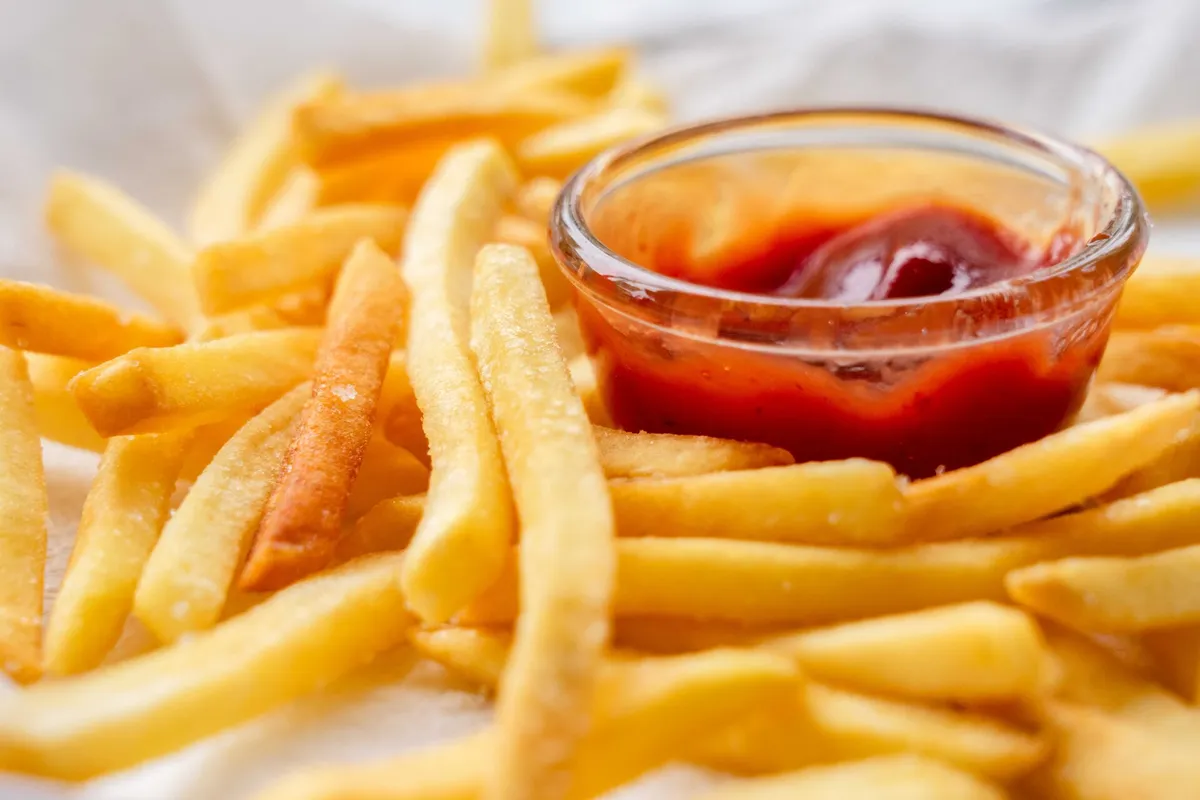
Official Storage Guidelines for Ketchup
🇺🇸 USDA Guidelines
🇬🇧 FSA Guidelines
Disclaimer: This information is provided for general guidance only. It is based on publicly available USDA and FSA recommendations at the time of publication. Storage times may vary depending on handling, packaging, and storage conditions. Always check official sources and use your best judgment to ensure food safety.
This guide contains Amazon affiliate links, marked ↗. If you buy through one, we may earn a commission at no extra cost to you. Learn more about affiliate links.
Frequently Asked Questions
Can you use ketchup directly from frozen?
Not really as a table condiment - since ketchup doesn't freeze fully solid, you'll usually find it in a thick, slushy, or separated state rather than a scoopable frozen block.
For cooking applications (stirring into a sauce, glaze, or marinade base), you can often scrape or spoon partially-frozen ketchup straight into a hot pan, where it'll finish thawing and blending as the dish cooks.
For using it as a table condiment, it's better to let it thaw fully in the refrigerator first, then stir or briefly blend it to smooth out the separation before serving.
Either way, a quick stir is usually enough to bring frozen-and-thawed ketchup back to a usable consistency - it doesn't need aggressive mixing unless it's been frozen for a long time.
Can ketchup be refrozen after it's thawed?
Yes, refreezing thawed ketchup is generally safe from a food-safety standpoint, since ketchup's high acidity and sugar content make it inhospitable to most spoilage bacteria in the first place.
That said, each freeze-thaw cycle worsens the separation and slightly dulls the flavor, so repeated refreezing isn't worth doing for a condiment that keeps just fine in the fridge or even the pantry between uses.
If you've thawed more than you need, the better move is simply to refrigerate the rest and use it within its normal fridge window rather than refreezing it.
As with any refrigerated or thawed food, discard it if it sat out at room temperature for more than 2 hours (1 hour above 90°F/32°C) before you consider refreezing or continuing to store it.
Does ketchup freeze well?
Not particularly, and the honest answer is that it doesn't really need to. Ketchup is a high-acid, high-sugar condiment engineered for a long shelf-stable life - an unopened bottle keeps for about a year in the pantry, and once opened, it holds up for around 6 months refrigerated. That's already longer than most people need before finishing a bottle.
When you do freeze it, the sugar and vinegar (acetic acid) content lower ketchup's freezing point compared to plain water, so it never turns into a solid, scoopable block the way water-based liquids do - expect a thick, slushy texture instead. On thawing, ketchup commonly separates into a thin, watery layer sitting on top of the thicker tomato solids; this is purely physical (the emulsion-like suspension of tomato solids in the sugar-vinegar liquid breaks down under repeated ice-crystal disruption), not a sign of spoilage, and a good stir or a few seconds in a blender brings it back together well enough to use.
Where freezing genuinely makes sense is homemade ketchup made without the commercial preservatives, stabilizers, and higher sugar/salt ratios of store-bought brands - it typically only keeps 1-2 weeks refrigerated, so freezing extra batches is a legitimately useful way to stretch a homemade batch rather than losing it to spoilage.
Best containers to freeze ketchup
A lidded silicone freezer tray works well for portioning ketchup into small, measured amounts you'll actually use at once - a half-cup silicone tray with a lid(affiliate link, opens Amazon) is ideal for this, since you can pop out just what a recipe calls for instead of thawing a whole container.
For larger batches (like a big pot of homemade ketchup), a rigid, freezer-safe container with a tight lid works fine - just leave a bit of headspace, since the liquid still expands somewhat even though it won't freeze fully solid.
Ice cube trays without lids work in a pinch for small portions, but transfer the frozen cubes to a freezer bag once solid to limit freezer burn and odor absorption from other items.
Avoid freezing ketchup in its original squeeze bottle if it's more than about two-thirds full - there's not much expansion room, and a cracked bottle in the freezer is a genuinely annoying cleanup.
Why doesn't ketchup freeze into a solid block like water does?
It comes down to freezing point depression - a basic property of solutions where dissolved solutes (in this case, sugar and vinegar's acetic acid) lower the temperature at which a liquid fully solidifies compared to pure water.
Ketchup is roughly 20-25% sugar by some formulations, plus a meaningful vinegar content, both of which interfere with water molecules forming the orderly crystal lattice that makes ice solid. The result is that even at typical freezer temperatures (0°F/–18°C), a significant portion of the liquid in ketchup stays in a slushy, unfrozen or partially-frozen state rather than solidifying completely.
This is the same basic phenomenon that keeps a jar of honey or a bottle of maple syrup from ever fully hardening in the freezer, and why homemade ice cream needs sugar in its base to stay scoopable rather than freezing into a brick.
It's not a defect or a sign anything's wrong - it's just chemistry, and it's part of why ketchup is such a forgiving thing to freeze even though there's rarely a practical reason to.
Best uses for ketchup after it's been frozen and thawed
Thawed, well-stirred ketchup works fine anywhere you'd use it cooked into something rather than as a pristine table condiment - burger sauces, meatloaf glaze, barbecue sauce bases, cocktail sauce, sloppy joe mix, or stirred into baked beans.
For cooking applications specifically, the slight separation and texture change disappears entirely once it's heated and combined with other ingredients, so there's no real downside there.
If you want to use it as a straightforward table condiment again, blend or vigorously whisk it after thawing to re-incorporate the separated liquid - most people can't tell the difference once it's mixed back together.
Avoid using thawed ketchup for anything where a perfectly smooth, glossy appearance matters cosmetically (like a plated presentation), since a very close look may reveal the difference in texture even after stirring.
Is there ever a good reason to freeze ketchup?
The clearest case is homemade ketchup made without commercial preservatives, stabilizers, or the higher sugar and salt levels of store-bought brands - it typically only lasts about 1-2 weeks in the fridge, so freezing extra batches in measured portions(affiliate link, opens Amazon) genuinely extends how long you can keep a big batch before it goes to waste.
Another reasonable case is a bulk-size bottle you know you won't finish before it starts to noticeably degrade in flavor - freezing a portion you're not going to use soon is a low-effort way to lock in flavor rather than letting an opened bottle sit in the fridge for many months.
For a normal-size, store-bought bottle used at a normal pace, though, freezing usually isn't worth the freezer space - unopened, it keeps about a year in the pantry, and opened, about 6 months in the fridge, which covers most households' usage easily without any freezing at all.
Ketchup Freezing and Storage Guide
Can you freeze ketchup? Yes - but this is one of the few guides on this site where the honest answer is “you almost certainly don’t need to.”
Ketchup is a high-acid, high-sugar condiment built for a long shelf-stable life: an unopened bottle keeps for about a year in the pantry, and once opened, commercial ketchup holds up for roughly 6 months refrigerated. Both numbers already outlast how long most bottles survive in a typical kitchen. Freezing doesn’t make ketchup safer or meaningfully extend that window - what it does do is change the texture, in a way worth understanding before you bother.
Why Ketchup Never Actually Freezes Solid
Ketchup’s sugar and vinegar (acetic acid) content lower its freezing point compared to plain water - a basic chemistry effect called freezing point depression, the same reason honey and maple syrup never fully harden in a freezer either. At typical freezer temperatures (0°F/–18°C), ketchup doesn’t form a solid block; instead it turns into a thick, spoonable slush. That’s normal, not a sign anything went wrong.
Thawing brings a second, more noticeable change: separation. Ketchup’s smooth consistency comes from tomato solids suspended in a sugar-vinegar liquid, and repeated ice-crystal formation during freezing disrupts that suspension. The result is a thin, watery layer sitting on top of thicker tomato solids once thawed - purely physical, not spoilage, and a good stir or a few seconds in a blender brings it back to a usable consistency.
When Freezing Ketchup Actually Makes Sense
For a normal store-bought bottle, freezing is rarely worth the freezer space - it already lasts long enough on the shelf and in the fridge that most households finish it before that matters. The clearer case is homemade ketchup, which typically lacks commercial preservatives and stabilizers and only keeps about 1-2 weeks in the fridge. If you’ve made a big batch, portioning the extra into a lidded silicone tray(affiliate link, opens Amazon) and freezing it is a genuinely useful way to avoid waste rather than watching a batch slowly turn.
How to Freeze Ketchup
- Portion before freezing. Small, measured amounts (a lidded silicone tray works well) are more useful later than one big frozen block you have to fully thaw to use any of.
- Leave a little headspace in rigid containers - ketchup still expands somewhat even though it won’t freeze fully solid.
- Label with the date and contents. Frozen ketchup doesn’t spoil in any dangerous sense, but flavor and color do drift the longer it sits.
- Freeze at 0°F (–18°C) or below, same as any other freezer item.
Thawing and Using Frozen Ketchup
Thaw in the refrigerator, then stir or blend to re-incorporate the separated liquid before using. For cooking applications - burger sauce, meatloaf glaze, barbecue sauce, cocktail sauce, sloppy joe mix - the slight separation disappears entirely once it’s heated and combined with other ingredients, so there’s no real downside there. If you want it as a straightforward table condiment again, a vigorous whisk after thawing is usually all it needs.
Common Mistakes to Avoid
The most common mistake is simply freezing ketchup that didn’t need to be frozen in the first place - given how long it already lasts unopened or opened, freezing a normal bottle rarely earns back the freezer space and inevitable texture change it costs. The second is freezing a nearly-full squeeze bottle without accounting for any expansion, risking a cracked bottle. The third is expecting thawed ketchup to look and pour exactly like it did fresh - the separation is completely normal and a quick stir fixes it, so there’s no need to worry when you see it.
Editor's Picks
Gear Worth Buying for Ketchup
Souper Cubes 1/2 Cup Silicone Freezer Tray with Lid
Portions leftover or homemade ketchup into measured, lidded cubes for cooking and sauce bases.
Shop on AmazonStasher Stand-Up Mid Reusable Silicone Bag (56 oz)
A premium, reusable stand-in for disposable freezer bags - freezer, oven, and dishwasher safe.
Shop on AmazonRubbermaid Brilliance Airtight Food Storage Containers, 24-Piece Set
A complete, leak-proof set that covers nearly any portion size this guide calls for.
Shop on Amazon
As an Amazon Associate, we earn from qualifying purchases.
Important Safety Guidelines
- Ketchup is a high-acid, high-sugar, shelf-stable condiment; an unopened bottle is safe at room temperature for about a year past purchase, and commercial brands remain safe (though the label typically recommends refrigeration) even stored at room temperature after opening - the label's refrigeration advice is about preserving color and flavor, not preventing spoilage.
- Freezing ketchup is safe but rarely necessary given its long shelf-stable life; there is no food-safety reason to freeze an unopened or freshly opened bottle.
- Because of ketchup's sugar and vinegar (acetic acid) content, it has a lower freezing point than plain water and will not freeze fully solid at typical freezer temperatures - expect a slushy, spoonable consistency rather than a solid block.
- Freeze in a rigid, freezer-safe container or a lidded silicone tray, leaving headspace, since the liquid still expands somewhat as it partially freezes.
- After thawing, ketchup commonly separates into a thin, watery layer on top of thicker tomato solids - this is a texture change, not spoilage, and a good stir or brief blend restores a usable consistency.
- Homemade ketchup without commercial preservatives and stabilizers has a shorter safe fridge life than store-bought (typically 1-2 weeks refrigerated) and is a better freezing candidate than store-bought, since it doesn't already have a long shelf-stable life to rely on.
- Discard any ketchup, homemade or commercial, that shows mold, an off or fermented smell, a bulging cap, or a container that's leaking - these are signs of spoilage or fermentation, not something freezing or refrigeration reverses.
- Once opened, keep ketchup tightly capped and use a clean utensil or pour rather than double-dipping to limit contamination that could shorten its usable life.
- Label any frozen ketchup with the date - while it won't spoil in the freezer in any dangerous sense, flavor and color both drift over long freezer storage.
Key Safety Reminders
- Always label containers with freezing date
- Use airtight containers to prevent freezer burn
- Follow proper thawing procedures
You Might Also Like
Can You Freeze Chicken Broth and Stock?
Yes, chicken broth and stock freeze exceptionally well. Cool homemade broth quickly, portion it, leave expansion space, and freeze for about 2-3 months for best quality. Commercial broth can also be frozen after opening. Never freeze broth in an unopened can, carton or completely full glass jar.

Can You Freeze Coconut Milk?
Yes, coconut milk freezes well - it's one of the more freezer-friendly liquids on this site, and freezing leftover canned coconut milk in an ice cube tray is a genuinely popular, effective trick. Expect it to separate into a firmer, whiter layer and a more watery layer as it freezes and thaws; this is completely normal and disappears once you blend it for about 30 seconds after thawing. Opened, it holds well for about 2 months in the freezer and 4-6 days in the fridge.
Can You Freeze Cranberry Sauce?
Yes, you can freeze cranberry sauce, but do not expect the exact same texture when it thaws. Cranberry sauce freezing can cause separation and a softer set. Freeze small portions, thaw in the fridge, then stir hard before serving or cooking with it.
Can You Freeze Grapefruit?
Yes, you can freeze grapefruit whole, as peeled sections, zest, or juice. For the best section quality, NCHFP recommends removing membranes and seeds and packing the fruit in 40 percent syrup. Dry-packed or whole grapefruit becomes soft after thawing. Grapefruit can interact with some medicines, and freezing does not remove that interaction.
Sources & References
This information is based on official guidelines from trusted food safety authorities:
FoodKeeper App - FoodSafety.gov
View Source →Freezing and Food Safety
View Source →Are You Storing Food Safely?
View Source →How to chill, freeze and defrost food safely
View Source →
About the Author

Disclaimer
The information on this website is provided for general informational purposes only. While we work to keep our food storage and freezing guides accurate and current, we are not food safety professionals, nutritionists, or medical experts, and our recommendations may not account for every individual circumstance, product type, or storage condition.
Always consult official food safety guidance (such as your national food safety agency) and use your own judgment before consuming stored or frozen food. CanIFreeze.com assumes no responsibility or liability for any loss, damage, illness, or other adverse outcome resulting from reliance on the information provided on this site.
CanIFreeze.com is a participant in the Amazon Associates Program, an affiliate advertising program designed to provide a means for sites to earn advertising fees by linking to Amazon.com and its affiliated sites. As an Amazon Associate we earn from qualifying purchases made through links on this site, at no extra cost to you. Product links are clearly marked where they appear.
Disclaimer date: