Official Storage Guidelines for Grapefruit
🇺🇸 USDA Guidelines
🇬🇧 FSA Guidelines
Disclaimer: This information is provided for general guidance only. It is based on publicly available USDA and FSA recommendations at the time of publication. Storage times may vary depending on handling, packaging, and storage conditions. Always check official sources and use your best judgment to ensure food safety.
This guide contains Amazon affiliate links, marked ↗. If you buy through one, we may earn a commission at no extra cost to you. Learn more about affiliate links.
Frequently Asked Questions
Can you use grapefruit directly from frozen?
Frozen juice and zest can go directly into smoothies, sauces, dressings, or baking. Sections can be blended while frozen or eaten partly thawed if prepared hygienically.
A whole frozen grapefruit needs to soften before juicing. Thaw it covered in the refrigerator. You can zest the firm rind carefully, but frozen fruit may be slippery.
Can thawed grapefruit or juice be refrozen?
Yes, if it thawed in the refrigerator and stayed at 40°F / 4°C or below. Each freeze-thaw cycle softens the cells further and can flatten aroma, so portioning before the first freeze gives better results.
Do not refreeze grapefruit juice left at room temperature for extended periods or handled with contaminated utensils.
Does grapefruit freeze well?
It freezes well for juice, smoothies, compote, and other soft-texture uses. Whole or dry-packed fruit becomes soft after thawing. NCHFP's tested citrus method improves section quality by removing peel, seeds, and membranes and covering sections with cold 40 percent syrup before freezing with headspace.
The syrup adds sweetness, which may soften perceived bitterness, but it is optional only if you choose a different practical format and accept a different result.
Does freezing stop grapefruit medicine interactions?
No. Freezing grapefruit or its juice does not make a medicine interaction disappear. The FDA says grapefruit can change how some medicines work, sometimes increasing or decreasing the amount of medicine in the blood.
Check the prescription information or Drug Facts label and ask a pharmacist or clinician whether grapefruit, its juice, or related citrus must be avoided. Do not assume a small frozen portion is safe for a particular medicine.
What are the best uses for thawed grapefruit?
Blend thawed or frozen sections into smoothies, cook them into compote, or add them to a citrus sauce. Use juice in salad dressing, granita, marinades, or drinks, provided grapefruit is compatible with any medicines you take.
Frozen zest can flavor cakes, syrups, and compound butter. Fully thawed dry-packed sections are softer than fresh and work better in blended or cooked recipes than a crisp fruit salad.
Grapefruit Freezing and Storage Guide
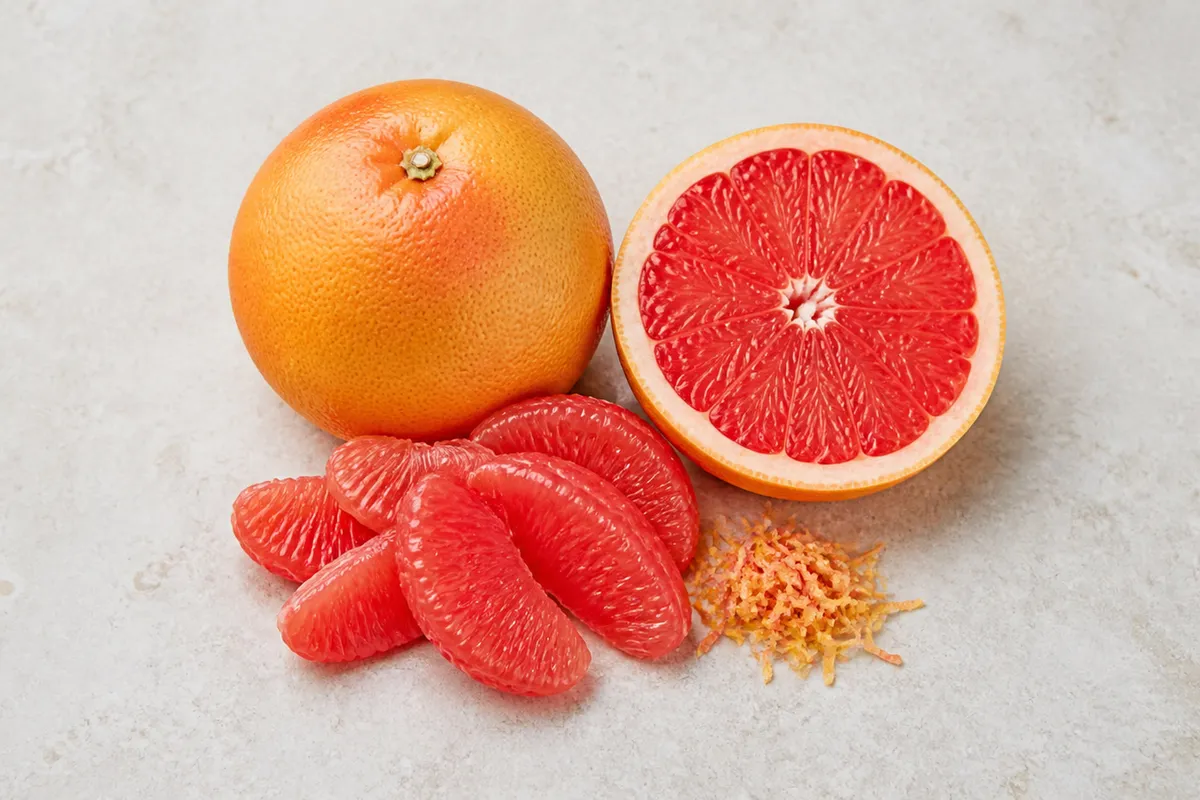
Grapefruit can be frozen, but choose the format around its future use. Juice and zest remain flexible ingredients. Whole fruit is quick to store but thaws soft. Peeled sections have the best eating quality when membranes and seeds are removed and the fruit is packed using NCHFP’s tested syrup method.
Choose firm, heavy fruit without soft spots. Wash the rind under running water before cutting, even if you plan to discard it.
How to Freeze Grapefruit Sections
Peel the grapefruit and divide it into sections. Remove seeds and membranes; membrane left on grapefruit can be chewy and contributes bitterness.
For the tested NCHFP method, pack the cleaned sections into freezer containers, cover them with cold 40 percent syrup made with water or excess fruit juice, leave the correct headspace, seal, and freeze. Grapefruit with many seeds can be halved first so the seeds are easier to remove before scooping out sections.
For an unsweetened practical option, tray-freeze cleaned sections and transfer them to airtight storage. Expect a softer, more watery result than syrup-packed fruit and plan to blend or cook it.
Freezing Whole Grapefruit
Wash and dry the whole fruit, seal it in a heavy freezer bag with excess air removed, label, and freeze at 0°F / -18°C. This saves preparation time but takes more freezer space.
Thaw covered in the refrigerator before juicing. The pulp and membranes soften, so a thawed whole grapefruit is not the best route to neat breakfast sections.
How to Freeze Grapefruit Juice and Zest
Zest before squeezing if you want both parts. Avoid the bitter white pith. Freeze zest airtight in measured portions.
Squeeze juice without pressing excessive rind oil into it. Pour it promptly into freezer-safe containers with headspace. NCHFP recommends freezer-rated glass jars to limit off-flavor development. A covered tray creates smaller portions; transfer the solid blocks to airtight labeled storage.
Important Medicine Warning
Grapefruit and grapefruit juice can affect the way some medicines work. According to the FDA, the interaction varies by person, medicine, and amount consumed, and it can cause too much or too little medicine to enter the blood.
Freezing does not remove this effect. Read the medication guide or Drug Facts label and ask a pharmacist or clinician whether grapefruit is compatible with your medicine. The FDA also notes that Seville oranges, pomelos, and tangelos may have similar effects for medicines that interact with grapefruit.
Thawing and Best Uses
Thaw sections and whole fruit covered in the refrigerator. Juice and zest can go directly into recipes. UK guidance advises using defrosted food within 24 hours.
Use frozen grapefruit in smoothies with strawberries or peaches, blend it into granita, or cook it into compote. Add juice to dressing or marinades only when compatible with your medicines. Compare the related orange, lemon, and lime guides for other citrus methods.
Editor's Picks
Gear Worth Buying for Grapefruit
Souper Cubes 1/2 Cup Silicone Freezer Tray with Lid
Creates measured grapefruit-juice portions while keeping the tray covered from freezer odors.
Shop on AmazonStasher Stand-Up Mid Reusable Silicone Bag (56 oz)
A premium, reusable stand-in for disposable freezer bags - freezer, oven, and dishwasher safe.
Shop on AmazonRubbermaid Brilliance Airtight Food Storage Containers, 24-Piece Set
A complete, leak-proof set that covers nearly any portion size this guide calls for.
Shop on Amazon
As an Amazon Associate, we earn from qualifying purchases.
Important Safety Guidelines
- Grapefruit and grapefruit juice can affect how some prescription and over-the-counter medicines work. Freezing does not remove this interaction. Read the medicine information and ask a pharmacist or clinician if grapefruit is allowed.
- Wash grapefruit under running water before cutting or zesting. Do not use soap or detergent on produce.
- Remove seeds and membranes before syrup-packing sections according to the NCHFP method.
- Leave headspace in juice and syrup-pack containers because liquids expand. Use only freezer-rated glass.
- Freeze at 0°F / -18°C and keep all formats airtight to reduce freezer burn and odor absorption.
- Thaw covered in the refrigerator unless frozen juice or zest is being used directly in cooking.
- Refreeze only grapefruit thawed under refrigeration and kept at 40°F / 4°C or below; quality will decline.
- Discard moldy fruit, fermented juice, leaking or cracked containers, and food with an unsafe handling history.
Key Safety Reminders
- Always label containers with freezing date
- Use airtight containers to prevent freezer burn
- Follow proper thawing procedures
You Might Also Like
Can You Freeze Apples?
Yes, you can absolutely freeze apples! They're actually one of the easier fruits to preserve this way. Fresh apples freeze beautifully for 8-12 months when properly prepared, though you'll want to treat them first to prevent browning. The texture changes a bit after freezing - they become softer - so frozen apples work best in cooked dishes like pies, sauces, and baked goods rather than eating fresh.
Can You Freeze Avocado?
Yes, avocado freezing is safe when done as a purée. Whole or sliced avocados tend to go mushy and waterlogged, so blitz the flesh with lemon/lime juice and freeze airtight at 0°F / -18°C. Expect texture changes after thawing; ideal for guac, smoothies, dressings, and baking.

Can You Freeze Bananas?
Yes, bananas freeze well and it's a handy way to rescue ripe fruit. Peel first (or mash), pack airtight, and freeze at 0°F / -18°C. Expect best texture for smoothies, baking, and nice cream, not for fresh snacking - the flesh softens completely once thawed.

Can You Freeze Blueberries?
Yes, you can freeze blueberries, and the counterintuitive part is that you shouldn't wash them first. The National Center for Home Food Preservation is specific that washing before freezing toughens the skin, so pick over the berries for stems and soft ones, skip the rinse, and freeze them dry. Spread them in a single layer on a tray until solid, then bag them, and they'll hold good quality for about 8 to 10 months in the US (closer to 3 months under UK guidance). Wash them after they've thawed, or straight out of the freezer if you're eating them frozen, not before they go in.
Sources & References
This information is based on official guidelines from trusted food safety authorities:
Freezing Citrus Fruits
View Source →Grapefruit Juice and Some Drugs Don't Mix
View Source →Freezing and Food Safety
View Source →Selecting and Serving Produce Safely
View Source →How to chill, freeze and defrost food safely
View Source →
About the Author

Disclaimer
The information on this website is provided for general informational purposes only. While we work to keep our food storage and freezing guides accurate and current, we are not food safety professionals, nutritionists, or medical experts, and our recommendations may not account for every individual circumstance, product type, or storage condition.
Always consult official food safety guidance (such as your national food safety agency) and use your own judgment before consuming stored or frozen food. CanIFreeze.com assumes no responsibility or liability for any loss, damage, illness, or other adverse outcome resulting from reliance on the information provided on this site.
CanIFreeze.com is a participant in the Amazon Associates Program, an affiliate advertising program designed to provide a means for sites to earn advertising fees by linking to Amazon.com and its affiliated sites. As an Amazon Associate we earn from qualifying purchases made through links on this site, at no extra cost to you. Product links are clearly marked where they appear.
Disclaimer date: