Official Storage Guidelines for Muffins
🇺🇸 USDA Guidelines
🇬🇧 FSA Guidelines
Disclaimer: This information is provided for general guidance only. It is based on publicly available USDA and FSA recommendations at the time of publication. Storage times may vary depending on handling, packaging, and storage conditions. Always check official sources and use your best judgment to ensure food safety.
This guide contains Amazon affiliate links, marked ↗. If you buy through one, we may earn a commission at no extra cost to you. Learn more about affiliate links.
Frequently Asked Questions
Can you freeze muffin batter instead of baking first?
Yes, and it's one of the more useful tricks for muffins specifically, since most recipes make a dozen and few households eat a dozen muffins before they go stale. Portion the raw batter into a lined muffin tin exactly as you would before baking, then set the whole tin in the freezer uncovered until the batter is solid, usually a few hours. Once frozen, pop the batter "pucks" out of the tin and transfer them to a labeled freezer bag or container so the tin is free for its next job. North Dakota State University Extension's food storage guidance covers frozen cake batter the same way and specifically recommends double-acting baking powder (or a baking powder and baking soda combination) for any batter that's going to be frozen, since straight single-acting leavening loses potency in storage and gives a flatter rise.
Baking from frozen isn't a direct swap for your usual recipe and time, though. America's Test Kitchen tested this directly: a normal muffin batter baked at around 400°F for close to 20 minutes came out of the freezer stunted and misshapen, dry on the outside while the center was still cool or even raw. Their fix was to drop the oven to 350°F and extend the bake to roughly 35 minutes, giving the heat enough time to work all the way through a solid, ice-cold center before the outside overbakes. They also swapped melted butter for vegetable oil, since oil stays liquid at freezer temperature and keeps the crumb from turning tight and dry.
If you'd rather not build a whole new recipe around freezing, the practical takeaway is simpler than it sounds: freeze the batter in the same silicone muffin pan you'll eventually bake it in, drop the oven temperature by about 50°F from your recipe's normal setting, and expect to add roughly 10-15 extra minutes rather than trying to bake frozen batter at your usual time and temperature. Use frozen batter within about a month for the best rise; NDSU's storage chart lists one month as the point where leavening loss starts to show in the finished muffin, well before anything becomes unsafe.
Should you freeze muffins whole, or split and buttered?
Freeze them whole and plain, and add butter after they're thawed, not before. It's tempting to prep a batch exactly the way you'll eat it, split and buttered, so breakfast is a two-second job. In practice, butter frozen against cut muffin halves partially soaks into the crumb as it thaws, leaving a greasy, uneven texture instead of the clean melt you get from buttering a warm, freshly reheated muffin. The same logic applies to jam, honey, or cream cheese spread inside a split muffin: freeze it plain, and dress it up in the minute it takes to reheat.
Splitting the muffin before freezing (without butter) is a reasonable middle ground if your main goal is faster reheating, since a split muffin heats through and toasts more evenly than a whole one, similar to freezing bread pre-sliced so you only thaw what you need. The tradeoff is that a split muffin has more exposed surface area, so it's more prone to drying out or picking up freezer burn if the wrap isn't fully airtight. Whole muffins, kept intact until you're ready to eat them, hold moisture better over a long freezer stay.
For muffins topped with streusel, a sugar crumble, or turbinado sugar sprinkled on top before baking, freezing whole and plain works especially well, since dry toppings like these don't weep moisture the way a glaze or icing does; they freeze and thaw with almost no visible change. Save the wet stuff for last: glazes, cream cheese frosting, or a cream-based filling should always go on after the muffin is fully thawed, the same rule that applies to freezing cupcakes with anything perishable on top.
What's the best way to reheat a frozen muffin?
The oven gives the most reliable results if you have 10-15 minutes to spare. Wrap the frozen muffin in foil and place it on a baking sheet in a 350°F oven for 10-15 minutes; the foil traps just enough steam to rehydrate the crumb without turning the outside soggy. If you want a firmer, slightly crisp top instead of a softer all-around reheat, King Arthur Baking's approach works well too: skip the foil and warm the muffin directly on a tray for just a few minutes at 350°F, watching closely since unwrapped muffins dry out faster than wrapped ones.
The microwave is the fastest option and a perfectly reasonable choice for a rushed morning, but it's the easiest to overdo. Fifteen to twenty seconds on a plate or paper towel is usually enough for a standard-size muffin; go in 15-30 second increments rather than guessing at a longer time up front, since even 10 extra seconds can turn a tender crumb rubbery and tough. Microwaving also does nothing for a crisp top or edge, since there's no dry heat involved, only steam.
For a muffin split in half, a skillet or toaster oven gives you something neither the microwave nor a whole-muffin oven reheat can: a genuinely crisp, toasted cut face. Heat a nonstick skillet over medium-low, place the muffin halves cut-side down, and give them 2-3 minutes until warmed through with a light golden crust, similar to toasting a split English muffin. A regular pop-up toaster is best avoided for this; muffin halves are an awkward, irregular shape that tends to jam or reheat unevenly compared with a flat bread slice.
Which method wins depends on what you're after: oven for the most even, all-around texture restoration, microwave when speed matters more than crispness, and a skillet or toaster oven when you want a toasted edge on a split muffin. None of these require thawing first; all three work straight from frozen.
Do banana or blueberry muffins freeze differently than plain muffins?
Banana muffins are, if anything, better freezer candidates than plain ones. Mashed banana adds enough moisture and natural sugar to the batter that the crumb actually resists drying out during frozen storage better than a leaner plain muffin does, and many bakers find banana muffins taste just as good, sometimes better, a few days after freezing once the spices and banana flavor have had time to settle. There's no special handling needed beyond the usual cool-completely-then-wrap-airtight routine.
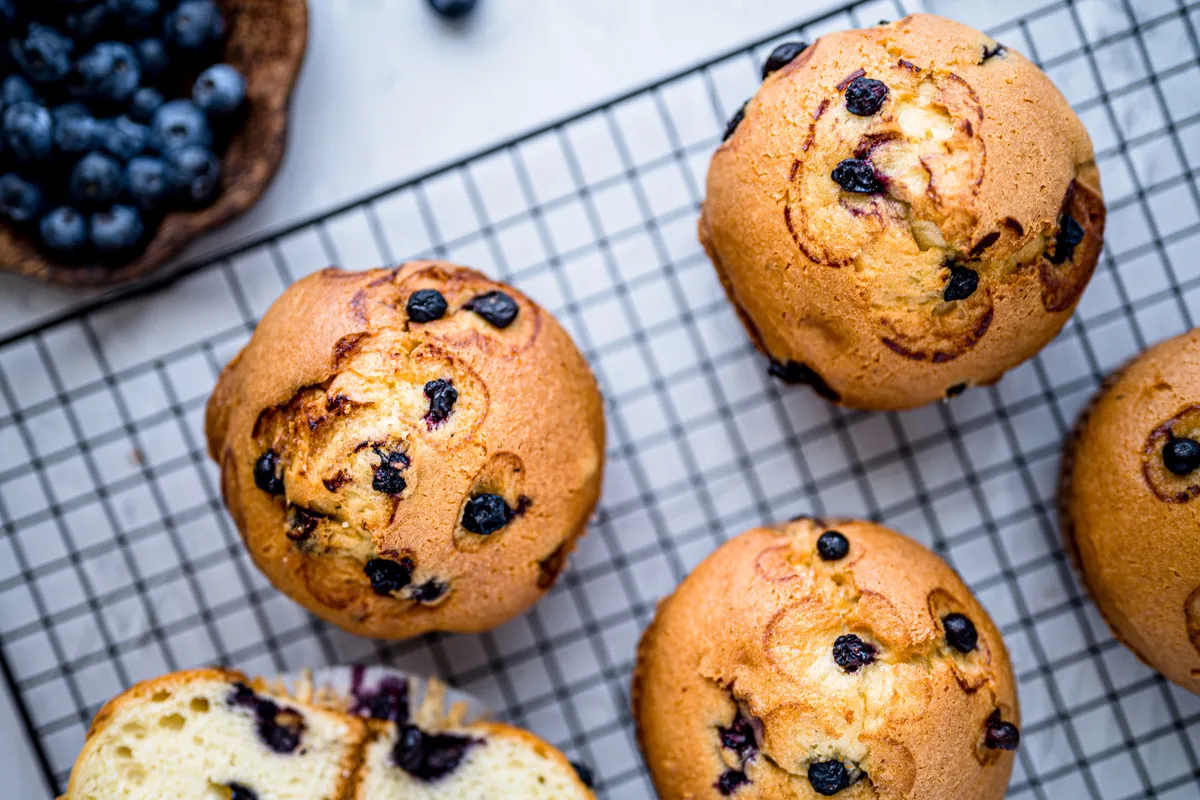
Blueberry muffins need a little more care, mostly because of what the berries do during a freeze-thaw cycle rather than any risk to the muffin itself. Ice crystals form inside each berry, and when they thaw, the berries release juice into the surrounding crumb, which is why a previously frozen blueberry muffin sometimes has a slightly damper ring of purple-tinted crumb around each berry that a fresh one doesn't. Tossing the blueberries in a spoonful of flour before folding them into the batter helps keep that bleeding to a minimum and stops the berries from sinking to the bottom during baking and freezing alike. If you're using frozen blueberries in the batter to begin with, fold them in while still frozen rather than thawed, which limits how much color and juice they release before the muffin ever hits the oven.
Either way, both freeze and thaw perfectly safely using the same wrapping, temperature, and timeline as a plain muffin. The differences are entirely about texture and appearance, not food safety: a banana muffin's extra moisture works in its favor, while a blueberry muffin's juicy fruit is the one thing worth a small extra prep step if you want the tidiest results after thawing.
How long do muffins actually stay good in the fridge and freezer?
In the fridge, North Dakota State University Extension's storage guidance lists baked muffins as good for 7-10 days at 32-40°F, noticeably longer than the 2-month leeway a sealed, preservative-free quick bread loaf gets on the counter alone, which is exactly why refrigeration is the better call for a homemade batch you won't finish quickly. In the UK, home-baking guidance tends to run more conservative on exact day counts for items without commercial preservatives; a few days, in the 3-4 day range, is a sensible target if you don't have a specific use-by date to go by, reflecting UK food-safety convention generally rather than anything different about the muffin itself.
In the freezer, the honest answer is that good sources don't fully agree, and it's worth knowing why. NDSU's tested extension guidance allows baked muffins a full 6 months at 0°F (-18°C) before quality meaningfully drops. Kansas State University Research and Extension's baked-goods chart lists quick breads, muffins, and coffee cakes at a tighter 2-4 months. King Arthur Baking, working from a working bakery's-eye view of what actually tastes good, recommends using muffins within about 3 months. None of these are wrong: they're measuring the same slow decline in moisture and flavor at different thresholds of "still good." A reasonable middle ground is to treat 3 months as the point where muffins are reliably at their best, and up to 6 months as the outer edge where they're still safe and still decent, just not quite as fresh-tasting.
What doesn't change across any of these sources is the safety line: as long as your freezer holds a steady 0°F (-18°C) or below the whole time, muffins don't spoil in the food-safety sense just because they crossed a particular month on the calendar. What you're actually managing is moisture loss, a stale bite, and dulled spice or vanilla flavor, the same slow fade every baked good goes through, just paused rather than stopped.
Can muffins be refrozen after they've thawed?
Yes, technically, if the muffin was thawed in the refrigerator and kept at 40°F (4°C) or below the whole time. That's the same rule that applies to most refrigerator-thawed foods: no cooking step required, no unsafe bacterial growth to worry about, just a real hit to texture. Each freeze-thaw cycle forms new ice crystals in the crumb, and each time those crystals melt they rupture a few more of the starch structures holding the muffin's texture together, so a twice-frozen muffin usually comes out noticeably drier and more crumbly than one frozen only once.
The line you actually need to watch is time and temperature, not the refreezing itself. If a thawed muffin sat out at room temperature for more than 2 hours (or 1 hour above 90°F/32°C), don't refreeze it; treat it the way you'd treat any perishable left in the danger zone and either eat it soon or throw it out, since freezing doesn't reverse bacterial growth that already happened while it sat out. That matters more for muffins with a cream cheese filling or dairy-based glaze than for a plain one, since those ingredients are the more perishable part of the equation.
If you routinely end up with more thawed muffins than you can eat before they go stale, the better long-term fix is smaller portions going into the freezer in the first place, two or three muffins per bag instead of a full dozen in one. That way you're only ever thawing exactly what you're about to eat, and "should I refreeze this" mostly stops being a question you need to ask.
Muffins Freezing and Storage Guide
Muffins are one of the few baked goods that give you two genuinely different things to freeze: the finished muffin, or the raw batter itself. Both work, and which one makes sense depends on whether you’re trying to preserve a batch you already baked or set yourself up to bake two fresh muffins on a random Tuesday without dragging out the whole recipe. Either way, the underlying reason freezing works is the same one that makes bread and cupcakes such reliable freezer items: muffins are low in moisture compared to something like a custard or a cream filling, so the main risk over time is staling and drying out, not bacterial growth.
How to Freeze Baked Muffins
For baked muffins, the prep that matters most is patience before you wrap anything. Let them cool completely on a rack, not just until the outside feels cool to the touch, since a muffin can hold enough residual heat in its center to sweat inside a sealed bag or container even after 15-20 minutes. That trapped moisture is what turns a good muffin into a soggy, occasionally moldy one. Once they’re truly cool, wrap them airtight, ideally a first layer of plastic wrap or foil around each one, then group them into a freezer bag or rigid container with the air pressed out. North Dakota State University Extension and Kansas State University Research and Extension both list this same two-part approach, cool fully, then wrap tightly, as the standard for any baked good headed into the freezer, the same rule that keeps stacked cookies from fusing together in their container.
Raw batter is the less obvious option but arguably the more useful one for a household that doesn’t go through a dozen muffins quickly. Portion it into a lined muffin tin, freeze until the batter is solid, then bag the frozen pucks so the tin is free again. The catch is that baking from frozen batter isn’t a straight swap of your usual time and temperature: a dense, ice-cold center needs a gentler, longer bake than a room-temperature batter does, or you end up with a muffin that’s dry on the outside and raw in the middle. Dropping the oven temperature by about 50°F and adding roughly 10-15 minutes to the bake, covered in more detail below, is the fix.
Can You Freeze Muffin Batter?
Use a recipe developed for make-ahead frozen batter when possible. Portion the batter in lined muffin cups, freeze until solid, then package the portions airtight and use them within about one month. Baking directions are recipe-specific, so do not assume every formula needs the same temperature reduction or extra time; check the centre for doneness.
How to Thaw and Reheat Frozen Muffins
Thaw wrapped muffins at room temperature, or reheat them directly from frozen. A low oven restores the crumb more evenly than a microwave; use short microwave intervals when speed matters so the muffin does not turn tough. Split muffins can also be warmed cut-side down in a skillet or toaster oven.
How Long Do Muffins Last in the Freezer?
Quality, not safety, is what actually changes the longer a muffin sits in the freezer. Kept at a steady 0°F (-18°C), muffins don’t spoil on a calendar schedule the way a fresh dairy product would; what fades is moisture, spice flavor, and crumb texture, gradually, over months rather than all at once. Most guidance converges somewhere between 3 and 6 months for the best-quality window, which is a wide-enough range that it’s worth reading as “use your judgment based on how it was wrapped” rather than a hard cutoff. A muffin double-wrapped and pressed free of air will comfortably sit at the long end of that range; one tossed into the freezer in a single thin bag will start showing dry, freezer-burned patches well before then.
The one thing that shortens a muffin’s freezer life no matter how well you wrap it is anything added after baking. Glazes, cream cheese frosting, fresh butter, and custard-style fillings all weep moisture or separate during a freeze-thaw cycle in a way the plain crumb doesn’t, the same issue that shows up with frosted cupcakes or a cream-filled pumpkin pie. Freeze muffins plain, whatever the flavor, and save the toppings for after they’ve thawed. Oversized Costco muffins can be halved before wrapping if a whole one is more than you usually serve.
Editor's Picks
Gear Worth Buying for Muffins
Stasher Stand-Up Mid Reusable Silicone Bag (56 oz)
A premium, reusable stand-in for disposable freezer bags - freezer, oven, and dishwasher safe.
Shop on AmazonRubbermaid Brilliance Airtight Food Storage Containers, 24-Piece Set
A complete, leak-proof set that covers nearly any portion size this guide calls for.
Shop on Amazon
As an Amazon Associate, we earn from qualifying purchases.
Important Safety Guidelines
- Cool muffins completely on a wire rack, at least 30-60 minutes depending on size, before wrapping or bagging them. Wrapping warm muffins traps steam, and that condensation is what causes sogginess and mold, whether they end up in the fridge or the freezer.
- Homemade muffins don't have the preservatives that keep bakery or packaged muffins shelf-stable, so treat the counter as short-term only, about 1-2 days, and move anything you won't eat by then into the fridge or freezer instead.
- Wrap muffins airtight in a double layer, plastic wrap or foil first, then a freezer bag or rigid container with the air pressed out. A single layer, especially a thin bakery bag, is the main reason freezer-burned muffins happen.
- Flash-freeze muffins uncovered on a tray for an hour or two before bagging them together, so they freeze as separate pieces instead of one solid block you have to thaw all at once.
- If you're freezing raw batter instead of baked muffins, use a recipe with both baking powder and baking soda (double-acting) rather than baking powder alone; the extra leavening compensates for potency lost during frozen storage.
- Toss fresh blueberries or other soft fruit in a spoonful of flour before folding them into the batter if you plan to freeze the muffins; it helps keep them suspended and reduces the purple bleeding and soggy pockets that can show up after a freeze-thaw cycle.
- Hold off on glaze, streusel-adjacent icing drizzle, cream cheese filling, or fresh butter until after the muffins are thawed. Dairy-based additions and glazes weep moisture into the crumb as they freeze and thaw, leaving a soggy top instead of a set one.
- Keep your freezer at a true 0°F (-18°C) or colder, and in the UK keep the fridge at or below 8°C, ideally 5°C or colder, for any muffins stored with a perishable filling.
- Never leave a muffin with a cream cheese or custard-style filling out of the fridge for more than 2 hours (or 1 hour above 90°F/32°C); that's the standard window before bacteria in the 40-140°F (4-60°C) danger zone start multiplying.
- Label every bag with the contents and freeze date. Frozen muffins stay safe indefinitely at 0°F, but flavor and crumb texture fade well before then, so a date keeps you eating them while they're still good.
Key Safety Reminders
- Always label containers with freezing date
- Use airtight containers to prevent freezer burn
- Follow proper thawing procedures
You Might Also Like
Can You Freeze Bread?
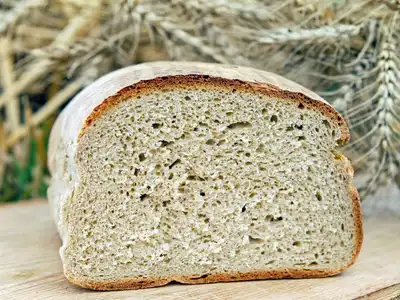
Yes, bread is one of the best foods you can freeze - in fact, freezing is the single best way to store bread beyond a day or two, better than the counter and much better than the fridge. Wrapped well and frozen at 0°F (-18°C), a loaf holds its texture and flavor for 3-5 months, and slices go straight from freezer to toaster with no real quality hit. The one thing freezing can't fix is bread that's already stale or moldy going in, so freeze it while it's fresh, not as a last resort.

Can You Freeze Bread Dough?
Yes, you can freeze yeast bread dough, but home-frozen dough may rise less than fresh dough because slow freezing damages yeast and weakens gluten. For the most predictable result, use a freezer-dough recipe, freeze shaped portions after the first rise, seal them well, and use them within 1 month.
Can You Freeze Cake?
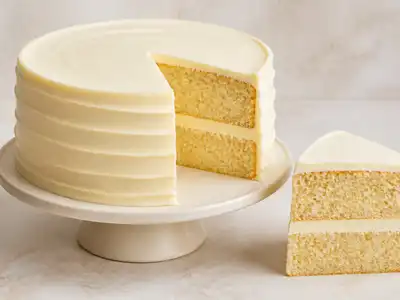
Yes, you can freeze cake, and for most types it works very well. Plain or buttercream-frosted cake holds good quality for roughly 3 to 6 months in the freezer, while cakes topped with egg-white frostings, custard fillings, or fondant hold up far worse and are better off frozen plain. Layer cakes, sponge cakes, and sheet cakes all freeze the same basic way: cool completely, wrap airtight in a rigid container so nothing gets crushed, and keep the freezer at 0°F (-18°C) or below. Cheesecake behaves differently enough, thanks to its dense dairy filling, that it's worth checking the dedicated cheesecake freezing guide rather than treating it like an ordinary cake.

Can You Freeze Cookie Dough?
Yes, cookie dough freezes remarkably well and actually benefits from it. Both homemade and store-bought varieties can be frozen for 2-3 months while maintaining quality. The freezer acts like a pause button, keeping your dough fresh until you're ready to bake those warm cookies whenever a craving strikes.
Sources & References
This information is based on official guidelines from trusted food safety authorities:
Food Storage Guide (FN579)
View Source →Freezing Baked Goods
View Source →The Best Basic Muffin Recipe
View Source →Ready-to-Bake Make-Ahead Freezer Muffins
View Source →Freezing Pointers
View Source →Food Safety Pack for Home Bakers
View Source →How to chill, freeze and defrost food safely
View Source →How to Freeze Muffins
View Source →Exactly How To Reheat Muffins
View Source →
About the Author

Disclaimer
The information on this website is provided for general informational purposes only. While we work to keep our food storage and freezing guides accurate and current, we are not food safety professionals, nutritionists, or medical experts, and our recommendations may not account for every individual circumstance, product type, or storage condition.
Always consult official food safety guidance (such as your national food safety agency) and use your own judgment before consuming stored or frozen food. CanIFreeze.com assumes no responsibility or liability for any loss, damage, illness, or other adverse outcome resulting from reliance on the information provided on this site.
CanIFreeze.com is a participant in the Amazon Associates Program, an affiliate advertising program designed to provide a means for sites to earn advertising fees by linking to Amazon.com and its affiliated sites. As an Amazon Associate we earn from qualifying purchases made through links on this site, at no extra cost to you. Product links are clearly marked where they appear.
Disclaimer date: