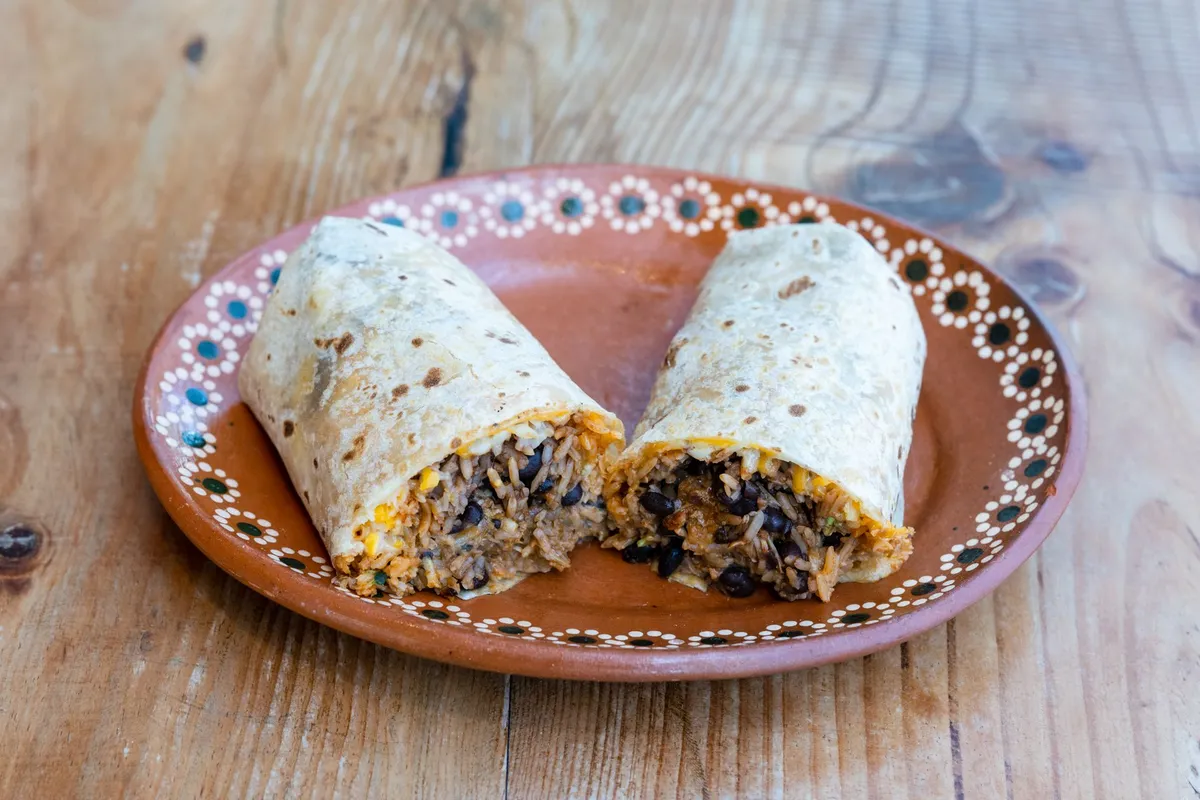
Official Storage Guidelines for Chipotle Burritos
🇺🇸 USDA Guidelines
🇬🇧 FSA Guidelines
Disclaimer: This information is provided for general guidance only. It is based on publicly available USDA and FSA recommendations at the time of publication. Storage times may vary depending on handling, packaging, and storage conditions. Always check official sources and use your best judgment to ensure food safety.
This guide contains Amazon affiliate links, marked ↗. If you buy through one, we may earn a commission at no extra cost to you. Learn more about affiliate links.
Frequently Asked Questions
Can you eat a frozen burrito directly from frozen without thawing first?
Yes, cooked burritos (or any cooked meat, rice, and bean filling) can be reheated straight from frozen, and it's actually the more common method since a foil-wrapped burrito reheats fairly evenly in the oven from solid frozen.
Wrap it in foil if it isn't already, place it in an oven at around 350°F / 175°C, and give it roughly 35-45 minutes depending on size, checking that the center reaches at least 165°F / 74°C with a food thermometer.
A microwave works too and is faster, but tends to leave the tortilla tough or unevenly heated in spots. If using one, unwrap any foil first, vent the plastic wrap or use a microwave-safe cover, and rotate or flip the burrito halfway through.
Either way, add any cold toppings (fresh salsa, sour cream, guacamole, lettuce) only after reheating, not before.
Can a burrito be refrozen after it's already been thawed?
It depends on how it was thawed and handled. If the burrito was thawed in the refrigerator and kept at or below 40°F / 4°C the whole time, USDA guidance generally allows refreezing it, though texture will keep declining with each cycle - the tortilla gets tougher and the rice can turn a bit gummy or dry.
If it was thawed on the counter, in a warm car, or sat out for more than 2 hours (1 hour above 90°F / 32°C) at any point, don't refreeze it - and don't eat it either, since that's long enough for bacteria to have started multiplying.
In the UK, NHS and Food Standards Agency guidance is more conservative and generally recommends only one reheat-and-refreeze cycle total. In practice, only reheat the portion you're going to eat and skip the second freeze if you can.
Do burritos freeze well overall?
Mostly yes, with one important caveat: a burrito is really several different ingredients wrapped together, and they don't all handle freezing the same way.
Rice, beans, cooked meat, cheese and the tortilla itself all freeze and reheat reasonably well - this is standard cooked-leftover territory that USDA and UK food-safety guidance both cover extensively. The tortilla can turn slightly tougher or a bit gummy after freezing and reheating, but it's still perfectly edible, especially reheated in foil in the oven rather than a microwave.
Fresh, watery ingredients are the weak link: shredded lettuce goes limp and slightly slimy, fresh pico de gallo or salsa turns watery, sour cream can separate, and guacamole browns and loses its bright flavor. None of that makes the burrito unsafe, it just won't taste like it did fresh. Stripping those out before freezing and adding them back fresh after reheating gets you the best of both.
Best way to wrap and store a burrito for the freezer
Wrap the cooled burrito tightly in foil first, pressing out air as you go, then place it in a freezer-safe zip-top bag or airtight container as a second layer. The foil helps it hold its shape and reheats evenly in the oven later; the outer bag or container is the main defense against freezer burn and odor transfer from other food in the freezer.
If you're freezing a burrito bowl instead of a wrapped burrito, a rigid, airtight, freezer-safe container(affiliate link, opens Amazon) works better than a bag, since it protects the layered filling from getting crushed.
For meal-prepping several at once, wrap and freeze them individually rather than stacking multiple burritos in one bag - individual portions freeze faster, thaw faster, and let you grab exactly the number you need. Label each one with the date and contents.
Best uses for a burrito after it's been frozen and reheated
A reheated frozen burrito is best treated as a warm, hearty base you finish with fresh ingredients rather than something you expect to taste identical to the moment it was made. Add fresh salsa, sour cream, guacamole, shredded lettuce, or a squeeze of lime right after reheating to bring back the brightness that freezing takes out of those components.
If the tortilla texture doesn't bounce back the way you'd like, unwrap the filling and turn it into a burrito bowl instead, over rice or greens, or use it as a filling for quesadillas, nachos, or a quick burrito-inspired fried rice, where a slightly softer texture doesn't matter as much.
The filling alone (rice, beans, meat, cheese) also works well folded into scrambled eggs for a quick, high-protein breakfast burrito using yesterday's dinner.
Does guacamole freeze well inside or alongside a burrito?
Not particularly, though the issue is browning and texture rather than safety. Avocado darkens through enzymatic browning once it's cut, exposed to air, or frozen and thawed - this is harmless oxidation, not spoilage, but it doesn't look appetizing.
Freezing also breaks down guacamole's smooth, creamy texture into something closer to watery and mushy once thawed, especially if it contains tomato, onion, or lime juice mixed in, since those add extra water that separates out.
If you want to freeze avocado specifically for later use, plain mashed avocado with a bit of lemon or lime juice mixed in (no other additions) freezes noticeably better than finished guacamole, and can be thawed and stirred into fresh aromatics closer to serving time. For a burrito you're about to freeze, it's simplest to just leave the guacamole out and add it fresh after reheating.
Does sour cream freeze well in a burrito?
Not well as a smooth topping, no. Sour cream is a dairy emulsion, and freezing disrupts that structure the same way it does with cream cheese or yogurt: the water separates out from the fat and protein, leaving a grainy, watery texture once thawed, even though it's stirred.
It isn't unsafe once thawed, assuming it was kept cold throughout, but it won't spread or dollop the way fresh sour cream does. Full-fat sour cream tends to hold up a little better than reduced-fat versions, which have more water relative to fat.
As with guacamole and fresh produce, the more reliable approach is to leave sour cream out of anything you're planning to freeze and add a fresh dollop after reheating.
Why is rice specifically called out as a food-safety concern in burritos?
Rice has a well-documented link to a specific type of food poisoning caused by Bacillus cereus, a bacterium whose spores can survive cooking. If cooked rice is left to cool slowly at room temperature, those spores can germinate and multiply, and some strains produce a toxin that is heat-stable, meaning reheating the rice thoroughly afterward does not destroy it.
This is why food-safety guidance is specific about rice: cool it quickly (spreading it in a shallow container helps) and refrigerate or freeze it within about an hour of cooking, rather than leaving a pot of rice on the counter to cool gradually.
A burrito made and eaten fresh, then refrigerated or frozen promptly afterward, is not a meaningful risk here. The concern applies mainly to rice that's been cooked, cooled slowly at room temperature, and then eaten later without proper refrigeration in between.
Can you freeze a burrito bowl (no tortilla) the same way as a wrapped burrito?
Yes, and in some ways it's simpler, since there's no tortilla to worry about turning gummy or tough. Let the rice, beans, and meat cool, then pack them into a rigid, airtight, freezer-safe container, leaving a little headspace since the contents may expand slightly as they freeze.
The same rules apply to the toppings as with a wrapped burrito: leave out lettuce, fresh salsa, sour cream, cheese you want to stay melty, and guacamole, and add those fresh after reheating. Cheese that's mixed in and reheated works fine; it's raw, unmelted toppings that suffer most in the freezer.
Reheat in the microwave or a covered oven-safe dish until the center reaches at least 165°F / 74°C, stirring partway through for even heating.
Chipotle Burritos Freezing and Storage Guide
Yes, you can freeze a leftover Chipotle-style burrito, and it’s a genuinely common question from anyone who ordered a burrito the size of their forearm and couldn’t finish it. The short version: the cooked, hearty parts of a burrito (rice, beans, meat, cheese, tortilla) freeze about as well as any cooked leftover, while the fresh, cold toppings (lettuce, salsa, sour cream, guacamole) don’t. Everything here is general food-safety and food-quality guidance for cooked leftovers and fresh produce, applied to a specific popular style of burrito - not instructions from Chipotle or any specific chain, none of which publish home-freezing guidance for their food.
Why a Loaded Burrito Needs a Little Prep Before It’s Freezer-Ready
A burrito isn’t really one food, it’s several different foods wrapped together, and freezing treats them very differently. The cooked components (rice, beans, seasoned meat, melted or shredded cheese, the tortilla itself) are dense, relatively low-water foods that hold their structure well through a freeze-thaw cycle. The fresh components (shredded lettuce, chopped tomato or fresh salsa, sour cream, guacamole) are either mostly water held in delicate plant cell walls or a dairy/fat emulsion, and both of those structures break down when frozen.
That mismatch is really the whole story with freezing any big, loaded sandwich or wrap: freeze the sturdy, cooked parts, and handle the fresh, cold parts separately.
How to Freeze a Burrito the Right Way
If the burrito is already assembled and you’re freezing it whole, unwrap it, pick out the lettuce, fresh salsa, sour cream, and guacamole, then rewrap the rice-beans-meat-cheese-tortilla core tightly in foil, pressing out as much air as you can. Put the foil-wrapped burrito into a freezer-safe zip-top bag or airtight container as a second layer of protection against freezer burn and any lingering odors from other food in the freezer.
If you’d rather deconstruct it, that works just as well and is arguably tidier: transfer the rice, beans, meat, and cheese into a rigid, airtight, freezer-safe container(affiliate link, opens Amazon), leaving a little headspace, and freeze the tortillas separately (they freeze fine on their own, stacked with a layer of parchment or wax paper between them so they don’t fuse together).
Either way, label the package with the date. If you’re batch-freezing several burritos at once, from meal prepping or a bulk order, wrap and freeze them individually rather than stacking multiple burritos into one bag - individual portions freeze faster, thaw faster, and let you grab exactly what you need instead of thawing the whole batch.
The Ingredients That Don’t Belong in the Freezer
Lettuce and any fresh, chopped vegetables are mostly water held inside plant cell walls. Freezing forms ice crystals that rupture those walls, and there’s no coming back from it: thawed lettuce turns limp and slightly slimy, and fresh pico de gallo or salsa turns watery and loses its crunch. None of this is a safety problem, it’s purely texture, but it’s not something anyone wants on a burrito.
Sour cream is a dairy emulsion, and freezing disrupts it the same way it does cream cheese or yogurt - the water separates from the fat and protein, leaving a grainy, watery texture once thawed. It’s still safe if it stayed cold the whole time, it just won’t dollop the way fresh sour cream does.
Guacamole and avocado are a slightly different case. Avocado naturally browns once it’s cut and exposed to air (harmless enzymatic oxidation, not spoilage), and that browning continues or worsens through a freeze-thaw cycle. Freezing also breaks guacamole’s creamy texture down into something closer to watery and mushy, especially if it has tomato, onion, or citrus juice mixed in. Plain mashed avocado with a bit of lemon or lime juice and nothing else freezes noticeably better than finished guacamole, if you specifically want to freeze avocado for later.
The practical fix for all of the above is the same one that works for any loaded sandwich: freeze the cooked core, and add fresh lettuce, salsa, sour cream, and guacamole back in after reheating, not before freezing.
Rice and Beans: The One Real Food-Safety Point Worth Knowing
Beyond the general cooked-leftover rules, rice deserves a specific mention. Cooked rice has a well-documented link to Bacillus cereus, a bacterium whose spores survive cooking. If cooked rice cools slowly at room temperature, those spores can germinate and multiply, and some strains produce a toxin that is heat-stable, meaning thorough reheating afterward does not destroy it once it’s formed.
This is why food-safety guidance is specific about cooling rice quickly, ideally within about an hour, by spreading it out in a shallow container rather than leaving a full pot to cool gradually on the counter. A burrito made and refrigerated or frozen promptly isn’t a meaningful risk here; the concern is mainly about rice that sat out cooling slowly before it was ever chilled. Beans follow the same general cooked-leftover timeline as rice and don’t carry that specific added risk.
How Long a Frozen Burrito Actually Lasts
Frozen at a steady 0°F / −18°C, a well-wrapped burrito is safe indefinitely from a bacterial-growth standpoint - freezing doesn’t sterilize food, it pauses the microbial clock. Quality is the real limiting factor. Using USDA guidance on cooked leftovers as a baseline, a burrito like this is best used within about 2-3 months in the US; UK guidance for cooked leftovers tends to be a bit more conservative, closer to 2 months. Past that window it’s still safe if it stayed frozen solid, but the tortilla will taste noticeably staler and the filling can pick up freezer-burn flavors.
Thawing and Reheating Without Wrecking the Tortilla
You don’t have to thaw a burrito before reheating it. Wrapped in foil, straight from frozen, an oven set to around 350°F / 175°C for roughly 35-45 minutes (depending on size) does a good job of heating it evenly while keeping the tortilla from drying out, since the foil traps steam that keeps things from turning tough.
A microwave is faster but heats unevenly and tends to leave the tortilla a bit rubbery in spots, since it excites water molecules rather than applying steady, dry-adjacent heat. If a microwave is your only option, unwrap it, cover loosely, and rotate or flip it partway through.
Whichever method you use, the food-safety target is the same: the center needs to reach at least 165°F / 74°C, checked with a food thermometer if you have one, not just warm on the outside. Add any fresh toppings - salsa, sour cream, guacamole, lettuce - only after reheating.
Signs a Frozen Burrito Has Gone Bad
Freezer burn (dry, pale, slightly leathery patches on the tortilla or filling) is a quality issue, not a safety one - trim it or accept the texture hit. Actual spoilage looks different: a sour or off smell, visible mould, or a slimy texture on the meat or rice means it goes in the bin, no taste test needed. These are the same general warning signs food-safety agencies list for any cooked leftovers, nothing specific to burritos.
Practical Tips
A burrito frozen the same day it was made, chilled promptly, will always beat one that sat in the fridge for several days first and then got frozen as an afterthought - freezing isn’t a rescue tool for food that’s already close to its fridge-life limit. If you’re meal-prepping burritos specifically to freeze, keep the fresh, watery ingredients out of the mix entirely and add them fresh at serving time; you’ll get a noticeably better result than trying to freeze a fully “dressed” burrito and hoping for the best.
Editor's Picks
Gear Worth Buying for Chipotle Burritos
OXO Good Grips POP Container, Big Square Tall (6.0 Qt)
Fits a deconstructed burrito's rice, beans, and meat - or a few wrapped burritos upright - without squashing.
Shop on AmazonStasher Stand-Up Mid Reusable Silicone Bag (56 oz)
A premium, reusable stand-in for disposable freezer bags - freezer, oven, and dishwasher safe.
Shop on AmazonRubbermaid Brilliance Airtight Food Storage Containers, 24-Piece Set
A complete, leak-proof set that covers nearly any portion size this guide calls for.
Shop on Amazon
As an Amazon Associate, we earn from qualifying purchases.
Important Safety Guidelines
- Refrigerate a leftover burrito within 2 hours of it being made, or within 1 hour if it's been sitting somewhere hotter than 90°F / 32°C. If it's been out longer than that, don't refrigerate or freeze it - freezing pauses bacterial growth, it doesn't reverse it.
- Keep your fridge at or below 40°F / 4°C and your freezer at 0°F / −18°C.
- Cooked rice needs to cool quickly, ideally within about an hour, before it's refrigerated or frozen. Rice held warm for too long can support Bacillus cereus, a bacterium that produces a heat-stable toxin reheating cannot destroy - this is a genuine, well-documented food-safety point, not just a texture issue.
- Remove lettuce, fresh salsa or pico de gallo, sour cream and guacamole before freezing. These don't freeze well texturally, and guacamole/sour cream can separate; none of this makes them unsafe once thawed, but the results are unappealing. Add fresh versions back after reheating.
- Wrap the burrito (or its filling, if deconstructed) tightly in foil or plastic wrap, then place it in an airtight freezer bag or container to limit freezer burn and air exposure.
- Label with the date. Aim to use within about 2–3 months for best quality in the US, or closer to 2 months in the UK, even though it stays safe well beyond that if kept frozen solid.
- Thaw in the refrigerator when possible, or reheat directly from frozen. Reheat until the center reaches at least 165°F / 74°C, checked with a food thermometer if you have one.
- Discard if you notice mould, a sour or off smell, or a slimy texture on the meat or rice. Don't taste-test food you suspect has spoiled.
- This page applies general food-safety guidance for cooked leftovers (rice, beans, meat, cheese and bread) to a popular style of burrito. Chipotle does not publish or endorse instructions for freezing its food at home; this is not manufacturer guidance.
Key Safety Reminders
- Always label containers with freezing date
- Use airtight containers to prevent freezer burn
- Follow proper thawing procedures
You Might Also Like
Can You Freeze Casseroles?
Yes, most cooked casseroles freeze well for 2 to 3 months at peak quality, though university extension testing rates hearty combination dishes like lasagna and baked bean casseroles as good for up to 4 to 6 months when stored at a steady 0°F (-18°C). Cool them quickly in shallow portions, leave crisp toppings off until reheating, and expect potatoes, pasta, cream sauces, and soft vegetables to change texture. Thaw in the refrigerator or bake from frozen, and heat the center to 165°F (74°C).
Can You Freeze Chick-fil-A Nuggets?
Yes, you can freeze leftover Chick-fil-A nuggets. Chill them quickly, freeze in a single layer so they don't clump, then reheat in an oven or air fryer rather than a microwave to keep the breading from going soggy. Chick-fil-A doesn't publish its own freezing guidance, so this follows general USDA rules for cooked, breaded chicken.

Can You Freeze Costco Croissants?
Yes, Costco croissants freeze well for about 1 to 2 months at their best quality. Remove them from the clamshell, freeze them while fresh and protect each croissant from both air and crushing. Reheat from frozen or thawed in an oven or air fryer to revive the flaky exterior. Avoid the microwave when crisp layers matter.

Can You Freeze Costco Muffins?
Yes, Costco muffins freeze very well, and freezing is the most practical way to handle the oversized multipack. Remove them from the clamshell, wrap each muffin or half individually and place the wrapped portions in an airtight freezer bag. Blueberry, chocolate and most seasonal cake-style varieties keep their best quality for about 2 to 3 months. Leave the paper liner on unless it is damp or damaged.
Sources & References
This information is based on official guidelines from trusted food safety authorities:
Leftovers and Food Safety
View Source →Freezing and Food Safety
View Source →Safe Handling of Take-Out Foods
View Source →Freezing Avocados
View Source →How to chill, freeze and defrost food safely
View Source →Preparing and cooking food safely
View Source →
About the Author

Disclaimer
The information on this website is provided for general informational purposes only. While we work to keep our food storage and freezing guides accurate and current, we are not food safety professionals, nutritionists, or medical experts, and our recommendations may not account for every individual circumstance, product type, or storage condition.
Always consult official food safety guidance (such as your national food safety agency) and use your own judgment before consuming stored or frozen food. CanIFreeze.com assumes no responsibility or liability for any loss, damage, illness, or other adverse outcome resulting from reliance on the information provided on this site.
CanIFreeze.com is a participant in the Amazon Associates Program, an affiliate advertising program designed to provide a means for sites to earn advertising fees by linking to Amazon.com and its affiliated sites. As an Amazon Associate we earn from qualifying purchases made through links on this site, at no extra cost to you. Product links are clearly marked where they appear.
Disclaimer date: