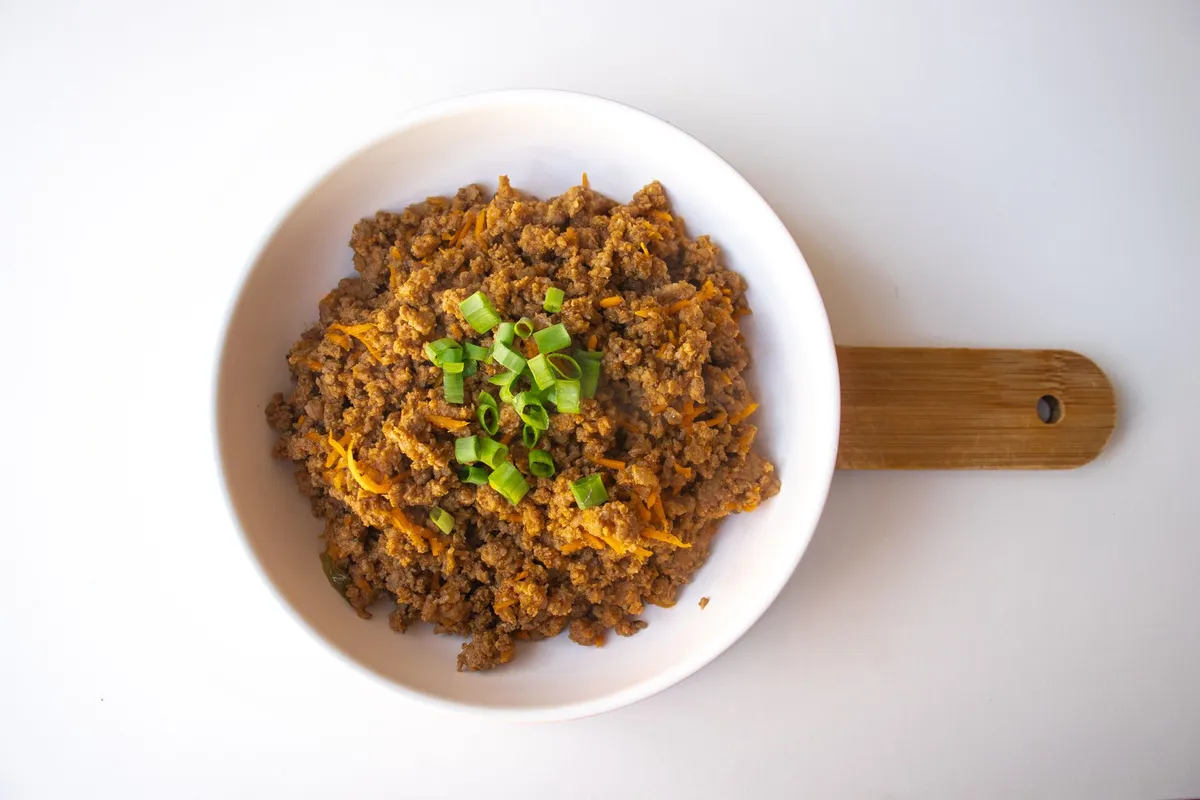
Official Storage Guidelines for Taco Meat
🇺🇸 USDA Guidelines
🇬🇧 FSA Guidelines
Disclaimer: This information is provided for general guidance only. It is based on publicly available USDA and FSA recommendations at the time of publication. Storage times may vary depending on handling, packaging, and storage conditions. Always check official sources and use your best judgment to ensure food safety.
This guide contains Amazon affiliate links, marked ↗. If you buy through one, we may earn a commission at no extra cost to you. Learn more about affiliate links.
Frequently Asked Questions
Can you reheat taco meat directly from frozen?
Yes, and it's easy to do straight from frozen without thawing first. Break the frozen block into a skillet over medium heat with a splash of water or broth, cover, and let it steam and soften for a few minutes before stirring and breaking it up further as it heats through - budget about 10-15 minutes total for a typical batch.
The microwave also works well: place the frozen meat in a microwave-safe dish, cover, and heat in 2-minute bursts on 50-70% power, breaking it up with a fork between bursts so it heats evenly instead of scorching at the edges while the center stays frozen.
Either way, reheat until it's steaming hot throughout (165°F/74°C), not just warm - this matters more for ground meat than for whole cuts, since grinding can distribute any surface bacteria throughout the meat.
If you froze the taco meat flat in a bag, it thaws and reheats noticeably faster than a block frozen in a deep container, since there's more surface area for heat to reach the center quickly.
Can taco meat be refrozen after it's thawed?
Yes, as long as it was thawed in the refrigerator and kept at 40°F (4°C) or below the whole time - USDA guidance allows refreezing cooked ground meat under those conditions, though texture and moisture will decline further with each cycle.
Don't refreeze taco meat that was thawed on the counter, in the microwave without immediately cooking it, or that sat above 40°F (4°C) for more than 2 hours (1 hour above 90°F/32°C) - discard it instead.
Because taco meat is already a well-seasoned, moisture-rich mixture, it tends to tolerate a second freeze better than plain cooked ground beef would - the sauce and spices help mask some of the textural change that repeated freezing causes.
If you've thawed more than you'll use, folding it into a fully-cooked dish (like a casserole or stuffed peppers) and freezing that is generally a better bet than refreezing the plain meat a second time.
Does taco meat freeze well?
Very well, actually - taco meat is one of the more freezer-friendly cooked dishes on this site. USDA guidance for cooked ground beef, turkey, or chicken puts best quality at about 2-3 months frozen, and the seasoning actually works in taco meat's favor: the salt, chili powder, cumin, and other spices help carry flavor through the freeze-thaw cycle better than plain unseasoned cooked meat does.
The main variable is fat content. Leaner ground meat (like 93/7 beef or ground turkey breast) freezes with less risk of the rancid, "freezer" off-flavor that fattier meat can develop over time, since fat oxidation - not bacterial growth - is what actually limits frozen meat's quality window. Draining excess grease before freezing helps regardless of which protein you use.
Spice blends generally hold up well in the freezer, though onion and garlic powder in particular can turn slightly bitter or musty after several months at freezer temperatures - not a safety issue, just a flavor one, and another reason to use frozen taco meat within the 2-3 month window rather than pushing it much longer.
What doesn't freeze well are the fresh toppings - lettuce wilts, tomatoes turn mushy and watery, and sour cream or guacamole separate. Freeze the meat on its own and add all of that fresh after reheating.
Best containers to freeze taco meat
A heavy-duty freezer bag pressed flat is the most space-efficient option and freezes faster than a deep container, since a thin, flat shape has more surface area exposed to the cold - lay the bag flat on a baking sheet until solid, then it'll stack like a book in the freezer.
For a larger batch you're not portioning out, a rigid, freezer-safe container(affiliate link, opens Amazon) works well and is easier to reheat directly from if you're going the skillet route, since you can just tip the frozen block straight into the pan.
Portioning before freezing - into meal-sized amounts rather than one large batch - means you only thaw what you'll actually use for a given taco night or lunch, rather than defrosting more than you need.
Whichever you use, press out as much air as possible and drain excess grease first; both steps meaningfully slow freezer burn and the fat oxidation that eventually dulls taco meat's flavor.
Best uses for taco meat after it's been frozen
Thawed taco meat is genuinely versatile beyond just tacos: use it in burritos, quesadillas, taco salad, nachos, stuffed peppers, taco soup, or layered into a Mexican-style casserole with rice and cheese.
It also works well stirred into scrambled eggs for a quick breakfast burrito, folded into mac and cheese for a taco-mac hybrid, or piled onto a baked potato with the usual toppings.
Because the seasoning is already built in, frozen taco meat is a genuinely useful shortcut ingredient - similar to having pre-cooked rice on hand, it turns a fridge full of odds and ends into a fast meal.
Always add fresh toppings (shredded lettuce, diced tomato, sour cream, shredded cheese) after reheating rather than freezing them with the meat - they hold their texture and flavor far better added fresh at serving time.
Does ground turkey or chicken taco meat freeze differently than beef?
Not dramatically, but there are a couple of differences worth knowing. Ground turkey and chicken are generally leaner than standard ground beef, which means less fat to oxidize and go rancid over time - in that sense, they can actually hold quality slightly longer in the freezer than fattier ground beef does.
The tradeoff is moisture: lean poultry has less fat to keep it from drying out, so thawed and reheated turkey or chicken taco meat can turn out a touch drier than beef unless you reheat it gently with a splash of broth or water to help rehydrate it.
Both freeze and thaw using the exact same method and timeline as beef - there's no need to treat them differently in terms of packaging, freezer temperature, or the 2-3 month quality window.
If you're using a plant-based ground "meat" alternative instead, most of these products are specifically formulated to freeze well (many are sold frozen to begin with), though texture after a second freeze-thaw cycle can turn slightly more crumbly than beef, turkey, or chicken would.
Can you make vegetarian taco filling from something other than meat, and does it freeze the same way?
Yes - lentils, black beans, or a mix of both are a common meat-free taco filling, seasoned the same way as ground beef (chili powder, cumin, garlic, onion) and simmered until the lentils are tender and most of the liquid has cooked off.
Cooked lentils freeze well on their own, and a lentil taco filling follows the same core rules: cool quickly, drain any excess liquid so the lentils don't turn mushy in the freezer, and pack flat in a bag or airtight container for about 5-6 months of good quality - actually a bit longer than meat-based taco filling typically holds.
Crumbled extra-firm tofu, seasoned and pan-fried until browned, is another common option; it freezes reasonably well but can turn slightly spongier in texture after thawing, similar to how plain tofu behaves when frozen.
Whichever base you use, the same rule about toppings applies - freeze the seasoned filling on its own, and add lettuce, tomato, cheese, and sour cream fresh after reheating.
Taco Meat Freezing and Storage Guide
Can you freeze taco meat? Yes, and it’s one of the more forgiving cooked dishes to freeze - the seasoning that makes it taco meat in the first place also happens to help it hold flavor well through a freeze-thaw cycle.
USDA guidance for cooked ground beef, turkey, or chicken applies directly here: about 3-4 days in the refrigerator and 2-3 months in the freezer for best quality. Freezing doesn’t change the safety math, but the way you package it - and what you leave out of the bag - makes a real difference to how good it tastes later.
How to Freeze Taco Meat
- Cool it quickly. Get cooked taco meat into a shallow container or spread it on a tray to cool, rather than leaving a deep pot to cool slowly on the stove - it needs to be refrigerated or frozen within 2 hours of cooking.
- Drain excess grease. Less fat exposed to freezer air means less rancidity and freezer burn over time, the same logic that makes lean cuts outlast fatty ones in the freezer.
- Pack it flat. A freezer bag pressed flat freezes faster and more evenly than a deep container, and thaws faster too.
- Portion before freezing into meal-sized amounts so you’re not thawing more than you’ll use for one taco night.
- Label with the date and protein type, and freeze at 0°F (-18°C) or below.
What Not to Freeze With It
This is the part people miss: taco meat freezes well, but taco toppings mostly don’t. Shredded lettuce wilts into a slimy mess, diced tomatoes turn watery and mushy, and sour cream, guacamole, or shredded cheese can separate or turn grainy. Freeze the seasoned meat on its own, and add all of that fresh after reheating - it takes an extra minute of prep and makes a real difference in the final result.
How Long Frozen Taco Meat Actually Lasts
At a steady 0°F (-18°C), taco meat is safe indefinitely - freezing halts bacterial growth completely. The 2-3 month window is about quality, not safety: spice blends generally hold up well, though onion and garlic powder specifically can turn slightly bitter after several months at freezer temperatures. Fat content is the other variable - leaner ground meat (93/7 beef, ground turkey or chicken breast) resists the rancid “freezer” flavor longer than fattier ground beef, since fat oxidation, not bacteria, is what actually limits how long frozen meat tastes its best.
Reheating Taco Meat From Frozen
No need to thaw first. In a skillet, break the frozen block apart over medium heat with a splash of water or broth, cover, and let it steam and soften for a few minutes before stirring it the rest of the way through - about 10-15 minutes total. In the microwave, heat in 2-minute bursts at 50-70% power, breaking it up between bursts so it heats evenly rather than scorching at the edges while the center stays frozen. Either way, reheat until steaming hot throughout (165°F/74°C) - this matters more for ground meat than whole cuts, since grinding can spread any surface bacteria through the whole batch.
Best Uses for Frozen Taco Meat
Beyond tacos: burritos, quesadillas, taco salad, nachos, stuffed peppers, taco soup, or a Mexican-style casserole layered with rice and cheese. Shredded, sauced pork makes a great taco filling too, and freezes by the same shallow-portion, drain-the-fat logic as ground beef. It’s also a solid shortcut stirred into scrambled eggs for a quick breakfast burrito, or piled onto a baked potato with the usual fixings.
Common Mistakes to Avoid
The most common mistake is freezing a full assembled taco - meat, lettuce, tomato, cheese, sour cream, all together - and being disappointed by the soggy, separated result on thawing. Freeze the seasoned meat and tortillas separately, with the meat portioned and well-drained. The second is freezing a deep, un-portioned block that takes forever to thaw and forces you to reheat far more than you need for one meal. The third is skipping the grease-draining step, which shortens how long the meat tastes good in the freezer even though it doesn’t make it unsafe. Properly packed, taco meat holds up better than almost any other cooked dish on this site.
Editor's Picks
Gear Worth Buying for Taco Meat
OXO Good Grips POP Container, Big Square Tall (6.0 Qt)
Holds a full batch of seasoned taco meat without cramming it into a small tub.
Shop on AmazonStasher Stand-Up Mid Reusable Silicone Bag (56 oz)
A premium, reusable stand-in for disposable freezer bags - freezer, oven, and dishwasher safe.
Shop on AmazonRubbermaid Brilliance Airtight Food Storage Containers, 24-Piece Set
A complete, leak-proof set that covers nearly any portion size this guide calls for.
Shop on Amazon
As an Amazon Associate, we earn from qualifying purchases.
Important Safety Guidelines
- Cool cooked taco meat quickly and get it into the refrigerator or freezer within 2 hours of cooking (1 hour if the room is above 90°F/32°C) - don't let a full pan sit out to cool on the stovetop.
- Refrigerate at or below 40°F (4°C) and use within 3-4 days, or freeze it before that window closes.
- Freeze at 0°F (-18°C) or below in a shallow, airtight container or freezer bag; shallow packaging cools and freezes faster than a deep pot of meat, limiting the time it spends in the temperature danger zone.
- Drain excess grease before freezing where practical - less fat exposed to air means less freezer burn and rancidity over time, similar to why fattier cuts like bacon have shorter quality windows than lean meat.
- Ground meat mixtures are more prone to bacterial contamination than whole cuts because grinding mixes surface bacteria throughout the meat, so treat leftover taco meat with the same care as any other cooked ground beef, turkey, or chicken.
- Reheat taco meat to steaming hot (165°F/74°C) throughout before eating, whether it's freshly cooked or thawed from the freezer.
- Refreezing is only safe if the taco meat was thawed in the refrigerator and kept at 40°F (4°C) or below the entire time; never refreeze meat thawed on the counter or that sat above 40°F (4°C) for more than 2 hours.
- Don't freeze taco meat together with raw-vegetable toppings (lettuce, tomato, onion) or dairy toppings (sour cream, shredded cheese, guacamole) - these don't freeze well and will make the whole batch watery or separated once thawed.
- Label with the date and protein type (beef, turkey, chicken); frozen taco meat stays safe indefinitely at 0°F (-18°C), but quality is what actually declines over time.
Key Safety Reminders
- Always label containers with freezing date
- Use airtight containers to prevent freezer burn
- Follow proper thawing procedures
You Might Also Like
Can You Freeze Bacon?
Yes, you can freeze bacon, both raw and cooked. Raw bacon holds best quality for about 1 month in the freezer (some producers say up to 4 months), while cooked bacon is good for about 1 month as well. That's a shorter window than most raw meats get, and it's not about bacteria - it's the high fat content slowly turning rancid, a chemical process freezing only slows, not stops. Bacon stays safe indefinitely at 0°F (-18°C); quality is what actually declines.
Can You Freeze Beef and Roast Beef?
Yes, you can freeze raw beef, cooked beef, and roast beef. Freeze raw roasts and other whole cuts for 4 to 12 months for best quality, while cooked beef is best within 2 to 3 months. Divide sliced roast beef with parchment, remove as much air as possible, and thaw it in the refrigerator so it stays juicy and safe.

Can You Freeze Casseroles?
Yes, most cooked casseroles freeze well for 2 to 3 months at peak quality, though university extension testing rates hearty combination dishes like lasagna and baked bean casseroles as good for up to 4 to 6 months when stored at a steady 0°F (-18°C). Cool them quickly in shallow portions, leave crisp toppings off until reheating, and expect potatoes, pasta, cream sauces, and soft vegetables to change texture. Thaw in the refrigerator or bake from frozen, and heat the center to 165°F (74°C).

Can You Freeze Chick-fil-A Nuggets?
Yes, you can freeze leftover Chick-fil-A nuggets. Chill them quickly, freeze in a single layer so they don't clump, then reheat in an oven or air fryer rather than a microwave to keep the breading from going soggy. Chick-fil-A doesn't publish its own freezing guidance, so this follows general USDA rules for cooked, breaded chicken.
Sources & References
This information is based on official guidelines from trusted food safety authorities:
Ground Beef and Food Safety
View Source →Leftovers and Food Safety
View Source →Freezing and Food Safety
View Source →How to chill, freeze and defrost food safely
View Source →
About the Author

Disclaimer
The information on this website is provided for general informational purposes only. While we work to keep our food storage and freezing guides accurate and current, we are not food safety professionals, nutritionists, or medical experts, and our recommendations may not account for every individual circumstance, product type, or storage condition.
Always consult official food safety guidance (such as your national food safety agency) and use your own judgment before consuming stored or frozen food. CanIFreeze.com assumes no responsibility or liability for any loss, damage, illness, or other adverse outcome resulting from reliance on the information provided on this site.
CanIFreeze.com is a participant in the Amazon Associates Program, an affiliate advertising program designed to provide a means for sites to earn advertising fees by linking to Amazon.com and its affiliated sites. As an Amazon Associate we earn from qualifying purchases made through links on this site, at no extra cost to you. Product links are clearly marked where they appear.
Disclaimer date: