Official Storage Guidelines for Oat Milk
🇺🇸 USDA Guidelines
🇬🇧 FSA Guidelines
Disclaimer: This information is provided for general guidance only. It is based on publicly available USDA and FSA recommendations at the time of publication. Storage times may vary depending on handling, packaging, and storage conditions. Always check official sources and use your best judgment to ensure food safety.
This guide contains Amazon affiliate links, marked ↗. If you buy through one, we may earn a commission at no extra cost to you. Learn more about affiliate links.
Frequently Asked Questions
Can you use oat milk directly from frozen?
Not straight from frozen as a pour - oat milk needs to thaw before you can use it, since it freezes into a solid block or, if portioned into cubes, small solid pieces.
For coffee or a hot drink, a frozen cube can go straight into the hot liquid and melt in, similar to using an ice cube, though it'll take a minute or two to fully incorporate.
For baking or cooking, thaw fully in the refrigerator first, then shake, stir, or blend before measuring it into a recipe - the texture change from freezing is far less noticeable once it's baked into something or cooked into a sauce.
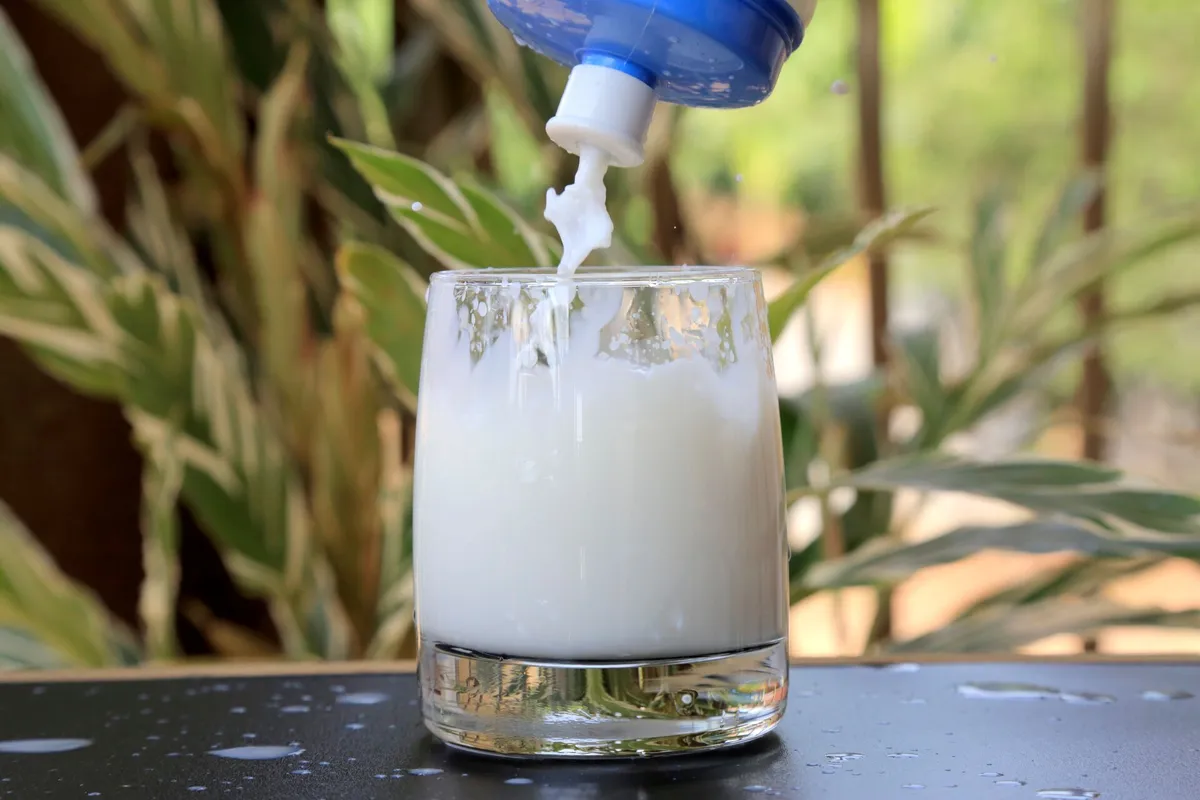
Drinking it straight after thawing is possible but not where oat milk shows its best side - the graininess is most noticeable in a plain glass, and much less so mixed into coffee, oatmeal, or a smoothie.
Can frozen oat milk be refrozen once it's thawed?
Technically yes, if it was thawed in the refrigerator and kept at 40°F (4°C) or below the whole time, but there's not much reason to. Oat milk's texture takes its biggest hit on the first freeze, and a second cycle mostly just compounds the graininess without meaningfully changing the safety picture.
Don't refreeze oat milk that was left out at room temperature, thawed on the counter, or that sat above 40°F (4°C) for more than 2 hours (1 hour above 90°F/32°C).
If you've thawed more than you'll use, it's generally better to use it up in cooking or baking over the next few days than to refreeze it - oat milk that's already grainy from one freeze won't improve by going through the freezer again.
Portioning into smaller amounts before the first freeze (rather than freezing a whole carton) is the easiest way to avoid ever needing to refreeze it in the first place.
Does oat milk freeze well?
Not especially, though it's far from ruined. Oat milk relies on a combination of natural oat starches, beta-glucan (a soluble fiber unique to oats that gives them their characteristic silky, slightly gummy texture even before processing), and added emulsifiers or gums to stay smooth and pourable. Freezing disrupts all three: ice crystals physically separate the fat and starch particles, the emulsifiers become less effective at holding everything together, and the beta-glucan can clump or turn slightly gelatinous as it thaws - which is where the "slimy" texture some people notice specifically in thawed oat milk, more than in other plant milks, comes from.
This is a genuine textural difference from other plant milks: almond milk tends to just separate and turn grainy, soy milk splits into visible layers, but oat milk's starch and beta-glucan content give it a slightly different failure mode - less like separation, more like an uneven, gummy thickening in spots.
None of this is a safety concern. A thawed, well-shaken or blended oat milk is perfectly fine to drink or cook with; it just won't pour as smoothly or taste quite as clean as it did before freezing.
Homemade oat milk (just blended oats and water, strained) tends to separate even more dramatically than store-bought, since it lacks the stabilizers commercial brands add specifically to prevent this - expect to blend it hard after thawing to bring it back together.
Best containers to freeze oat milk
A lidded silicone freezer tray(affiliate link, opens Amazon) is a good fit for oat milk, since it portions it into small, measured cubes - handy for adding exactly one serving to coffee or oatmeal without thawing an entire carton.
For larger amounts, a rigid, freezer-safe container works well; leave about an inch of headspace, since the liquid expands as it freezes.
Avoid freezing oat milk in its original cardboard carton - most aren't designed to expand with freezing liquid and can split at a seam, leaving a mess in the freezer.
Whatever container you use, label it with the date; oat milk doesn't become unsafe simply from time in the freezer, but flavor and texture keep declining gradually the longer it sits, so using it within a couple of months gives the best result.
Best uses for oat milk after it's been frozen
Coffee and tea are the easiest use - stir or blend thawed oat milk well, and any graininess is barely noticeable once it's mixed into a hot drink, especially a latte or cappuccino where it's already being frothed or blended in.
Baking is another strong option: pancakes, muffins, quick breads, and other batters absorb the texture change completely, and oat milk's naturally slightly sweet, oaty flavor works well in baked goods regardless.
Savory cooking works too - creamy soups, mashed potatoes, or a béchamel-style sauce all hide the textural change well, especially once heated and stirred.
For drinking straight from a glass, where the texture change is most noticeable, fresh (unfrozen) oat milk will always give a better experience - save frozen-and-thawed oat milk for coffee, cooking, and baking instead.
Why does oat milk behave differently in the freezer than dairy milk or other plant milks?
It comes down to what's actually suspended in the liquid. Dairy milk is a fat-in-water emulsion, and this site's dairy milk guide covers why that separates into a grainy, fatty texture when frozen - fundamentally a fat and water problem.
Oat milk adds a third component into the mix: beta-glucan, a soluble fiber naturally present in oats that gives oat milk (and oatmeal) its characteristic silky, slightly viscous texture even before any processing happens. Freezing disrupts the beta-glucan's structure along with the fat and any added emulsifiers, which is why thawed oat milk can end up with a slightly gummy or gelatinous quality that's a bit different from the simpler separation you see in dairy milk, almond milk, or soy milk.
None of the plant or dairy milks freeze perfectly, but the specific way each one changes texture comes down to its own unique mix of fats, proteins, starches, and fibers - which is also why the fix (shake, stir, or blend hard before using) works reasonably well across all of them, even though the underlying cause is slightly different for each.
Oat Milk Freezing and Storage Guide
Can you freeze oat milk? Yes, though it’s worth knowing upfront that it won’t come back exactly the same. Freezing tends to leave oat milk grainy, or even a little slimy, once thawed - a texture change that’s genuinely a bit different from what happens to dairy milk or other plant milks, and worth understanding before you freeze a whole carton on a whim.
Why Oat Milk Gets Slimy, Not Just Grainy
Oat milk isn’t just fat suspended in water the way dairy milk is. It also contains beta-glucan, a soluble fiber naturally present in oats that gives oat milk (and oatmeal) its characteristic silky, slightly viscous texture even before any processing happens. Freezing disrupts the beta-glucan’s structure right along with the fat and any added emulsifiers - which is why thawed oat milk can come out with a slightly gummy or gelatinous quality, distinct from the simpler separation you’d see in dairy milk, almond milk, or soy milk. None of this is a safety concern - it’s purely textural, and a good shake, stir, or blend brings it back to a usable, if not quite original, consistency.
How to Freeze Oat Milk
- Portion it first. Freezing the whole carton means thawing the whole carton later - a silicone tray(affiliate link, opens Amazon) or small containers let you thaw only what you need.
- Leave headspace in rigid containers; the liquid expands as it freezes.
- Skip the original carton. Most cardboard cartons aren’t built to expand with freezing liquid and can split at a seam.
- Label with the date, and freeze at 0°F (-18°C) or below.
How Long Oat Milk Actually Lasts
Refrigerated oat milk, once opened, is good for about 7-10 days at or below 40°F (4°C). Shelf-stable, aseptically-packaged cartons keep for months unopened at room temperature, but need the same refrigeration once opened. Frozen, plan on using it within about 2 months for the best texture - it won’t become unsafe past that point, but flavor and consistency keep drifting the longer it sits.
Best Uses for Thawed Oat Milk
Coffee and tea hide the texture change best, especially in a latte or cappuccino where it’s already being frothed or blended. Baking - pancakes, muffins, quick breads - absorbs the change completely, and oat milk’s naturally sweet, oaty flavor works well there regardless. Creamy soups, mashed potatoes, and béchamel-style sauces are solid savory options too. For drinking straight from a glass, where the graininess is most noticeable, fresh oat milk will always win - save the frozen-and-thawed carton for cooking and baking instead.
Homemade Oat Milk Freezes a Bit Differently
Homemade oat milk (blended oats and water, strained) lacks the stabilizers and emulsifiers commercial brands add specifically to prevent separation, so it tends to separate even more dramatically after freezing than store-bought does. It also has a shorter safe fridge life without those preservatives - about 4-5 days refrigerated - so freeze it promptly if you won’t finish a batch in time, and expect to blend it hard after thawing to bring it back together.
Common Mistakes to Avoid
The most common mistake is freezing a full, unopened carton expecting it to thaw back to its original pourable, smooth texture - it won’t, and the cardboard packaging isn’t even designed for the expansion. The second is drinking thawed oat milk straight without shaking or blending it first, which is when the graininess is most noticeable. The third is treating homemade oat milk with the same casual timeline as a shelf-stable commercial carton - without preservatives, it needs quicker refrigeration and freezing to stay at its best.
For the grain itself rather than the drink, see the oats guide, which covers cooked oatmeal, overnight oats, and dry rolled oats separately.
Editor's Picks
Gear Worth Buying for Oat Milk
Souper Cubes 1/2 Cup Silicone Freezer Tray with Lid
Portions oat milk into measured cubes for coffee, oatmeal, or baking, rather than freezing a whole carton at once.
Shop on AmazonStasher Stand-Up Mid Reusable Silicone Bag (56 oz)
A premium, reusable stand-in for disposable freezer bags - freezer, oven, and dishwasher safe.
Shop on AmazonRubbermaid Brilliance Airtight Food Storage Containers, 24-Piece Set
A complete, leak-proof set that covers nearly any portion size this guide calls for.
Shop on Amazon
As an Amazon Associate, we earn from qualifying purchases.
Important Safety Guidelines
- Refrigerated oat milk should be kept at or below 40°F (4°C); once opened, it becomes perishable and should not sit out for more than 2 hours (1 hour above 90°F/32°C).
- Shelf-stable, aseptically-packaged (UHT) oat milk is safe unrefrigerated while unopened, but once opened it needs the same refrigeration as the fresh, always-chilled kind, and should be used within about 7-10 days.
- Freezing oat milk is safe but changes its texture; freeze in a rigid, freezer-safe container or a lidded silicone tray with headspace, since the liquid expands as it freezes.
- Homemade oat milk (blended oats and water, strained) has no commercial stabilizers or preservatives, so treat it more cautiously than store-bought: refrigerate immediately, use within about 4-5 days, and freeze promptly if you won't finish it in time.
- Always check the printed use-by or best-before date, and follow it even for unopened shelf-stable cartons once that date has passed.
- Thaw oat milk in the refrigerator, not on the counter, and shake or blend it well before use - separation and graininess are normal and not a sign of spoilage.
- Discard oat milk that smells sour, off, or noticeably different from fresh, or that has an unusual thick, curdled, or chunky texture beyond the mild graininess freezing can cause.
- Label frozen portions with the date; while oat milk won't become unsafe simply from sitting in the freezer, flavor and texture continue to decline the longer it's stored past a couple of months.
Key Safety Reminders
- Always label containers with freezing date
- Use airtight containers to prevent freezer burn
- Follow proper thawing procedures
You Might Also Like
Can You Freeze Chicken Broth and Stock?
Yes, chicken broth and stock freeze exceptionally well. Cool homemade broth quickly, portion it, leave expansion space, and freeze for about 2-3 months for best quality. Commercial broth can also be frozen after opening. Never freeze broth in an unopened can, carton or completely full glass jar.

Can You Freeze Coconut Milk?
Yes, coconut milk freezes well - it's one of the more freezer-friendly liquids on this site, and freezing leftover canned coconut milk in an ice cube tray is a genuinely popular, effective trick. Expect it to separate into a firmer, whiter layer and a more watery layer as it freezes and thaws; this is completely normal and disappears once you blend it for about 30 seconds after thawing. Opened, it holds well for about 2 months in the freezer and 4-6 days in the fridge.

Can You Freeze Cranberry Sauce?
Yes, you can freeze cranberry sauce, but do not expect the exact same texture when it thaws. Cranberry sauce freezing can cause separation and a softer set. Freeze small portions, thaw in the fridge, then stir hard before serving or cooking with it.
Can You Freeze Grapefruit?
Yes, you can freeze grapefruit whole, as peeled sections, zest, or juice. For the best section quality, NCHFP recommends removing membranes and seeds and packing the fruit in 40 percent syrup. Dry-packed or whole grapefruit becomes soft after thawing. Grapefruit can interact with some medicines, and freezing does not remove that interaction.
Sources & References
This information is based on official guidelines from trusted food safety authorities:
Plant-Based Milk and Animal Food Alternatives
View Source →Are You Storing Food Safely?
View Source →Freezing and Food Safety
View Source →How to chill, freeze and defrost food safely
View Source →
About the Author

Disclaimer
The information on this website is provided for general informational purposes only. While we work to keep our food storage and freezing guides accurate and current, we are not food safety professionals, nutritionists, or medical experts, and our recommendations may not account for every individual circumstance, product type, or storage condition.
Always consult official food safety guidance (such as your national food safety agency) and use your own judgment before consuming stored or frozen food. CanIFreeze.com assumes no responsibility or liability for any loss, damage, illness, or other adverse outcome resulting from reliance on the information provided on this site.
CanIFreeze.com is a participant in the Amazon Associates Program, an affiliate advertising program designed to provide a means for sites to earn advertising fees by linking to Amazon.com and its affiliated sites. As an Amazon Associate we earn from qualifying purchases made through links on this site, at no extra cost to you. Product links are clearly marked where they appear.
Disclaimer date: