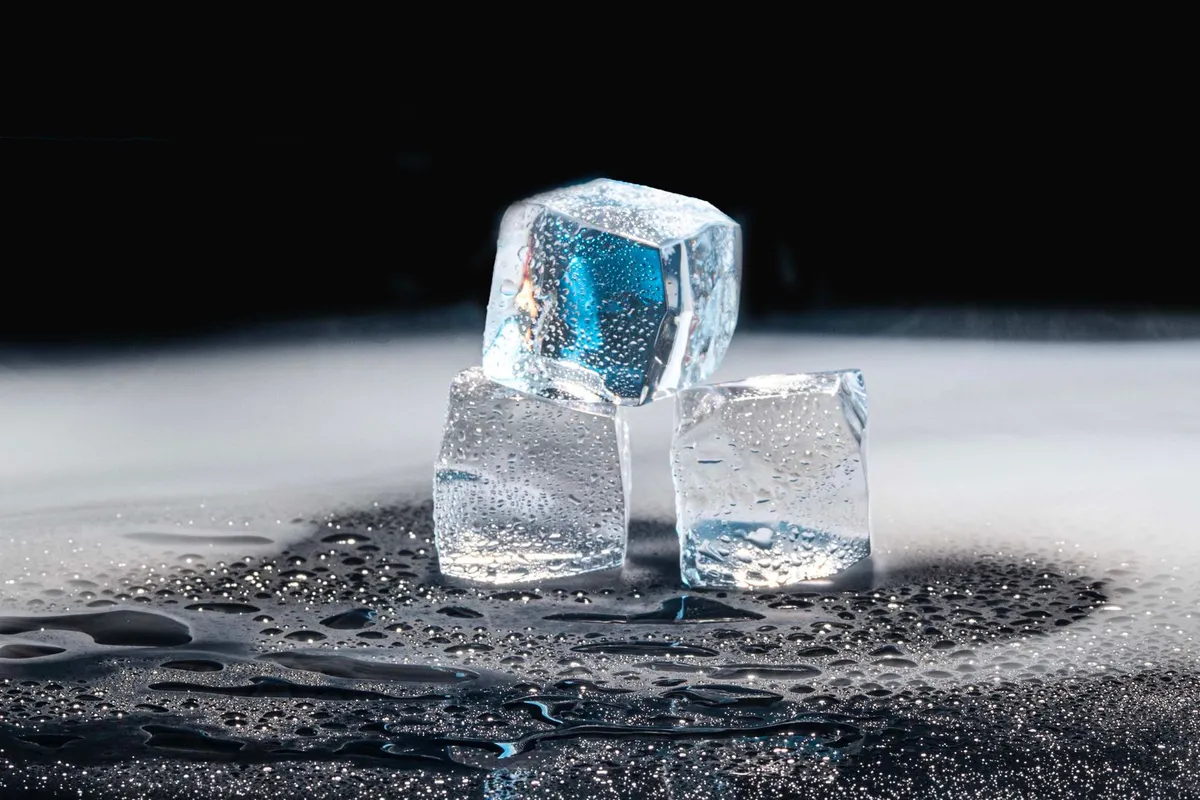
Official Storage Guidelines for Ice Cubes
🇺🇸 USDA Guidelines
🇬🇧 FSA Guidelines
Disclaimer: This information is provided for general guidance only. It is based on publicly available USDA and FSA recommendations at the time of publication. Storage times may vary depending on handling, packaging, and storage conditions. Always check official sources and use your best judgment to ensure food safety.
This guide contains Amazon affiliate links, marked ↗. If you buy through one, we may earn a commission at no extra cost to you. Learn more about affiliate links.
Frequently Asked Questions
How long does it actually take for ice cubes to freeze?
In a typical home freezer set to 0°F/-18°C, a standard tray of ice cubes takes about 3-4 hours to freeze solid, start to finish.
That number moves around based on a few real factors: smaller cubes freeze faster than large ones (sometimes in as little as an hour) because there's less water to cool all the way through; a colder freezer setting speeds things up, with some very cold home freezers getting a tray done in 2-3 hours; and how often you open the freezer door matters too, since every opening lets warm air in and slows everything down for a while.
If you need ice in a hurry, using a metal tray, filling it only partway, and putting it in the coldest part of the freezer (usually the back, away from the door) are the most reliable ways to shave time off, rather than anything to do with water temperature.
Does hot water really freeze faster than cold water?
This is the Mpemba effect, and the honest answer is: sometimes, under specific conditions, but it's not a reliable kitchen trick and scientists still don't fully agree on why it happens or how consistently it's real.
The effect is named after Erasto Mpemba, a Tanzanian student who noticed in 1963 that hot melted ice-cream mix froze faster than a cooler batch. Proposed explanations include faster evaporation from hot water (so there's simply less water left to freeze), convection currents that change how heat is lost, and differences in dissolved gas content - but attempts to reproduce the effect reliably in controlled lab conditions have given inconsistent results, and some researchers argue the effect disappears entirely once you control for all the variables carefully.
For home ice-making, don't count on hot water saving you time. What reliably matters is your freezer's temperature, the size of the cubes, and how much water you're trying to freeze at once.
Why is my ice cloudy, and how do I make clear ice cubes at home?
Cloudy ice happens because ordinary tap or filtered water contains dissolved air and minerals. As a cube freezes from the outside in, from all directions in a standard tray, that trapped air and mineral content gets pushed toward the center with nowhere left to go, forming countless tiny bubbles that scatter light and make the cube look white and cloudy.
Clear ice, the kind you see in cocktail bars, is made using directional freezing: water is frozen from only one direction, usually top-down, in an insulated container. This pushes the trapped air and impurities ahead of the freezing edge instead of trapping them in the middle, concentrating them in one cloudy pocket that you cut away once the rest has frozen clear.
At home, you can approximate this with an insulated cooler, a small igloo-style cooler, or a purpose-made clear-ice tray: fill it with water, freeze until mostly solid, then pour off or cut away the cloudy, unfrozen or slushy portion (usually at the bottom) before cutting the clear block into cubes.
How long do ice cubes last in the freezer before they go bad?
Ice itself doesn't spoil the way food does, and it stays safe to use indefinitely as long as your freezer holds a steady 0°F/-18°C or below.
What does change over time is taste and clarity: ice left in an open tray or an uncovered container for weeks or months will slowly absorb odors from whatever else is in the freezer, can pick up a stale, "freezer" taste, and may shrink slightly through sublimation, where ice evaporates directly into vapor in the dry freezer air.
For the best-tasting ice, most people find homemade cubes are noticeably better within about 1-2 months, especially if they're kept in a sealed bag or covered bin rather than an open tray. If ice has picked up an obvious off smell or flavor, it's a quality problem, not typically a safety one - but if you're not sure, making a fresh batch is quick and easy.
Can ice cubes make you sick?
Yes, if the water or the equipment used to make them wasn't clean - the ice itself doesn't create new risk once it's frozen, but freezing doesn't kill bacteria or viruses either, so anything present in the water before freezing is generally still present after thawing.
The two most common real-world risks are ice made from unsafe water (untreated well water, water during a boil-water notice, or tap water in places where it isn't safe to drink) and ice machines that haven't been cleaned - the FDA notes that ice machines are among the most frequently flagged items during restaurant health inspections, because their damp, dark interiors are a good environment for mold, yeast, and bacterial biofilm to build up if not regularly sanitized.
At home, the fix is simple: only freeze water you'd be comfortable drinking, wash ice cube trays regularly, and clean a built-in ice maker or ice bin on the schedule its manufacturer recommends.
How do I clean an ice maker or ice machine at home?
Start by turning the machine off or unplugging it (for a fridge's built-in ice maker, switch it to the "off" or "no ice" setting), then empty out and discard whatever ice is currently in the bin rather than reusing it mid-clean.
Wash the bin, scoop, and any other removable parts in hot, soapy water, or run them through the dishwasher if they're labeled dishwasher-safe. Wipe down the interior of the machine with a solution of warm water and white vinegar, a mild, food-safe descaler and disinfectant, rather than bleach, which many manufacturers specifically warn against using on internal plastic components.
If your model has a built-in cleaning or sanitizing cycle, run it as described in the manual. Most manufacturers recommend a full clean like this at least twice a year, more often if you're in a hard-water area where mineral scale builds up faster and gives mold and biofilm more surface area to grip onto.
Rinse everything thoroughly so no cleaning residue is left behind, let all parts air-dry completely before reassembling, and plan to toss the first batch or two of ice the machine makes afterward, since it can carry a faint cleaning-solution taste.
What's the best tray or material to freeze ice faster?
Metal trays (aluminum or stainless steel) freeze ice faster than plastic or silicone because metal conducts heat away from the water more efficiently, pulling the cold from the freezer air into the water more quickly.
Silicone and plastic trays are more common because they're flexible and easy to pop cubes out of, but they insulate slightly, which means marginally slower freezing - usually not enough to matter for everyday use, but noticeable if you're in a genuine hurry.
Beyond material, the biggest practical levers are cube size (smaller cubes freeze faster) and how full you fill each cavity (less water per cube means less to freeze). Glass isn't recommended for ice trays at all - the same expansion that can crack a glass jar of frozen liquid is a real risk in a rigid glass mold.
Can you refreeze melted ice or reuse water that's thawed?
Yes, from a safety standpoint - plain water, once melted, is just water again, and there's nothing about the freeze-thaw cycle itself that makes it unsafe to refreeze, as long as it hasn't been contaminated in the meantime (for example, by sitting uncovered next to raw food, or being handled with dirty hands or a used glass).
The only real consideration is cleanliness rather than the freezing itself: if a batch of ice melted in an open container in the fridge or on the counter, treat the water the same way you'd treat any water that's been standing out - if you're unsure it stayed clean, it costs nothing to start a fresh batch instead.
Why does my ice taste or smell like the freezer?
Ice is remarkably good at absorbing odors, because it's porous at a microscopic level and sits for long stretches in an environment full of other smells - onions, garlic, leftovers, fish, or anything not sealed tightly.
The fix is mostly about storage: keep ice in a covered silicone tray(affiliate link, opens Amazon) or a sealed bag rather than an open tray, avoid storing strong-smelling foods loosely (double-bag or use airtight containers for anything pungent), and don't let ice sit for months at a time - fresher batches simply haven't had as much time to pick up odors.
If your ice already tastes off, there's no way to "clean" it - melt it down, wash the tray or bin thoroughly, and start a new batch with fresh water.
Is it safe to use tap water for ice cubes, including when traveling?
At home, if your tap water is safe to drink, it's safe to freeze into ice - freezing doesn't add any risk beyond what's already true of the water itself.
The situation changes while traveling. In places where the tap water isn't considered safe to drink, health guidance (including CDC travel health advice) treats ice the same as tap water and recommends avoiding it in drinks, since freezing does not kill the bacteria, viruses, or parasites that unsafe water can contain. If you're unsure about the water quality somewhere you're staying, the safest options are ice made commercially from treated or bottled water, or skipping ice altogether and asking for drinks without it.
Ice Cubes Freezing and Storage Guide
Ice cubes are, technically, already frozen - so “can you freeze ice cubes” is really a question about time and quality: how long it takes to freeze a batch, why it sometimes goes cloudy or slushy, and how to keep it tasting clean.
How Long It Actually Takes for Ice Cubes to Freeze
In a typical home freezer holding a steady 0°F/-18°C, a standard ice cube tray takes about 3-4 hours to freeze completely solid. That’s an average, not a fixed number - several things push it faster or slower in practice:
- Freezer temperature. Water freezes at 32°F/0°C, but your freezer needs to be well below that to pull heat out of the water efficiently. A freezer running colder, closer to -10°F/-23°C, will freeze a tray noticeably faster than one hovering right around 0°F/-18°C.
- Cube size. Ice freezes from the outside in, so smaller cubes have less distance for the cold to travel to reach the center. Small or shallow cubes can freeze in about an hour; large novelty cubes or a big block can take most of a day.
- Tray material. Metal conducts heat far better than plastic or silicone, so a metal tray pulls warmth out of the water faster and freezes it sooner. Silicone and plastic are more convenient for popping cubes out, but they act as mild insulators, slowing things down slightly.
- How full the freezer is and how often the door opens. Every time the door opens, warm air rushes in and the freezer has to work to recover its temperature. A freezer that’s opened constantly, or one that’s nearly empty (empty freezers cycle temperature more than full ones, since there’s less cold mass to buffer the swings), will freeze a tray more slowly than a stable, well-stocked one.
If you need ice quickly, the most reliable levers are a colder freezer setting, a metal tray, and smaller cube cavities - not water temperature, which brings us to a much more debated idea.
Does Hot Water Really Freeze Faster? The Mpemba Effect
You’ll often hear that hot water freezes faster than cold water. This is a real, documented phenomenon called the Mpemba effect, named for a Tanzanian student who observed it while making ice cream in 1963 - but it’s genuinely more complicated than a kitchen hack.
The Royal Society of Chemistry ran a public competition in 2012 offering a prize for the best explanation, and received over 22,000 submissions without a single one earning a clear scientific consensus. Proposed mechanisms include faster evaporation from hot water (leaving less water to freeze), stronger convection currents redistributing heat, and differences in dissolved gas content changing how the water conducts heat. Some careful lab replications have failed to reproduce the effect consistently at all, which is why it remains debated rather than settled.
The practical takeaway: don’t rely on filling your tray with hot water to beat the clock. The variables that reliably matter - freezer temperature, cube size, tray material, and freezer traffic - are the ones worth controlling.
Why Ice Turns Cloudy - and How to Make It Clear
Tap and filtered water both carry dissolved air and minerals, even though you can’t see them in liquid form. In a standard tray, water freezes inward from every side at once. As the ice front advances, it pushes that trapped air and mineral content ahead of it, and since there’s nowhere left for it to go, it ends up concentrated in the center of the cube as thousands of microscopic bubbles. Light bounces off all those tiny surfaces instead of passing straight through, which is what makes the ice look cloudy or white rather than glass-clear.
Bars and restaurants get clear ice through directional freezing - freezing water from only one direction, usually top-down, the way a lake freezes from the surface while staying open water underneath. At home, you can copy this with an insulated cooler, a small “igloo” cooler, or a dedicated clear-ice tray: fill it with water and freeze until mostly solid, then pour off or cut away the cloudy, still-slushy portion (usually at the bottom, where the impurities collected) before cutting the clear block into cubes.
How Long Frozen Ice Cubes Stay Good
Ice doesn’t spoil the way food does, and it’s safe indefinitely as long as your freezer stays at 0°F/-18°C or colder. What actually changes over time is taste and clarity, not safety. Ice sitting for weeks in an open tray or an uncovered bin slowly absorbs odors from whatever else shares the freezer, can develop a flat “freezer” taste, and gradually shrinks through sublimation, where the ice surface turns directly into water vapor in the dry freezer air.
For the best-tasting ice, most kitchens do better making smaller, fresher batches - within about 1-2 months - stored in a sealed bag or a lidded silicone tray(affiliate link, opens Amazon) rather than an open tray. If a batch tastes off, that’s a quality issue you can fix by starting fresh, not typically a sign it’s become unsafe.
Keeping Ice Safe: Cleaning Trays and Ice Machines
Ice is legally classified as a food by the FDA, and it deserves the same basic hygiene as anything else you’d eat or drink. Only freeze water you’d be comfortable drinking as-is - that rules out untreated well water, water during a boil-water advisory, or tap water anywhere it isn’t considered safe. Wash trays regularly in hot, soapy water (or run dishwasher-safe trays through a cycle), and let them dry fully before refilling, since a damp tray between uses is an easy place for mold or mineral scale to build up.
If you use a built-in ice maker or a countertop machine, clean and sanitize it on the schedule its manufacturer recommends, and no less than twice a year - the FDA notes that ice machines are among the most commonly flagged items during restaurant health inspections, precisely because their dark, damp interiors are a comfortable environment for mold, yeast, and bacterial biofilm if they go too long without a proper clean.
Common Mistakes That Slow Down or Ruin a Batch of Ice
The most common mistake is simply not giving ice enough time - pulling a tray after an hour or two and getting slushy, half-frozen cubes that fuse together in the bag. The second is leaving ice uncovered in the freezer for months, which is almost always why it tastes stale or “off” by the time you use it. The third is reaching for hot water expecting a guaranteed speed boost from the Mpemba effect - it’s an interesting, still-debated phenomenon, not a reliable trick. And the fourth, more of a safety issue than a quality one, is freezing water you wouldn’t otherwise drink and assuming the freezer will make it safe - it won’t, since freezing pauses microbial activity rather than eliminating it.
Editor's Picks
Gear Worth Buying for Ice Cubes
Souper Cubes 1/2 Cup Silicone Freezer Tray with Lid
A lidded tray keeps a backup batch of cubes sealed off from freezer odors instead of sitting in an open tray.
Shop on AmazonStasher Stand-Up Mid Reusable Silicone Bag (56 oz)
A premium, reusable stand-in for disposable freezer bags - freezer, oven, and dishwasher safe.
Shop on AmazonRubbermaid Brilliance Airtight Food Storage Containers, 24-Piece Set
A complete, leak-proof set that covers nearly any portion size this guide calls for.
Shop on Amazon
As an Amazon Associate, we earn from qualifying purchases.
Important Safety Guidelines
- Ice for human consumption is legally classified as a food by the FDA, which means it must be made from safe, potable water and handled with the same care as any other ready-to-eat food.
- Only freeze water you would be comfortable drinking. Never make ice from water of unknown or questionable purity - well water that hasn't been tested, water during a boil-water advisory, or tap water in a region where the tap water itself isn't safe to drink.
- Clean ice cube trays regularly with hot, soapy water (or run them through the dishwasher if they're dishwasher-safe), and dry them before refilling. Trays that stay damp between uses can develop mold or mineral buildup that transfers into the ice.
- If you use a built-in ice maker or a countertop ice machine, clean and sanitize it on the schedule the manufacturer recommends, and never less than twice a year. Ice machines are one of the most commonly flagged items in food-safety inspections because their dark, damp interiors are an easy environment for mold, yeast, and biofilm to build up.
- Keep the ice bin's scoop stored outside the ice, in a clean, dry holder - never use a drinking glass to scoop ice, and never scoop with bare hands.
- Store ice away from raw meat, poultry, or seafood in the freezer, and keep the ice bin lid closed between uses to limit odor absorption and airborne contamination.
- If your freezer loses power, ice cubes are a useful visual check: a tray of solid cubes that partially melted and refroze into a fused, oddly shaped lump is a sign the freezer warmed enough that other food in it should be evaluated for safety too.
- If you're travelling somewhere the tap water isn't safe to drink, treat ice the same as tap water and avoid it - freezing does not kill the bacteria, viruses, or parasites that can be present in unsafe water.
Key Safety Reminders
- Always label containers with freezing date
- Use airtight containers to prevent freezer burn
- Follow proper thawing procedures
You Might Also Like
Can You Freeze Chicken Broth and Stock?
Yes, chicken broth and stock freeze exceptionally well. Cool homemade broth quickly, portion it, leave expansion space, and freeze for about 2-3 months for best quality. Commercial broth can also be frozen after opening. Never freeze broth in an unopened can, carton or completely full glass jar.

Can You Freeze Coconut Milk?
Yes, coconut milk freezes well - it's one of the more freezer-friendly liquids on this site, and freezing leftover canned coconut milk in an ice cube tray is a genuinely popular, effective trick. Expect it to separate into a firmer, whiter layer and a more watery layer as it freezes and thaws; this is completely normal and disappears once you blend it for about 30 seconds after thawing. Opened, it holds well for about 2 months in the freezer and 4-6 days in the fridge.

Can You Freeze Cranberry Sauce?
Yes, you can freeze cranberry sauce, but do not expect the exact same texture when it thaws. Cranberry sauce freezing can cause separation and a softer set. Freeze small portions, thaw in the fridge, then stir hard before serving or cooking with it.
Can You Freeze Grapefruit?
Yes, you can freeze grapefruit whole, as peeled sections, zest, or juice. For the best section quality, NCHFP recommends removing membranes and seeds and packing the fruit in 40 percent syrup. Dry-packed or whole grapefruit becomes soft after thawing. Grapefruit can interact with some medicines, and freezing does not remove that interaction.
Sources & References
This information is based on official guidelines from trusted food safety authorities:
FDA Regulates the Safety of Packaged Ice
View Source →FoodKeeper App - FoodSafety.gov
View Source →Food and Water Precautions for Travelers (CDC Yellow Book)
View Source →The Mpemba Effect - Royal Society of Chemistry Education
View Source →How Do I Make Clear Ice at Home? A Food Scientist Shares Easy Tips
View Source →How to chill, freeze and defrost food safely
View Source →
About the Author

Disclaimer
The information on this website is provided for general informational purposes only. While we work to keep our food storage and freezing guides accurate and current, we are not food safety professionals, nutritionists, or medical experts, and our recommendations may not account for every individual circumstance, product type, or storage condition.
Always consult official food safety guidance (such as your national food safety agency) and use your own judgment before consuming stored or frozen food. CanIFreeze.com assumes no responsibility or liability for any loss, damage, illness, or other adverse outcome resulting from reliance on the information provided on this site.
CanIFreeze.com is a participant in the Amazon Associates Program, an affiliate advertising program designed to provide a means for sites to earn advertising fees by linking to Amazon.com and its affiliated sites. As an Amazon Associate we earn from qualifying purchases made through links on this site, at no extra cost to you. Product links are clearly marked where they appear.
Disclaimer date: