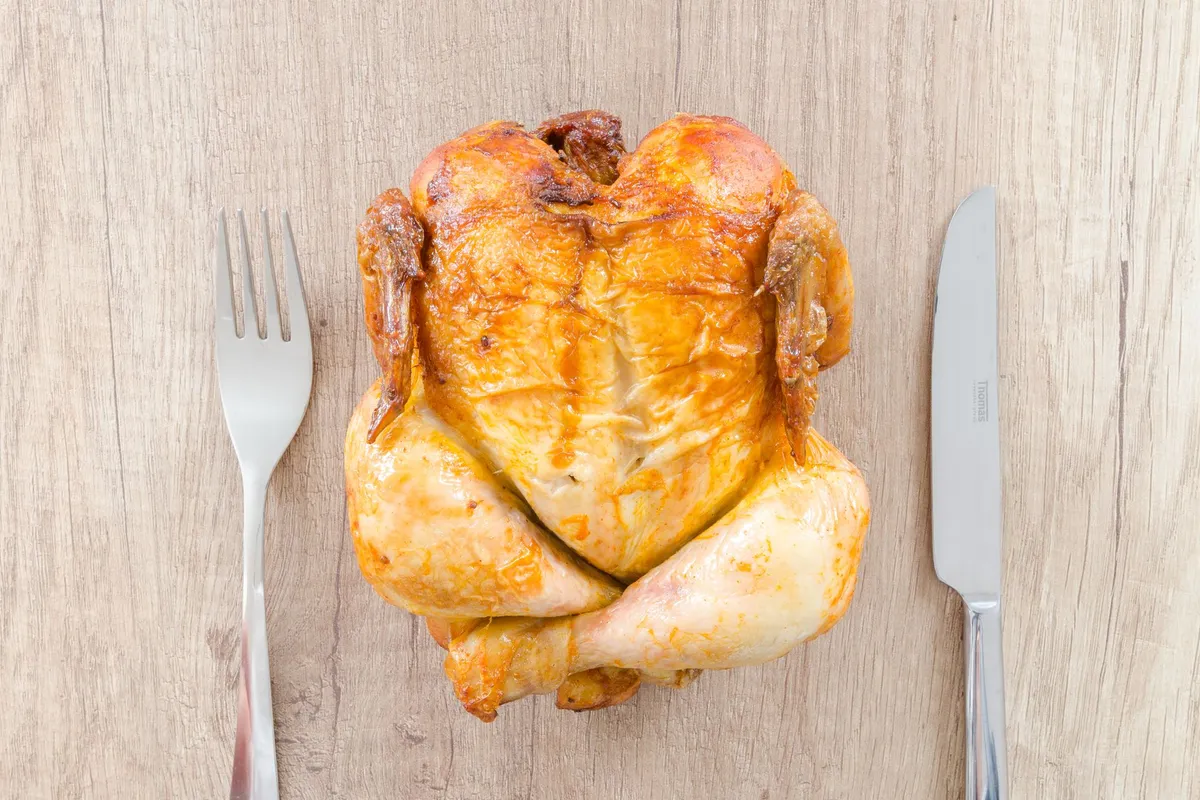
Official Storage Guidelines for Costco Rotisserie Chicken
🇺🇸 USDA Guidelines
🇬🇧 FSA Guidelines
Disclaimer: This information is provided for general guidance only. It is based on publicly available USDA and FSA recommendations at the time of publication. Storage times may vary depending on handling, packaging, and storage conditions. Always check official sources and use your best judgment to ensure food safety.
This guide contains Amazon affiliate links, marked ↗. If you buy through one, we may earn a commission at no extra cost to you. Learn more about affiliate links.
Frequently Asked Questions
Can you eat frozen rotisserie chicken straight from frozen?
You can cook it from frozen in some forms, but it's not the best approach for a whole bird or bone-in pieces, since the outside can overcook before the center is safely hot.
Frozen shredded or diced meat is the easiest to use straight from frozen: drop it into a simmering soup, a stir-fry, or a casserole and let the heat finish the job while it's already broken into small pieces.
For larger frozen portions, it's safer and gives better results to thaw in the refrigerator first, then reheat until the internal temperature reaches at least 165°F / 74°C throughout, checked with a food thermometer.
Microwaving from frozen tends to heat unevenly and can leave cold spots, so if you must microwave, use the defrost setting first, break the meat apart partway through, and finish with a short blast on high until steaming hot.
Can rotisserie chicken be refrozen after it's thawed?
Yes, with the same conditions that apply to any cooked poultry: it's safe to refreeze if it was thawed in the refrigerator and stayed at or below 40°F / 4°C the whole time, though the texture will be a little drier with each cycle.
Do not refreeze chicken that was thawed on the counter, in a warm car, or left out for more than 2 hours (1 hour above 90°F / 32°C) - the risk isn't the freezing itself, it's the time the meat may have spent in the temperature "danger zone" between 40-140°F (4-60°C) where bacteria can multiply.
If you've already reheated the chicken once, USDA guidance says it's technically fine to cool and refreeze it again, but UK guidance from the NHS and FSA is more conservative and generally recommends only one reheat-and-refreeze cycle. Either way, quality drops each time, so it's better to only thaw and reheat the portion you're actually going to eat.
Does rotisserie chicken freeze well?
The meat freezes well; the skin does not, and the whole bird is a mixed bag.
Boneless, skinless meat that's been shredded or diced holds up nicely in the freezer - it reheats into soups, casseroles, tacos, and salads with very little quality loss. Dark meat (thighs and legs) generally freezes and reheats a bit more forgivingly than white breast meat, which can dry out more easily on reheat.
The skin is the weak point no matter how you freeze it: rotisserie skin gets its appeal from being freshly roasted and crisp, and freezing turns any skin soft, rubbery, or slightly gummy on thawing, with no way to restore that fresh-off-the-rotisserie crackle. If skin texture matters to you, it's worth removing and discarding it before freezing rather than being disappointed later.
Freezing the bird whole, bones and all, is the least efficient option: it takes up far more freezer space, freezes and thaws more slowly and unevenly than smaller portions, and you still have to deal with the same rubbery skin once it's thawed.
Best containers to freeze rotisserie chicken
For shredded or diced meat, a heavy-duty zip-top freezer bag pressed flat and with the air squeezed out is ideal - it freezes fast, thaws fast, and stacks neatly in a chest or upright freezer.
Portion into meal-sized amounts before freezing (2 cups is a common size for a soup or casserole recipe) so you're not thawing more than you need.
Rigid, airtight freezer containers(affiliate link, opens Amazon) work well too, especially for chicken you're planning to freeze in broth or gravy, since liquid helps protect against freezer burn - just leave about half an inch of headspace for expansion.
A vacuum sealer gives the best results for longer storage, since removing air is what actually prevents freezer burn and dried-out texture, not the cold itself.
Avoid freezing chicken in the flimsy plastic container it may have come home in - it's rarely airtight enough on its own for freezer storage longer than a few days.
Best uses for thawed rotisserie chicken
Thawed rotisserie chicken is at its best in dishes where it gets reheated in liquid, sauce, or moist heat, which helps offset any drying that happened in the freezer.
Chicken noodle or tortilla soup, chicken pot pie, enchiladas, quesadillas, chicken salad, and creamy pasta bakes are all excellent uses, since the meat gets rehydrated and flavored by whatever it's cooked or mixed with.
Stir-fries and fried rice work well too, especially straight from frozen shredded chicken tossed into a hot pan.
Avoid dishes where the chicken is the plain, unadorned centerpiece, like a simple roast chicken dinner or cold sliced chicken on its own - that's where the texture difference from freezing is most noticeable. Save fresh, unfrozen rotisserie chicken for those.
Don't forget the carcass: if you didn't freeze it separately for stock, simmering it with vegetables and water for a few hours makes a genuinely great homemade broth, even from bones that have already been picked mostly clean.
Should you freeze a rotisserie chicken whole or take the meat off first?
Take the meat off first - it's almost always the better choice. A whole bird takes much longer to freeze solid because of its size and shape, which means larger, more damaging ice crystals form inside the meat before it fully freezes, and the same problem happens in reverse during a slow thaw.
Carving the meat off the bone first lets you portion it into meal-sized amounts, freeze it faster and more evenly, and pick exactly how much to thaw later instead of committing to an entire bird every time.
The only real case for freezing it whole is if you plan to use it within a month or so and don't mind the extra freezer space and slower thaw - otherwise, ten minutes with kitchen shears or your hands to strip the meat pays off significantly in convenience and quality later.
How long can a Costco rotisserie chicken sit out before it needs to be refrigerated or frozen?
About 2 hours at normal room temperature, or just 1 hour if it's somewhere hot, like a car in summer or an outdoor table on a warm day. This is the standard food-safety "danger zone" rule that applies to any cooked poultry, not something specific to Costco.
Between 40-140°F (4-60°C), bacteria that may be present can multiply quickly, and freezing does not reverse that growth - it only pauses whatever is already there. A chicken that's been left out longer than these windows should be thrown away rather than refrigerated or frozen "just in case."
If you're bringing it home from the store, especially in a hot car, get it into the fridge as soon as you reasonably can rather than leaving it on the counter while you unpack groceries.
Can you freeze the bones and carcass to make stock later?
Yes, and it's one of the most useful things to do with a picked-over rotisserie carcass rather than throwing it out.
Once you've removed the usable meat, let the bones cool, then bag them up in a freezer bag (they don't need much extra wrapping) and freeze for up to about 4-6 months. There's no meat left to worry about drying out, so bones tolerate long freezer storage well.
When you're ready, simmer the frozen bones directly with water, vegetables, and aromatics for a few hours to make broth or stock - there's no need to thaw them first. This is a genuinely good way to get more value out of a single chicken and reduces food waste.
Costco Rotisserie Chicken Freezing and Storage Guide
Yes, you can freeze a Costco rotisserie chicken, and it’s one of the most sensible ways to get real value out of one of the store’s most famous deals. At roughly the size and price it is, plenty of people can’t finish a whole bird before it’s due to go off in the fridge, and freezing the leftovers properly is a lot better than watching good chicken go to waste.
Costco doesn’t publish home-freezing instructions for its rotisserie chicken, so everything here is general USDA/FSIS and UK food-safety guidance for cooked chicken, applied sensibly to a specific product a lot of people buy every week.
How to Freeze Rotisserie Chicken the Right Way
The single biggest decision is whether to freeze the bird whole or take the meat off first. Taking the meat off wins almost every time. A whole chicken is a large, dense object, and it takes a long time to freeze all the way through and an equally long time to thaw. That slow transition through the freezing point forms larger ice crystals inside the meat, which damage more of the muscle structure than the smaller crystals that form when smaller portions freeze quickly. Carving the meat off the carcass, portioning it, and freezing it in meal-sized amounts solves this and also means you only thaw exactly what you need later instead of committing to the whole bird every time.
Start by letting the chicken cool from hot to roughly room temperature before wrapping it up - USDA guidance no longer requires cooling food all the way to room temperature before refrigerating (modern fridges handle it fine), but a hot, dense chicken sealed up whole cools slowly from the outside in, which isn’t ideal. Pulling the meat apart into smaller pieces speeds this up naturally.
Once cooled, strip the meat from the bones, discarding the skin if you don’t want to deal with its texture later (more on that below). Portion the meat into amounts that make sense for how you’ll use it: 2 cups is a common size for a soup or casserole recipe. Pack it into a heavy-duty freezer bag with the air pressed out, or a rigid airtight container(affiliate link, opens Amazon), and freeze at 0°F / −18°C or below.
Don’t discard the carcass. Bones freeze extremely well since there’s no delicate muscle tissue to dry out, and a bag of frozen bones is genuinely useful later for homemade stock.
Why the Skin Never Comes Back the Same
This is worth setting expectations for upfront: rotisserie chicken skin is famous for being crisp and flavorful straight off the spit, and no freezing method preserves that. Skin is mostly fat and connective tissue with a thin, crisped outer layer, and freezing turns that crisp layer soft, sometimes slightly rubbery or gummy, once it thaws. There’s no reheating trick that fully restores it - even a hot oven or air fryer only gets it partway back to its original texture. If crisp skin matters to you, the more reliable move is to remove and discard the skin before freezing and season the meat fresh when you reheat it, rather than being disappointed by soggy skin later.
How Long Frozen Rotisserie Chicken Actually Lasts
Frozen at a steady 0°F / −18°C, cooked chicken is safe indefinitely - freezing halts bacterial growth rather than reversing anything that happened beforehand. Quality is the real clock here. USDA guidance on cooked poultry and leftovers points to about 3-4 months for the best texture and flavor from frozen cooked chicken; UK guidance for cooked leftovers tends to be more conservative, closer to 2 months. Past those windows the chicken remains safe if it’s stayed solidly frozen, but you’ll notice more dryness and freezer-burn flavor the longer it sits.
In the refrigerator, cooked chicken (rotisserie included) is good for about 3-4 days in the US, or roughly 2 days under typical UK guidance - which is exactly why freezing the leftovers before that window closes is worth doing rather than letting a good chicken go to waste in the back of the fridge.
Thawing and Reheating Without Drying It Out
Thaw in the refrigerator, not on the counter - a whole portion typically needs several hours to overnight depending on size. If you’re short on time, frozen shredded or diced chicken can often go straight into a soup, stir-fry, or casserole without thawing first, since the smaller pieces heat through quickly and evenly in liquid or a hot pan.
For reheating, moisture is your friend. Chicken that gets reheated in broth, sauce, or gravy comes back much better than chicken reheated bone-dry in a microwave. Whatever method you use, the food-safety target is the same: an internal temperature of at least 165°F / 74°C throughout, checked with a food thermometer if you have one, not just warm on the outside.
Signs Frozen Rotisserie Chicken Has Gone Bad
Freezer burn - dry, grayish-white patches on the surface of the meat - is a quality problem, not a safety one; you can trim it away and use the rest, though the flavor nearby will be flatter. Actual spoilage looks and smells different: a sour or off odor, a slimy or tacky texture, or any visible mold means it should go straight in the trash, no taste test needed. These are the same general warning signs that apply to any cooked poultry, not something unique to a store-bought bird.
Practical Tips
Chicken frozen the same day you bring it home will always come out better than chicken that sat in the fridge for three days first and then got frozen “just in case” - freezing isn’t a rescue tool for meat that’s already close to the end of its safe fridge window. If you know you won’t finish a whole bird, it’s worth carving and freezing half of it the same evening rather than waiting to decide later. And if you’re buying a rotisserie chicken specifically to stock the freezer for the week, shredding it into labeled, meal-sized bags right away turns one chicken into several fast dinners instead of one large decision you have to make later.
Editor's Picks
Gear Worth Buying for Costco Rotisserie Chicken
OXO Good Grips POP Container, Big Square Tall (6.0 Qt)
Big enough for a full portion of shredded or pulled chicken without cramming it into a small tub.
Shop on AmazonStasher Stand-Up Mid Reusable Silicone Bag (56 oz)
A premium, reusable stand-in for disposable freezer bags - freezer, oven, and dishwasher safe.
Shop on AmazonRubbermaid Brilliance Airtight Food Storage Containers, 24-Piece Set
A complete, leak-proof set that covers nearly any portion size this guide calls for.
Shop on Amazon
As an Amazon Associate, we earn from qualifying purchases.
Important Safety Guidelines
- Cool the chicken before packing it away. USDA guidance says cooked poultry can go straight into the fridge or freezer, but a whole hot bird cools faster and more evenly if you carve it into pieces first rather than sealing it up intact.
- Refrigerate or start cooling within 2 hours of purchase (1 hour if it's above 90°F / 32°C, such as a hot car), then move it to the freezer within about 3-4 days if you haven't finished it.
- Keep your fridge at or below 40°F / 4°C and your freezer at 0°F / −18°C; use an appliance thermometer if you're not sure.
- Remove the meat from the carcass before freezing where possible. Bones take up freezer space, slow down freezing and thawing, and the skin turns rubbery rather than crisp no matter how it's frozen, so there's little benefit to keeping the bird whole.
- Wrap meat tightly in plastic wrap or foil, then place it in an airtight freezer bag or rigid container with as much air pressed out as possible to limit freezer burn and dried-out texture.
- Label with the date. For best quality, use frozen chicken within about 3-4 months in the US or closer to 2 months in the UK, though it stays safe well beyond that if kept solidly frozen.
- Thaw in the refrigerator only, never on the counter. Reheat until the chicken reaches an internal temperature of at least 165°F / 74°C throughout, checked with a food thermometer if you have one.
- Don't freeze the carcass and meat together if you plan to use the meat for sandwiches or salads later - freeze the stripped bones separately (or use them immediately for stock) so you're not thawing a whole carcass just to get at a cup of shredded chicken.
- If you notice a sour or off smell, sliminess, or any mould, discard it rather than freezing it. Freezing does not undo spoilage that has already started.
- This page applies general USDA/FSIS and UK food-safety guidance for cooked poultry and leftovers to a specific, widely bought product. Costco does not publish or endorse home-freezing instructions for its rotisserie chicken; nothing here is manufacturer guidance.
Key Safety Reminders
- Always label containers with freezing date
- Use airtight containers to prevent freezer burn
- Follow proper thawing procedures
You Might Also Like
Can You Freeze Bacon?
Yes, you can freeze bacon, both raw and cooked. Raw bacon holds best quality for about 1 month in the freezer (some producers say up to 4 months), while cooked bacon is good for about 1 month as well. That's a shorter window than most raw meats get, and it's not about bacteria - it's the high fat content slowly turning rancid, a chemical process freezing only slows, not stops. Bacon stays safe indefinitely at 0°F (-18°C); quality is what actually declines.

Can You Freeze Beef and Roast Beef?
Yes, you can freeze raw beef, cooked beef, and roast beef. Freeze raw roasts and other whole cuts for 4 to 12 months for best quality, while cooked beef is best within 2 to 3 months. Divide sliced roast beef with parchment, remove as much air as possible, and thaw it in the refrigerator so it stays juicy and safe.

Can You Freeze Casseroles?
Yes, most cooked casseroles freeze well for 2 to 3 months at peak quality, though university extension testing rates hearty combination dishes like lasagna and baked bean casseroles as good for up to 4 to 6 months when stored at a steady 0°F (-18°C). Cool them quickly in shallow portions, leave crisp toppings off until reheating, and expect potatoes, pasta, cream sauces, and soft vegetables to change texture. Thaw in the refrigerator or bake from frozen, and heat the center to 165°F (74°C).

Can You Freeze Chick-fil-A Nuggets?
Yes, you can freeze leftover Chick-fil-A nuggets. Chill them quickly, freeze in a single layer so they don't clump, then reheat in an oven or air fryer rather than a microwave to keep the breading from going soggy. Chick-fil-A doesn't publish its own freezing guidance, so this follows general USDA rules for cooked, breaded chicken.
Sources & References
This information is based on official guidelines from trusted food safety authorities:
How long can you keep cooked chicken?
View Source →Chicken from Farm to Table
View Source →Leftovers and Food Safety
View Source →How to chill, freeze and defrost food safely
View Source →Preparing and cooking food safely
View Source →
About the Author

Disclaimer
The information on this website is provided for general informational purposes only. While we work to keep our food storage and freezing guides accurate and current, we are not food safety professionals, nutritionists, or medical experts, and our recommendations may not account for every individual circumstance, product type, or storage condition.
Always consult official food safety guidance (such as your national food safety agency) and use your own judgment before consuming stored or frozen food. CanIFreeze.com assumes no responsibility or liability for any loss, damage, illness, or other adverse outcome resulting from reliance on the information provided on this site.
CanIFreeze.com is a participant in the Amazon Associates Program, an affiliate advertising program designed to provide a means for sites to earn advertising fees by linking to Amazon.com and its affiliated sites. As an Amazon Associate we earn from qualifying purchases made through links on this site, at no extra cost to you. Product links are clearly marked where they appear.
Disclaimer date: